Skip to content
Search
Menu

These bookings pay us a commission through Viator. Your price does not change, and neither did our picks because of it.

Museum

Expedition: Bigfoot! The Sasquatch Museum

Last updated

Casts, field recordings and expedition kit on Highway 515: the county's most reliable hour indoors when the weather turns.

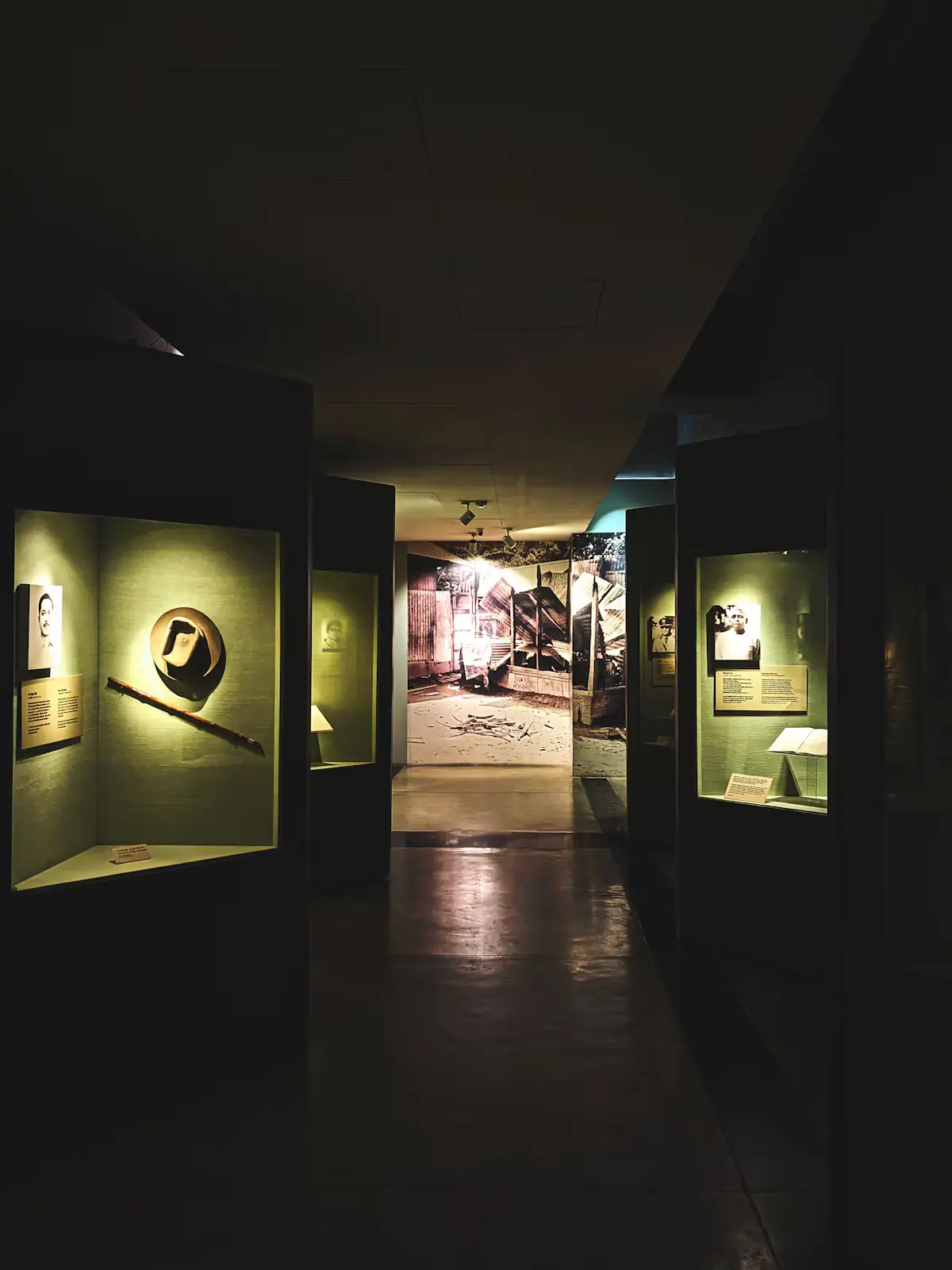
A dimly lit museum corridor with illuminated display cases set into the walls on both sidesUnsplash

Photo: UnsplashUnsplash License

Somewhere between Blue Ridge and Ellijay, on the four-lane that carries everyone up from Atlanta, there is a building with a sasquatch on the sign. Expedition: Bigfoot! is a private museum devoted to the North American ape phenomenon, and it is open every day of the year except Easter, Thanksgiving, Christmas and New Year's Day. In a county where most attractions are weather-dependent and half of them close for the winter, that reliability is worth more than it sounds.

Inside it is a proper collection rather than a gift shop with three posters. Plaster casts of footprints from various states, maps of reported sightings, audio recordings, expedition equipment, newspaper coverage going back decades, and the primary-source material that the field has generated since the 1950s. There is a dedicated section on the Georgia reports specifically, which is the part that makes it a Blue Ridge attraction rather than a roadside oddity that could sit anywhere.

The tone is the thing that decides whether you enjoy it. The museum presents the evidence and the history of the search rather than insisting on a conclusion, and it takes the people involved seriously. If you arrive intending to laugh at it, you will have a thin time. If you arrive interested in why thousands of otherwise unremarkable people have reported the same thing in the same terrain for seventy years, it is genuinely absorbing.

Allow about an hour, ninety minutes if you read everything. It suits children from roughly seven upwards, and the southern Appalachians are exactly the sort of country where the idea feels plausible for the drive home, which is half the fun.

It is a short hop off the highway, and it pairs neatly with an Ellijay apple run or a wet afternoon on the way back from anywhere.
Getting there and parking

The museum sits directly on GA-515, the four-lane between Blue Ridge and Ellijay, on the Cherry Log stretch. From downtown Blue Ridge it is about ten to fifteen minutes south; from Ellijay, ten to fifteen minutes north.

Because it is on the main highway, it is the easiest attraction in the county to reach: no gravel, no mountain bends, no navigation problem.

There is a car park on site. The museum cannot accommodate RVs, trailers or coaches, so if you are towing, plan another stop.

Coming up from Atlanta, it is on the right-hand side heading north and makes a sensible first or last stop of a cabin week.

What is actually in the collection

The core of it is casts. Plaster footprint casts taken from reported track lines across North America, displayed with the circumstances of each, which is the material that anyone serious about the subject argues over.

Around that sits the documentary history: sighting maps, reports filed over decades, newspaper cuttings, books, and the equipment expeditions have used, from thermal gear to plaster kits and audio recorders. There are recordings to listen to, including the vocalisations that turn up repeatedly in the literature.

Georgia gets its own attention, which is the reason this museum sits here and not in Oregon. The southern Appalachians produce a steady trickle of reports, and the exhibit on state and regional cases connects the subject to the ridges outside the window.

There is a gift shop, and it leans into the theme without apology.

It is a one-storey indoor visit with a clear route through, so it works as a stop rather than a commitment. Nobody is going to keep you for three hours.

Hours, prices and parking

The museum lists daily opening from 10am to 5pm with last admission at 4.30pm, closing only on Easter, Thanksgiving, Christmas Day and New Year's Day. That makes it one of very few things in the county you can rely on in February.

Admission is listed at $9 for adults and teenagers, $6 for children aged 5 to 12, free for under-5s and free for active military with ID. Treat those figures as current at the time of writing and confirm before you go.

Parking is a car park off the highway, and the museum states plainly that it cannot take RVs, trailers or coaches. If you are towing anything, this is not a stop you can make.

Cash and cards are both normal here, but a small independent attraction is not the place to rely on a phone wallet without checking.

An hour is the standard visit. Ninety minutes if you are the sort who reads every caption, forty-five if you are here because it is raining and someone is nine.

Taking children, and the honest age range

The sweet spot is roughly seven to fourteen. Old enough to read the displays and argue about the evidence, young enough to be delighted rather than sceptical.

Under about five, there is not much to do. It is a reading-and-looking museum rather than an interactive one, and there is no play space.

Nothing in here is designed to frighten, but the subject is a large unidentified animal in the woods, and some younger children connect that to the dark trees around the cabin on the drive home. If yours is the sort who would, have the conversation on the way rather than at bedtime.

Teenagers do well here, partly because the material rewards scepticism. The casts and reports are presented as evidence to be weighed, and a fourteen-year-old with a phone and an argumentative streak has a good time.

Combine it with an hour at Mercier Orchards or an early dinner in Ellijay and you have filled a wet afternoon without driving a gravel road.

Near Expedition Bigfoot

Straight-line distances, so allow more on the road — the island is long and has one main parkway.

  • A small-town street of low brick buildings with a wooded mountain rising directly behind the rooftops
    Neighbourhood

    Ellijay

    Free

    The Apple Capital of Georgia: a courthouse square, two rivers meeting, and orchards that turn the whole county into a queue in October.

    2.5–6 hoursFree to visit. Orchards charge for fruit and for u-pick by weight.9.6 mi away

    Photograph: Nyttend

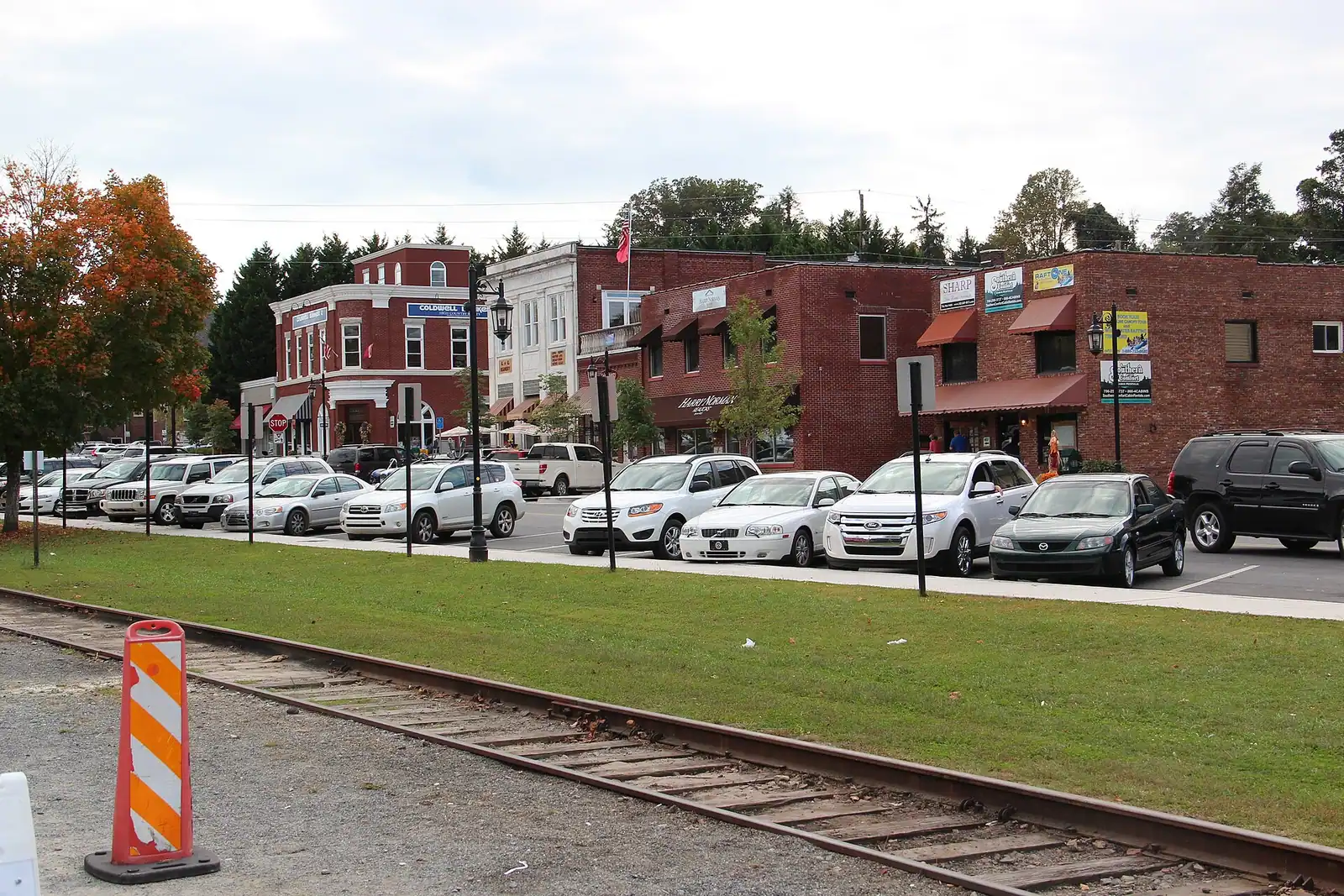
  • A small-town storefront in white and red painted brick seen from the pavement
    Neighbourhood

    Downtown Blue Ridge

    Free

    Four blocks of shopfronts facing a working railway depot, small enough to walk twice and busy enough to need a parking plan in October.

    1–4 hoursFree. Street parking is free and scarce on peak weekends.5.2 mi away

    Photograph: Thomson M

  • An apple tree carrying a heavy crop of unpicked fruit
    Entertainment

    Mercier Orchards

    Free

    A fourth-generation apple farm with a bakery, a hard cider house and, on an October Saturday, a car park like a county fair.

    1–3 hoursFree to visit the market, bakery and cider house. U-pick and tastings are charged.6.1 mi away

    Photograph: Thomson200

  • A drive-in cinema screen standing above an empty gravel lot with a pink sky behind it at dusk
    Entertainment

    Swan Drive-In Theatre

    Open since 1955 on a field above town: double features, sound through the car radio, and a diner that keeps the place alive.

    2.5–5 hoursPaid admission per person for a double feature. Entering for the second film only costs the same.4.8 mi away

    Photograph: Harrison Keely

Expedition Bigfoot: common questions

Where is the Bigfoot museum in Blue Ridge, Georgia?

On GA-515, the four-lane highway between Blue Ridge and Ellijay, along the Cherry Log stretch, with a Blue Ridge postal address at 1934 Highway 515. It is about ten to fifteen minutes south of downtown Blue Ridge and a similar distance north of Ellijay. Being on the main highway makes it the simplest attraction in the county to find: there is no gravel road and no mountain navigation involved.

How much is Expedition Bigfoot?

The museum lists $9 for adults and teenagers, $6 for children aged 5 to 12, free for under-5s and free for active military with ID. Prices at small independent attractions change, so treat those as indicative and check before you travel. It opens daily from 10am to 5pm with last admission at 4.30pm, closing only on Easter, Thanksgiving, Christmas Day and New Year's Day.

How long do you need at the Bigfoot museum?

About an hour for most people, or ninety minutes if you read every caption and listen to the audio recordings. Families with younger children often do it in forty-five minutes. It is a single-storey museum with a clear route through, so it fits neatly into an afternoon alongside something else rather than needing a day built around it.

Is Expedition Bigfoot suitable for young children?

Best from about seven upwards. The displays are casts, maps, reports and equipment rather than interactive stations, so under-fives run out of things to do quickly. Nothing is designed to be frightening, but the subject is an unidentified animal in the woods, and some younger children connect that to the dark trees on the drive back to the cabin. Teenagers tend to enjoy it most, because the material rewards argument.