Skip to content
Search
Menu

These bookings pay us a commission through Viator. Your price does not change, and neither did our picks because of it.

Things to Do

Wine, Cider and Beer in Fannin County

Last updated

Tasting around Blue Ridge, Georgia: the Upper Hiwassee Highlands appellation, why the grapes here are hybrids, orchard hard cider and the small beer scene.

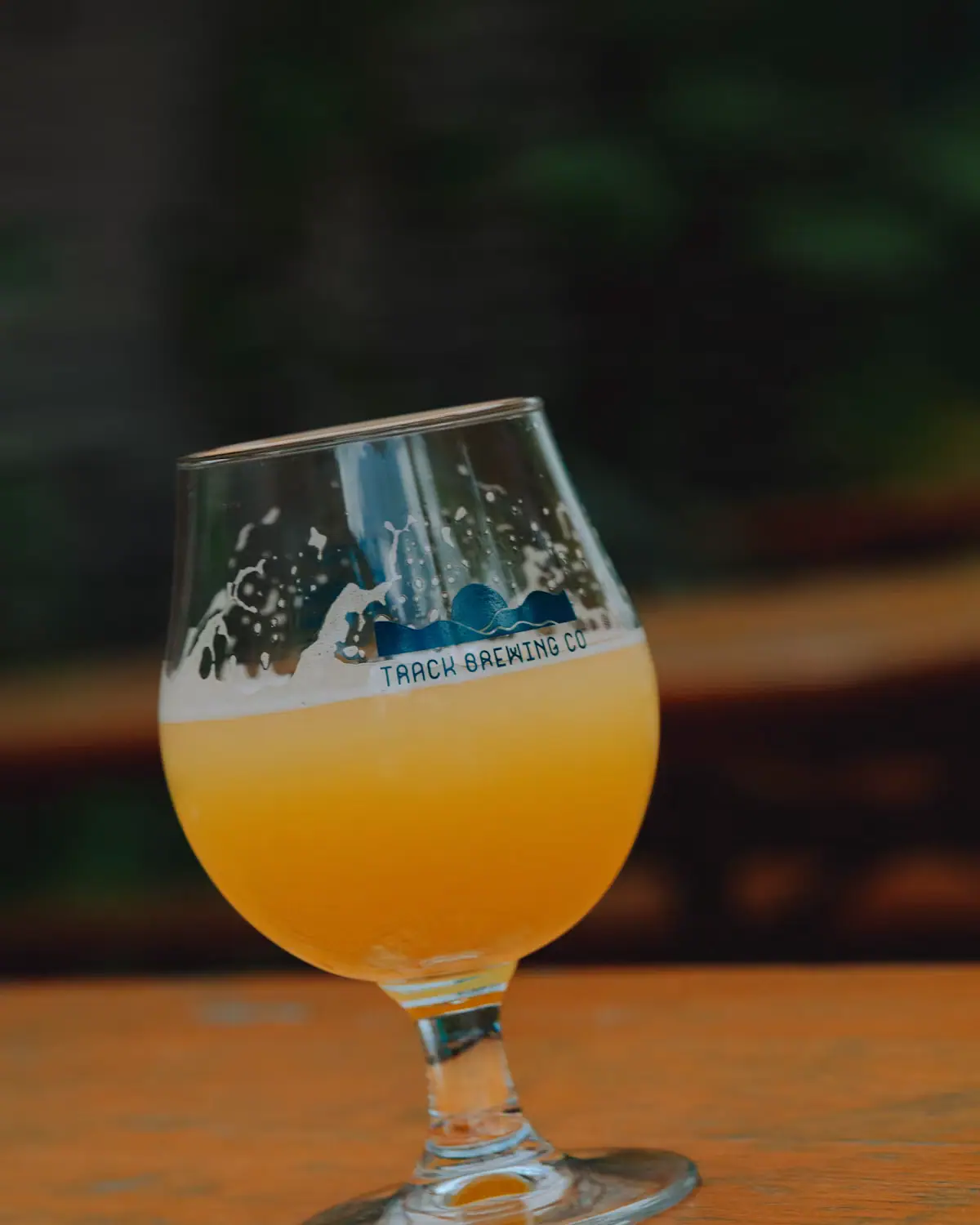
A stemmed glass of hazy unfiltered beer standing on a worn wooden table with dark green foliage behind itUnsplash

Fannin County sits inside an American Viticultural Area, which is not a sentence most visitors expect to read about north Georgia. The Upper Hiwassee Highlands appellation was approved in July 2014, the 214th in the country, and it covers Fannin, Towns and Union counties on the Georgia side plus Cherokee and Clay counties over in North Carolina.

The numbers behind it tell you exactly what kind of wine region this is. The appellation covers 441,600 acres. At the point it was established, 54 of those acres had vines on them. Twenty-six commercial vineyards, five bonded wineries. That is not a misprint and it has not become Napa since. This is a very small, very high, very young wine district, and the pleasure of drinking here comes from that rather than in spite of it.

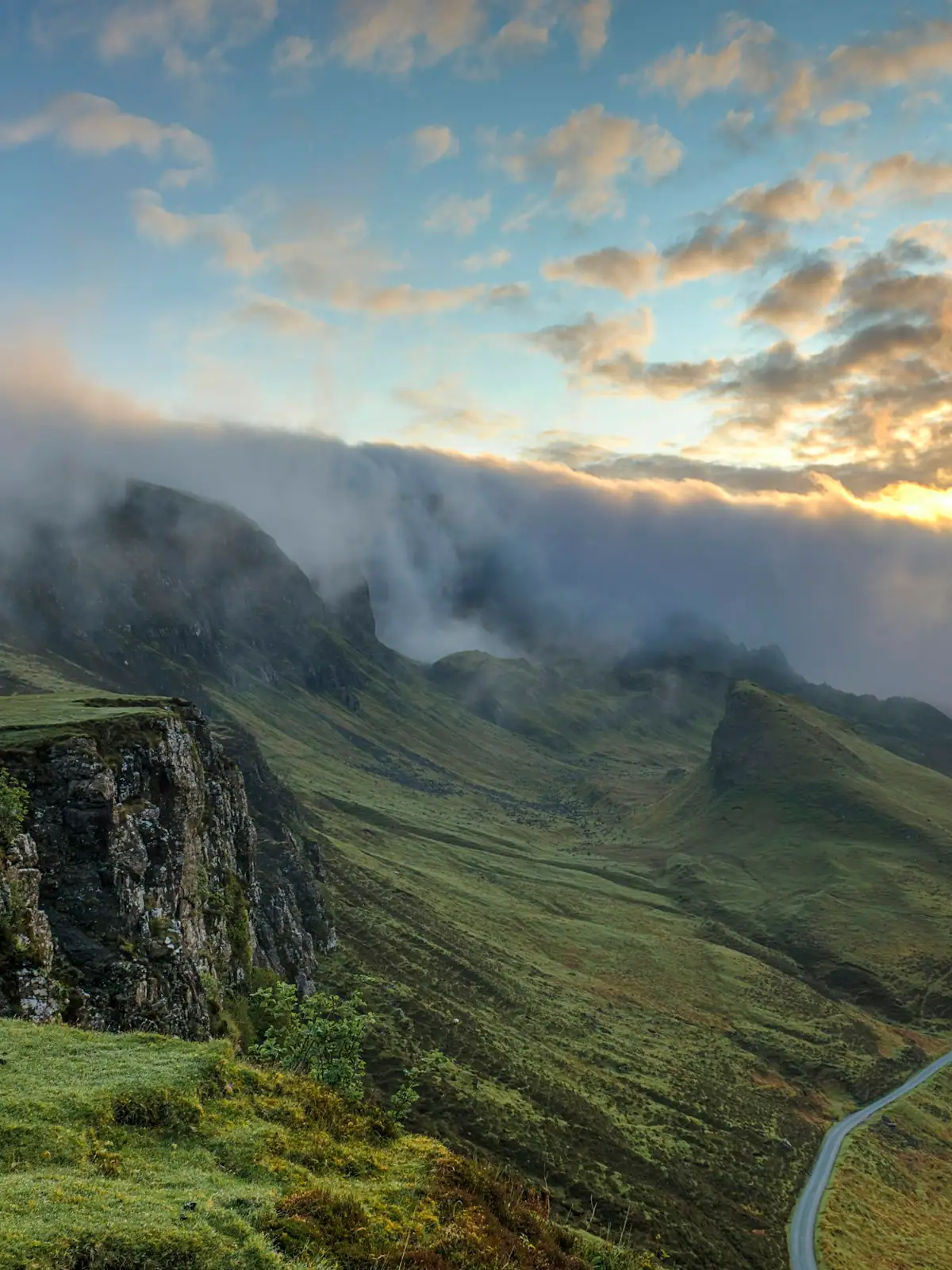
Height is the organising fact. Blue Ridge sits at about 1,762 feet and the vineyards are generally higher again, most of them planted between 2,000 and 2,400 feet on slopes of well-drained soil weathered off metasedimentary rock. That elevation buys cooler nights than the Georgia piedmont, which is what keeps acid in a grape grown this far south. It also buys late spring frosts, a short season and the humidity of a southern Appalachian summer, which is why so much of what is planted here is not what you would find in California.

What you will actually be handed in a tasting room, then, is often a French-American hybrid. Chambourcin and Seyval Blanc are widely grown here, American varieties such as Norton and Catawba turn up, and there is vinifera in the ground too, Cabernet Sauvignon and Merlot among it. Hybrids were in roughly two thirds of the appellation's vineyards and about half its planted acres when the boundary was drawn. Arrive prepared to taste things you have not tasted before and the afternoon is genuinely interesting. Arrive looking for a mountain Bordeaux and it will not be.

There are two other things in the glass around here. Hard cider is arguably the county's most honest drink, because apples are what this ground has always grown best, and the orchard north of town presses, ferments and cans its own. And there is beer: a small taproom scene rather than a city one, worth an evening rather than a weekend. All three are covered below, along with the part nobody enjoys discussing, which is how you get back to the cabin afterwards on unlit mountain roads.
The appellation almost nobody has heard of

An American Viticultural Area is a boundary drawn around ground that grows grapes differently from the ground next to it, and getting one approved requires evidence: climate data, soils, elevation, historical name usage. The Upper Hiwassee Highlands cleared that bar in July 2014.

What the petition argued, in effect, was altitude. These are the southern Appalachians, and the vineyards sit high enough that the growing season behaves like somewhere considerably further north than a Georgia latitude would suggest. Most of the plantings are between 2,000 and 2,400 feet. The soils come off metasedimentary rock and drain hard, which matters enormously in a region that gets serious summer rainfall. The heat accumulation puts most of the area in Winkler Region III, which is warm but not baking.

The other thing the numbers show is how thinly planted it is. Fifty-four acres of vines inside 441,600 acres of appellation is a rounding error. In practice that means tasting rooms here are attached to small farms, the person pouring may well be the person who pruned, and a wine you like this year may simply not exist next year because there was not much of it.

For a visitor that is the appeal. You are not touring an industry. You are visiting five or six farms that happen to make wine, spread across mountain roads in two states, and the drive between them through ridge country is at least half of what you came for.

Why the grapes are ones you have not heard of

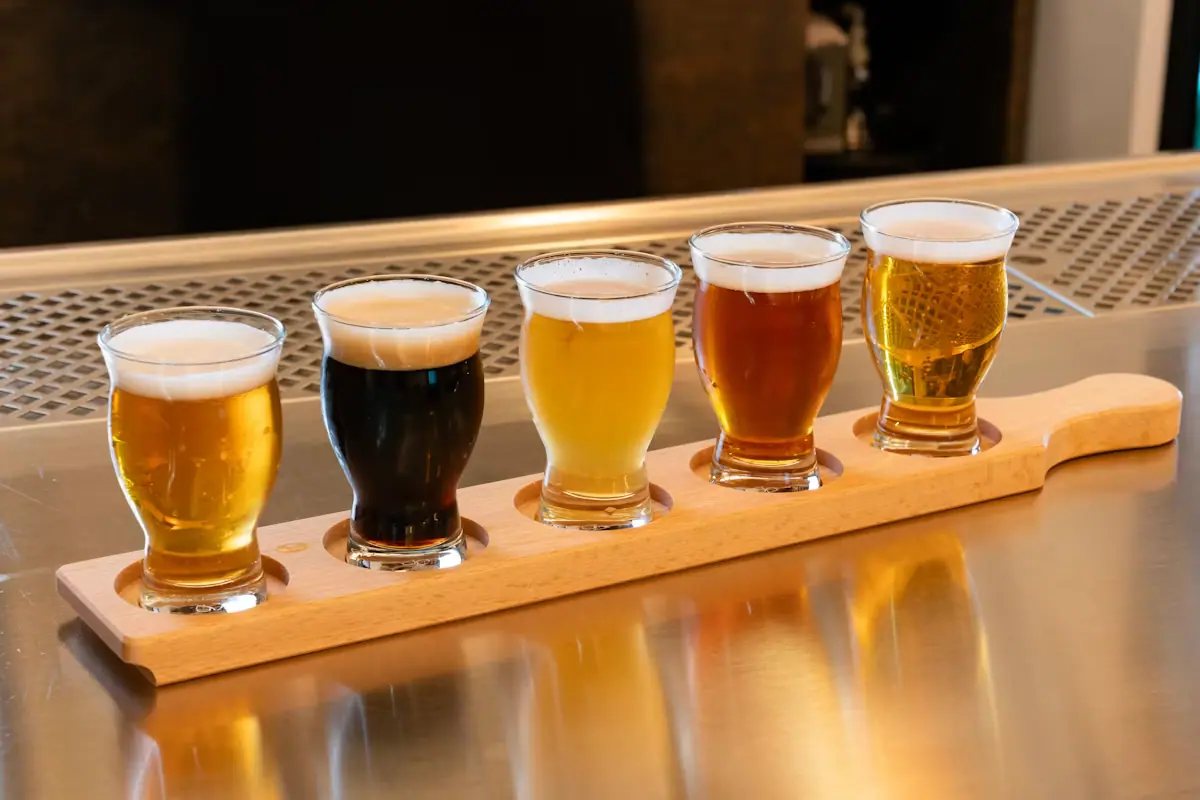
Five small tasting glasses of different coloured beers lined up on a wooden serving paddle along a barUnsplash
Five small tasting glasses of different coloured beers lined up on a wooden serving paddle along a bar

A visitor from a classic wine region looks at a north Georgia list and wonders why half of it is unfamiliar. The answer is weather, and it is worth understanding before the first pour, because it changes what you are tasting for.

Vitis vinifera, the European species behind almost every famous wine grape, is not well adapted to a humid southern summer. Warm nights and heavy rain in July and August favour fungal disease, and a vine that is battling downy mildew is not ripening fruit. Meanwhile at 2,300 feet in the Appalachians, a late April frost can take a whole crop off in one night. The winters, conversely, can drop hard enough to damage vines that are marginal for cold.

French-American hybrids were bred precisely for that set of problems: disease resistance, cold hardiness, earlier ripening. Chambourcin gives a dark, brambly, medium-bodied red with enough acid to stay lively. Seyval Blanc gives a crisp, dry white with a citrus edge. Norton is an American species entirely and makes a deep, high-acid red that tastes like nothing in Europe. Catawba is the old pink American grape behind a great deal of nineteenth-century sweet wine, and it still shows up in a sweeter style here.

Vinifera is planted too, and the better sites get Cabernet Sauvignon and Merlot ripe in good years. But the hybrids are the honest expression of this ground. Taste them on their own terms, not against a benchmark from a drier climate, and the afternoon makes a lot more sense.

Planning a tasting afternoon that works

Local tips

  • Two, or at most three. The vineyards are spread across mountain country in two states, not clustered on one road. Driving between them takes longer than the map says, and four stops turns a pleasant afternoon into a schedule.
  • Book the October weekends. Leaf season is peak everything in this county, and a small tasting room with a view fills up. Weekdays in autumn are the best time of the year to do this.
  • Ring first in the quiet months. Small producers keep seasonal hours, and a January Tuesday is exactly when somebody decides to prune instead of pour.
  • Assume you are driving on gravel at some point. Several vineyard approaches are farm tracks. A low car is fine in dry weather and less fine after rain.
  • Agree the driver before the first pour, not after it. Ride-hailing coverage in rural Fannin County is patchy to non-existent, and there is no taxi rank waiting at a vineyard.
  • Eat first. Food at tasting rooms here ranges from a full kitchen to a bowl of crackers, and you cannot tell which from a website.
  • Ask what is estate grown. In a district with this little acreage, some wine on the list will have been made from fruit bought in. That is normal and not a scandal, but it is worth knowing which glass is the mountain in front of you.
  • Buy the bottle you liked there and then. Production runs are tiny and distribution is local.

Cider is the drink this ground actually grows

If you only drink one local thing here, there is a strong argument for making it cider rather than wine.

Apples have been the serious crop in these mountains for generations. The elevation that makes grape growing awkward is precisely what apples want: cool nights, a real winter chill, and slopes that shed cold air. Fannin and neighbouring Gilmer County have been growing them commercially since long before anybody drew a viticultural boundary here.

The orchard north of Blue Ridge makes hard cider from its own fruit, and states that it is the only apple orchard in Georgia to grow, press, ferment and can it, with a tasting room on the property. Whatever you make of the claim, the practical point stands: the fruit in that can came off trees you can see from the car park, which is a shorter supply chain than almost any drink you will be offered on a holiday.

Cider also solves two problems that wine does not. It is an easier match for what people actually eat here, which runs to barbecue, fried chicken, trout and a great deal of pork. And it is a reasonable thing to carry home in a cool box, because cans survive a car boot in a way bottles do not.

One small warning. The sweet unfermented apple cider sold by the gallon at the orchard and the hard cider sold in the tasting room are entirely different drinks with nearly the same name. Buy both. Do not confuse which one you handed to a child.

Beer in a county of 25,000 people

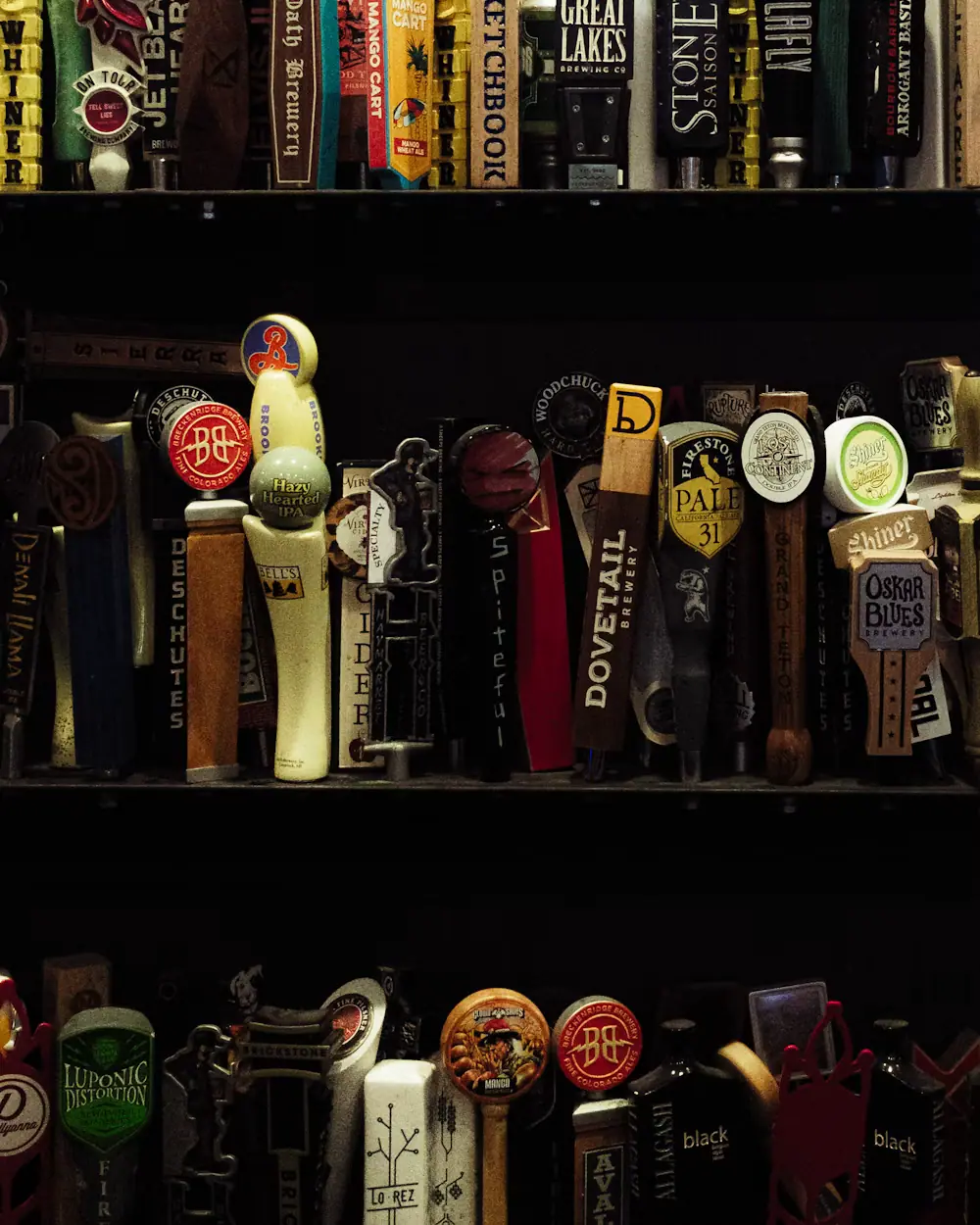
Shelves of decorated wooden and metal tap handles ranked above a dimly lit taproom barUnsplash
Shelves of decorated wooden and metal tap handles ranked above a dimly lit taproom bar

Set expectations and this is a good evening out. Fannin County has a small taproom scene: a handful of places pouring their own beer, most of them within reach of the town, and the whole thing is measured in single figures rather than in the dozens a city produces.

What that buys you is the opposite of choice paralysis. Taprooms here are small rooms with a bar, a few tables, a board with six or eight beers chalked on it and somebody behind it who knows how each one was made. Ordering a flight and working along it is the correct approach on a first visit, and it takes half an hour to have tasted most of what the place does.

The styles reflect the customers rather than a trend cycle, which means a reliable lager, something amber and malty for the cold months, at least one hazy pale ale because everyone makes one, and usually a seasonal that involves local fruit. In autumn, expect apples to appear in the beer as well as in everything else.

Practical points. Kitchens are not a given; several taprooms are beer-only and either bring in a food truck or expect you to eat first. Hours are shorter than in a city and considerably shorter midweek in winter. Dogs are often welcome and children sometimes are, but both are a decision made by the room rather than by the county. And weekend evenings in leaf season fill the small rooms early, which is the one time of year it is worth turning up before seven.

The part about driving home

Before you book

This is the section a tourism brochure leaves out, and it is the most important one on the page.

Getting back from a tasting room to a cabin in Fannin County is not like getting back from a bar in a city. There is no reliable ride-hailing coverage out in the county, no taxi rank, and no bus. The roads between the vineyards and the hollows are two-lane, unlit, edged with ditches and rock cuts, and they bend continuously. Your own cabin drive is probably gravel and probably steep.

Then there is the wildlife. Deer move at dawn and dusk and they move in groups: if one crosses in front of you, slow immediately, because there are usually more behind it. Autumn is the worst of it. Black bears cross these roads too, and a bear at night on a wet bend is a genuinely serious obstacle.

So: decide the driver before anybody tastes anything, and mean it. If your group cannot produce a driver, do the tasting within walking distance of where you are sleeping, book a tour that includes transport if one is running, or make it a lunchtime rather than an evening. Spitting at a tasting is entirely normal behaviour and nobody pouring will think less of you for it.

One last piece of arithmetic. A standard tasting flight of five pours is not a small amount of wine. It is close to a full glass, spread out. Treat it as such.

On the ground

Where to go

Every place below has its own page — hours, parking, what it costs and what to expect when you get there.

  • An apple tree carrying a heavy crop of unpicked fruit
    Entertainment

    Mercier Orchards

    Free

    A fourth-generation apple farm with a bakery, a hard cider house and, on an October Saturday, a car park like a county fair.

    1–3 hoursFree to visit the market, bakery and cider house. U-pick and tastings are charged.

    Photograph: Thomson200

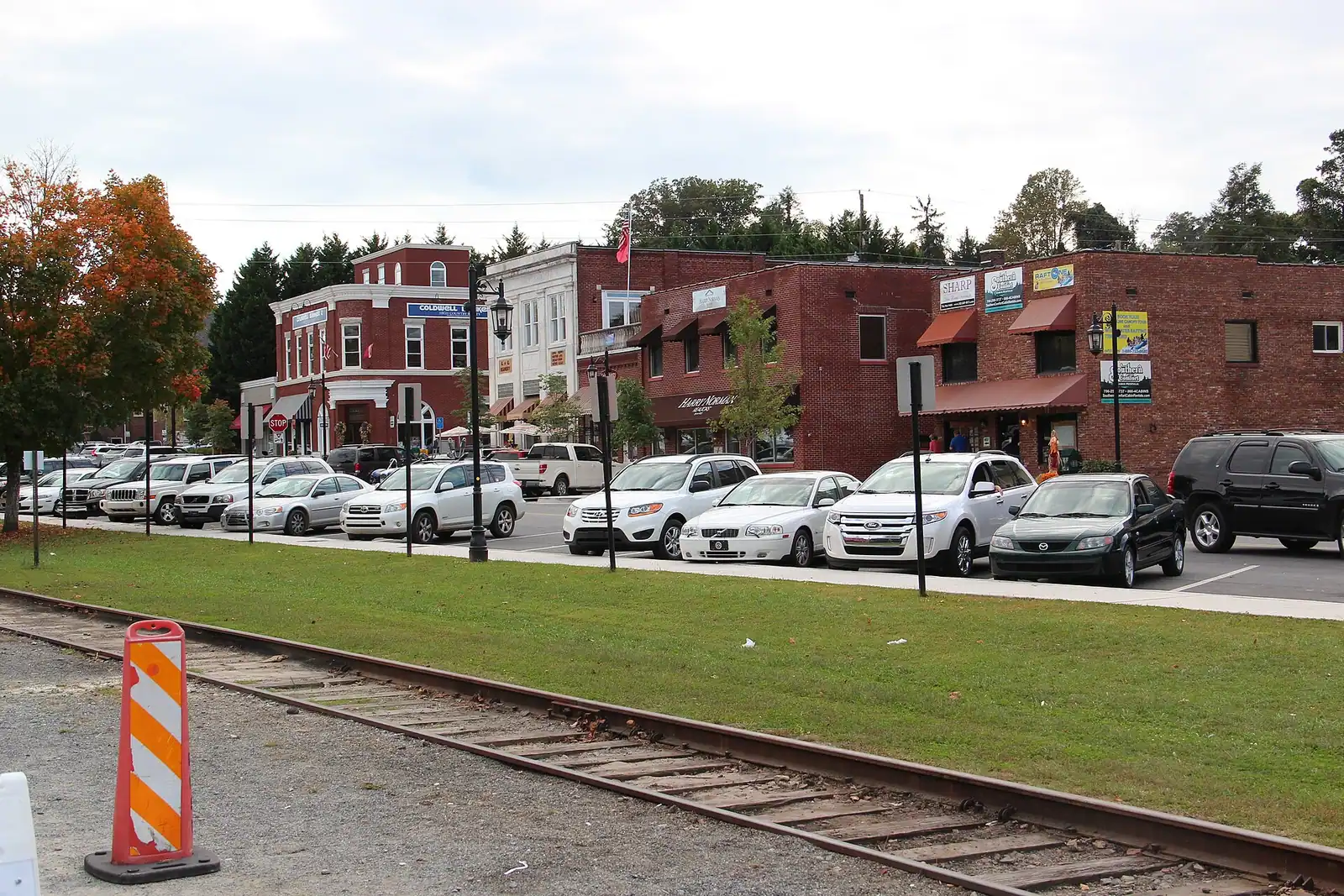
  • A small-town storefront in white and red painted brick seen from the pavement
    Neighbourhood

    Downtown Blue Ridge

    Free

    Four blocks of shopfronts facing a working railway depot, small enough to walk twice and busy enough to need a parking plan in October.

    1–4 hoursFree. Street parking is free and scarce on peak weekends.

    Photograph: Thomson M

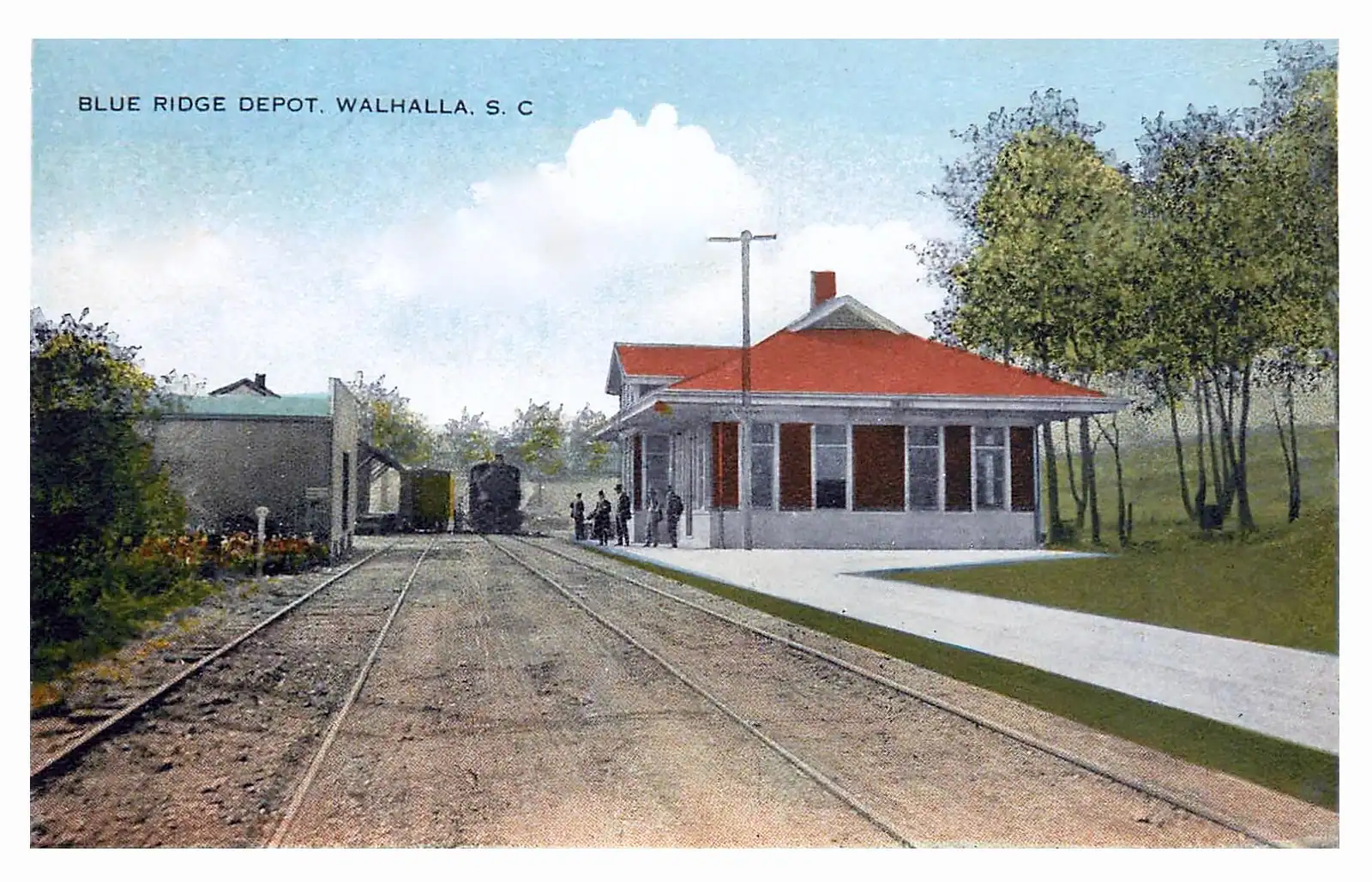
  • A railway depot with locomotives standing on the tracks below a forested hill
    Historic site

    Blue Ridge Depot

    Free

    The oldest working thing in Blue Ridge: a Register-listed railway building still selling tickets to a train that still runs.

    15–45 minutesFree to visit the building, platform side and yard. Train tickets are separate.

    Photograph: Unknown author

  • A small-town street of low brick buildings with a wooded mountain rising directly behind the rooftops
    Neighbourhood

    Ellijay

    Free

    The Apple Capital of Georgia: a courthouse square, two rivers meeting, and orchards that turn the whole county into a queue in October.

    2.5–6 hoursFree to visit. Orchards charge for fruit and for u-pick by weight.

    Photograph: Nyttend

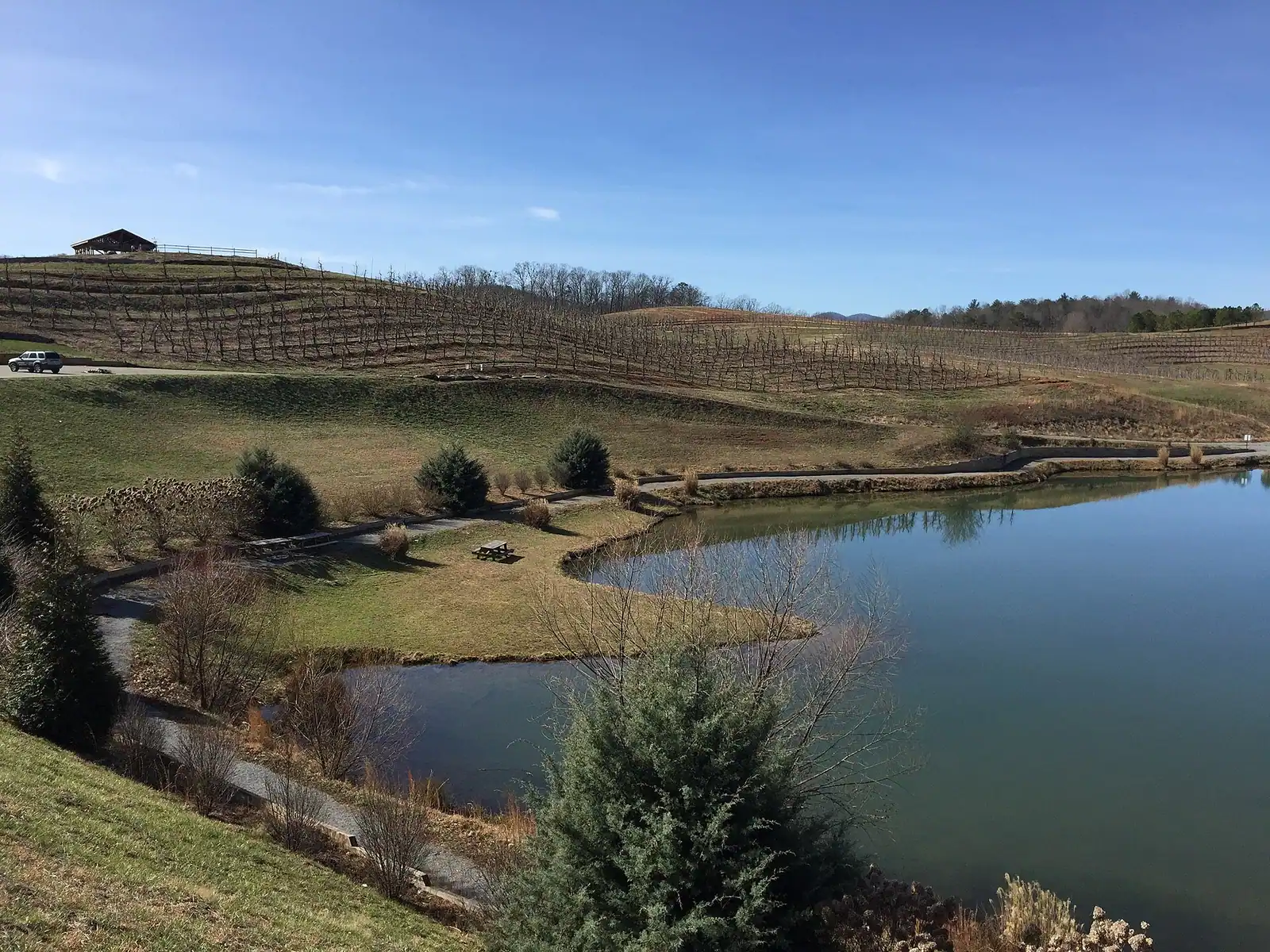
  • Rows of vines running across rolling green farmland with woodland behind
    Entertainment

    Sugar Creek Vineyard

    Small-batch wine and mead from the ridges above Blue Ridge, in a county that is a long way from Georgia's established wine country.

    1–2 hoursTastings charged per flight; bottles sold at the door.

    Photograph: Thomson M

Straight answers

Questions people actually ask

Is there a wine region around Blue Ridge, Georgia?

Yes, though it is tiny. Fannin County sits inside the Upper Hiwassee Highlands appellation, approved in July 2014, which also covers Towns and Union counties in Georgia and Cherokee and Clay counties in North Carolina. It runs to 441,600 acres but had only about 54 acres actually planted when it was established, with 26 commercial vineyards and five bonded wineries. Expect small farm operations rather than an industry.

What kind of wine is made near Blue Ridge?

A lot of it comes from French-American hybrids rather than familiar European grapes, because hybrids handle humid southern summers and mountain frosts better. Chambourcin gives a brambly medium-bodied red and Seyval Blanc a crisp dry white. American varieties such as Norton and Catawba appear too, and the better sites also grow Cabernet Sauvignon and Merlot. Taste them on their own terms rather than against a drier climate.

Why are the vineyards so high up?

Because elevation is what makes wine possible at this latitude. Blue Ridge itself sits at about 1,762 feet, and most vineyards in the appellation are planted between 2,000 and 2,400 feet on well-drained slopes. That height brings cooler nights, which keeps acid in the fruit, and the drainage matters in a region with heavy summer rain. The cost is a shorter season and a real risk of late spring frost.

How many wineries can you visit in a day?

Two comfortably, three at a push. They are scattered across mountain roads in two states rather than clustered on one route, and the driving between them takes longer than the distances suggest. Several approaches are gravel farm tracks. Add lunch and a stop for the view and two tasting rooms fill an afternoon properly, which is a better day than rushing four.

Is there good cider in Blue Ridge?

Cider is arguably the most authentic local drink, because apples are what these mountains have always grown best. The orchard north of town presses and ferments its own and says it is the only apple orchard in Georgia to grow, press, ferment and can its own hard cider, with a tasting room on site. Keep it separate in your head from the sweet unfermented cider sold by the gallon at the same place.

Are there breweries in Blue Ridge, Georgia?

A handful, which is what a county of 25,000 people supports. They are small taprooms with six or eight of their own beers on a board rather than large production breweries, and a flight is the sensible way to start. Several are beer-only and rely on food trucks or expect you to eat beforehand. Hours shorten considerably midweek in winter, and the rooms fill early on autumn weekends.

How do you get back to your cabin after a tasting?

You drive, which is why the driver has to be agreed before anyone tastes anything. Ride-hailing coverage in rural Fannin County is patchy at best, there is no taxi rank and there is no bus. The roads are unlit, bendy and busy with deer at dawn and dusk, and most cabin drives are steep gravel on top of that. Spitting at a tasting is completely normal, and no one pouring will mind.