Blue Ridge Scenic Railway
Twenty-six miles of river running to a town cut in half by a state line, in an open-sided coach with the windows down.
2–5 hoursTicketed. Fares vary by coach class, trip length and season.
Photograph: Thomson200
Things to Do
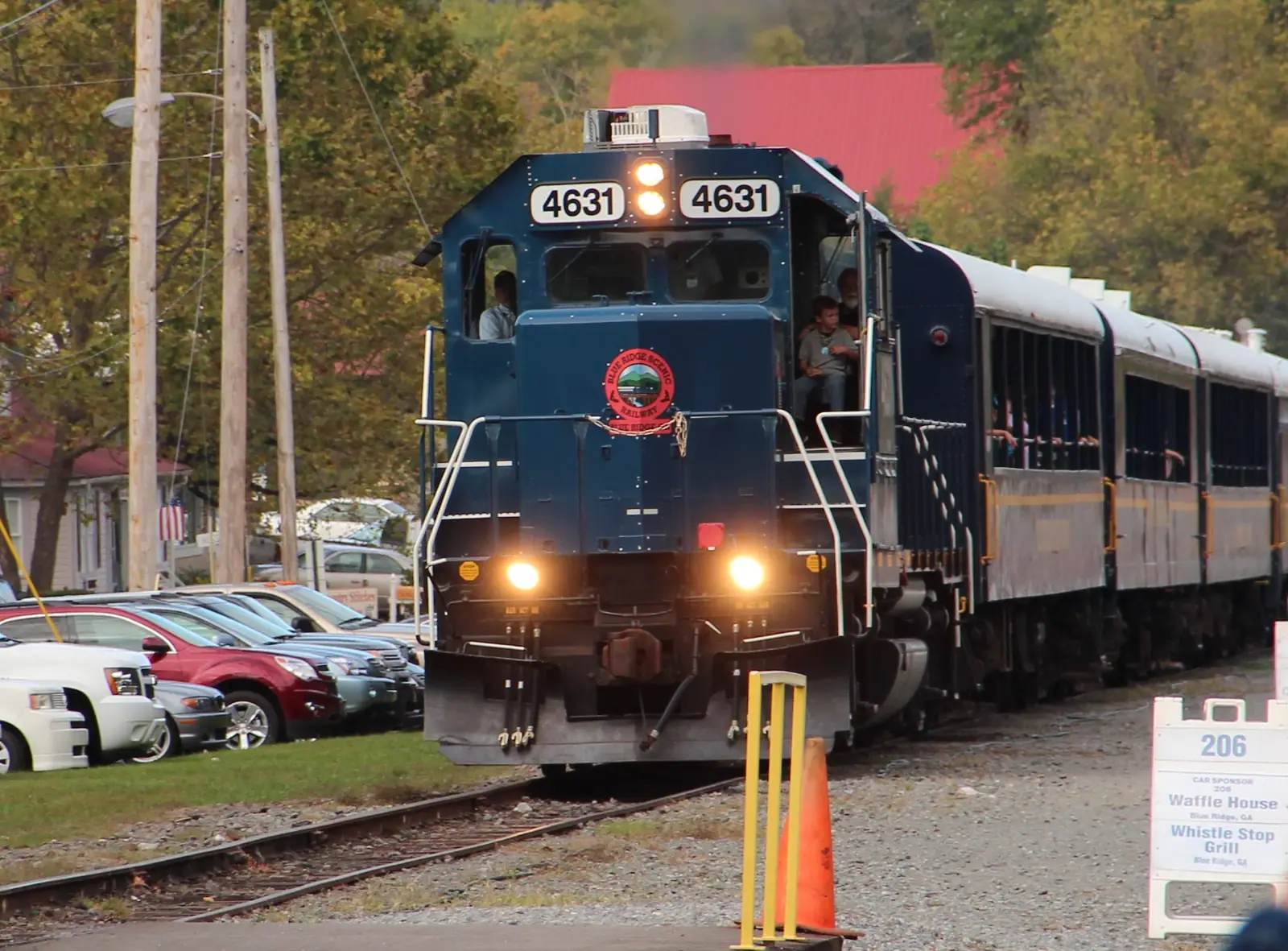
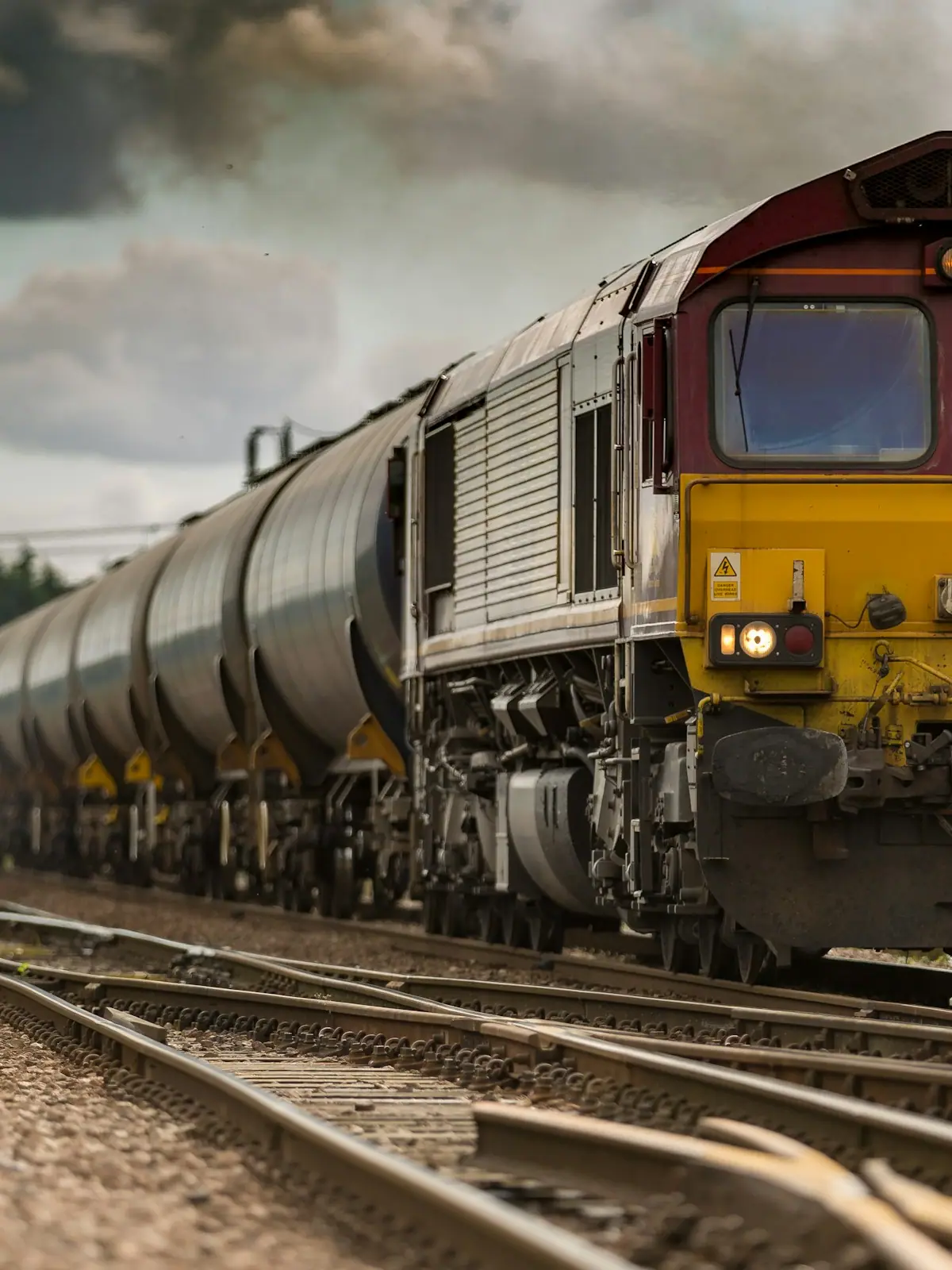
The Blue Ridge Scenic Railway runs 26 miles along the Toccoa River to McCaysville and Copperhill, with a two-hour layover on the Georgia-Tennessee line.
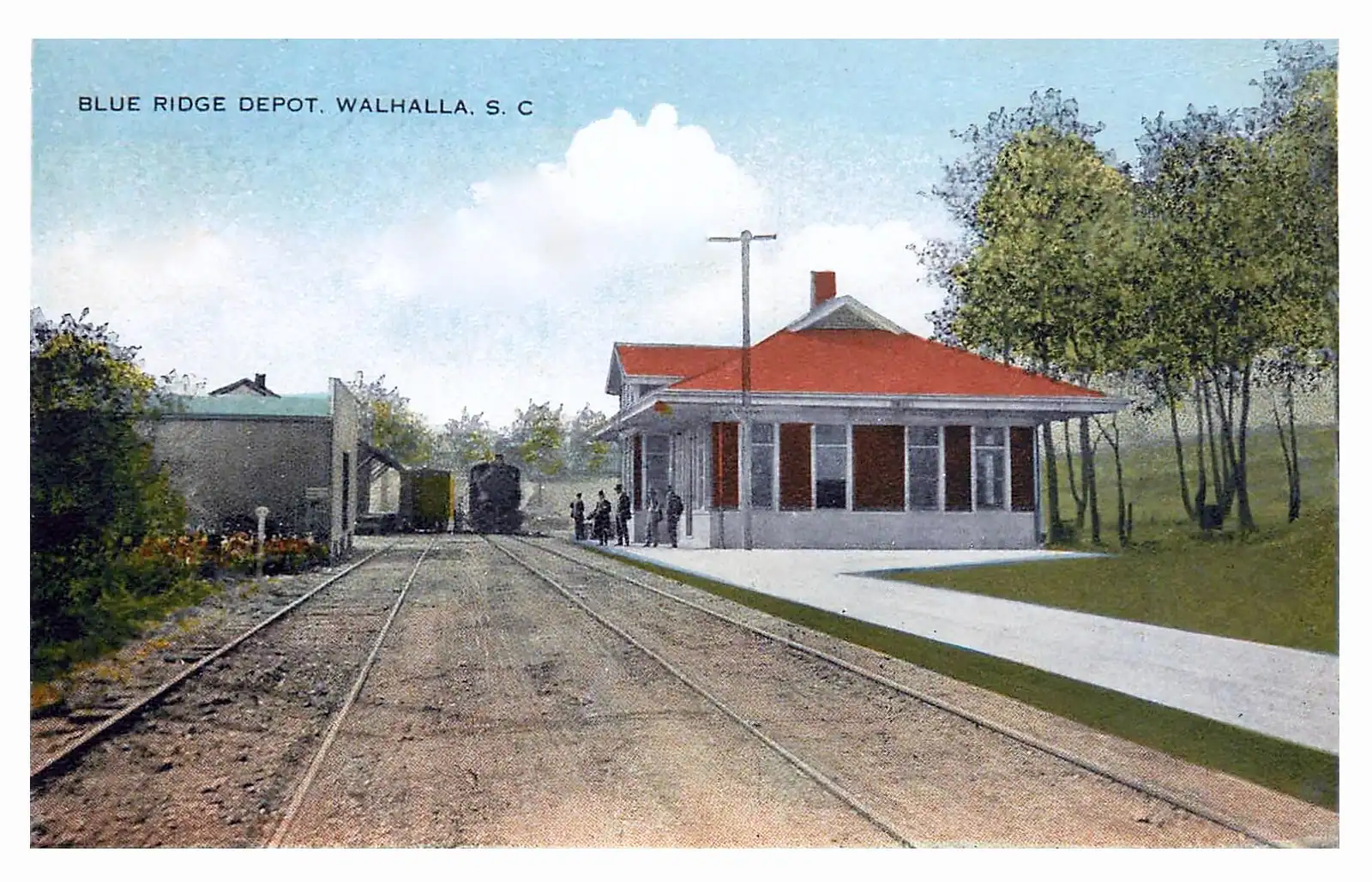
UnsplashBlue Ridge is here because a railway got here first. The Marietta and North Georgia pushed its line this far up the mountains in 1886, the town was laid out around the point where it stopped, and nine years later the county seat moved over from Morganton to be beside it. The depot on Depot Street is not a replica of anything. It is the reason there is a Main Street at all, and the excursion train that leaves from it is running on the same alignment through the same river valley.
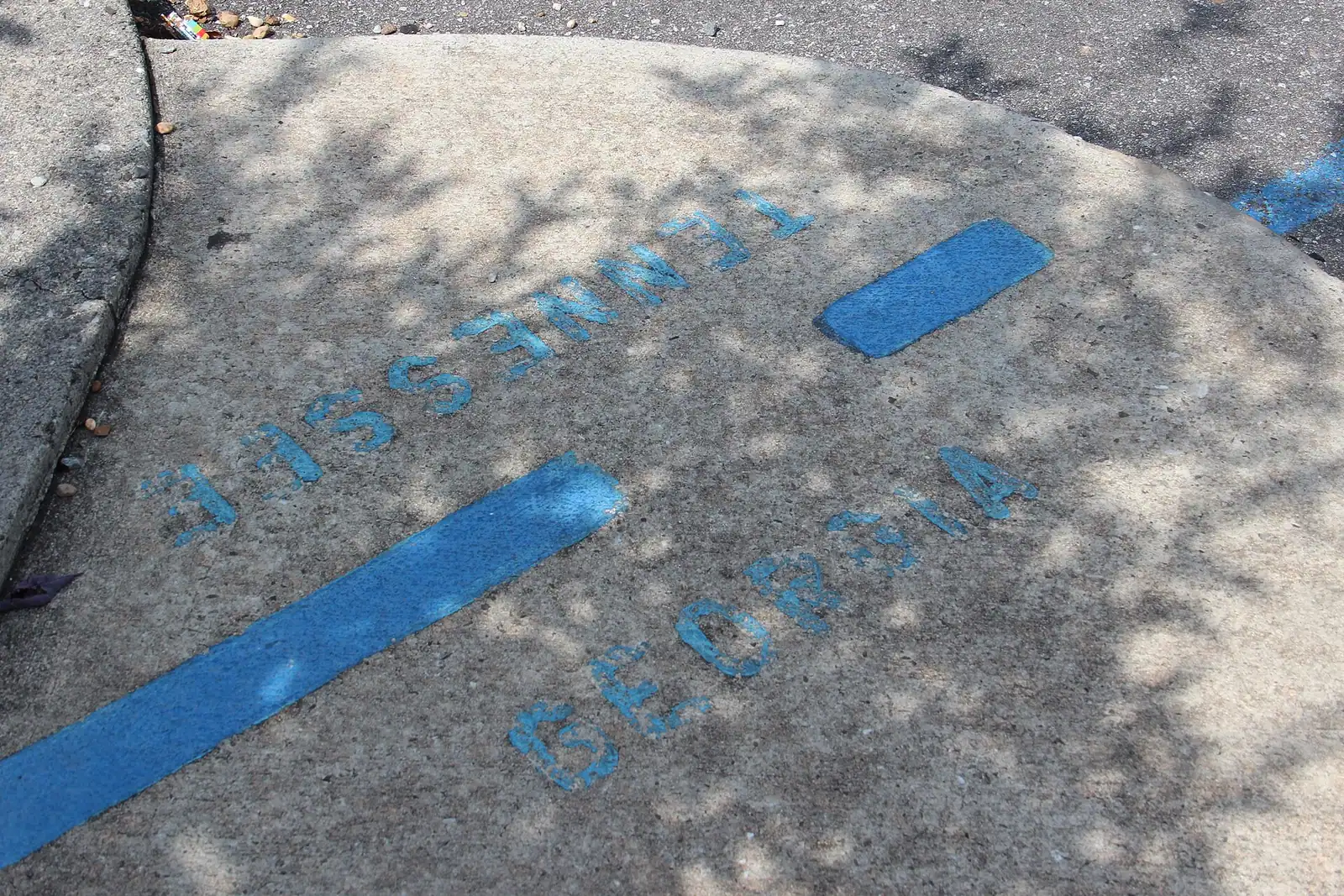
The trip is a 26-mile round journey down the Toccoa to the twin towns of McCaysville, Georgia and Copperhill, Tennessee. They sit on opposite banks with the state line drawn through them, and the line is painted on the pavement in McCaysville so that people can stand with a foot in each state and photograph it. That photograph is, for most families, the actual point of the day. The train is how you get to it without driving.
There is a second thing happening at that spot which almost nobody mentions on the platform. The river you have been following for an hour changes its name there. It runs 56 miles through Georgia as the Toccoa, and at the twin towns it becomes the Ocoee, then carries on into Tennessee towards the Hiwassee. Same water, two names, because two sets of people named it before anyone drew the border. Point that out to a nine-year-old on the way down and the layover makes considerably more sense.
The practical shape of the day is simple and worth understanding before you book. The railway publishes a long ride and a short one. The long version is advertised as four hours, of which roughly two are a layover on the ground in the twin towns, and that layover is the trip. The short version runs as a two-hour express on selected dates, goes to the same place and turns round without letting you off. If you are travelling with children who want to stand in two states, the express is the wrong ticket.
Everything else about this railway moves. The season blocks, the days of the week it runs, the departure times and which cars are attached all change through the year, and they change again for the autumn, which is the busiest six weeks on this line by a wide margin. The railway publishes its own calendar and it is the only source worth trusting. Look at it before you organise a weekend around a specific departure, and book the October dates a long way in advance, because they are the first thing in Fannin County to sell out.
When to go
The railway does not run a single summer season. It publishes the year in blocks, and each block has its own operating days, its own departures and sometimes its own ride lengths. At the time of writing those blocks ran roughly as a spring season from late February to the end of May, a summer season from the start of June to the middle of September, an autumn season from mid September to early November, and a winter season from early November through to the end of February. Treat those as the shape of the year rather than as dates to plan around, because they are republished annually.
Two details matter more than the block you are in.
Not every day is an operating day. Outside the autumn peak, the railway commonly runs on some days of the week and not others, and midweek departures in the quieter months can be thin or absent. A Tuesday in late January is not a safe assumption.
The autumn season is a different product. From roughly the third week of September to the first week of November, Fannin County fills up, the railway runs its heaviest schedule of the year, and the seats go early. The county's own visitor bureau advertises foliage trips across that same window. If your trip is built around riding the train in October, buy the ticket before you book the cabin.
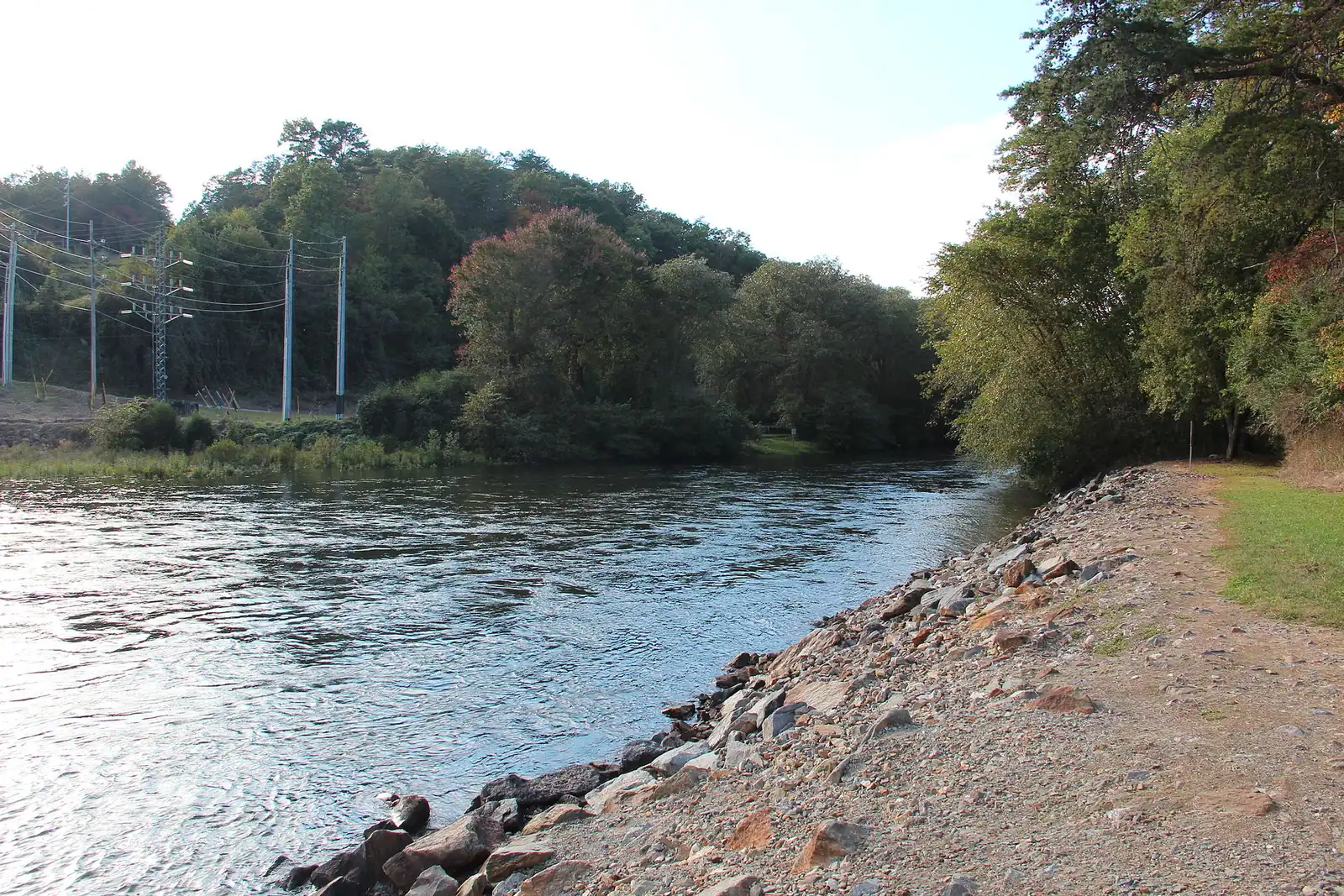
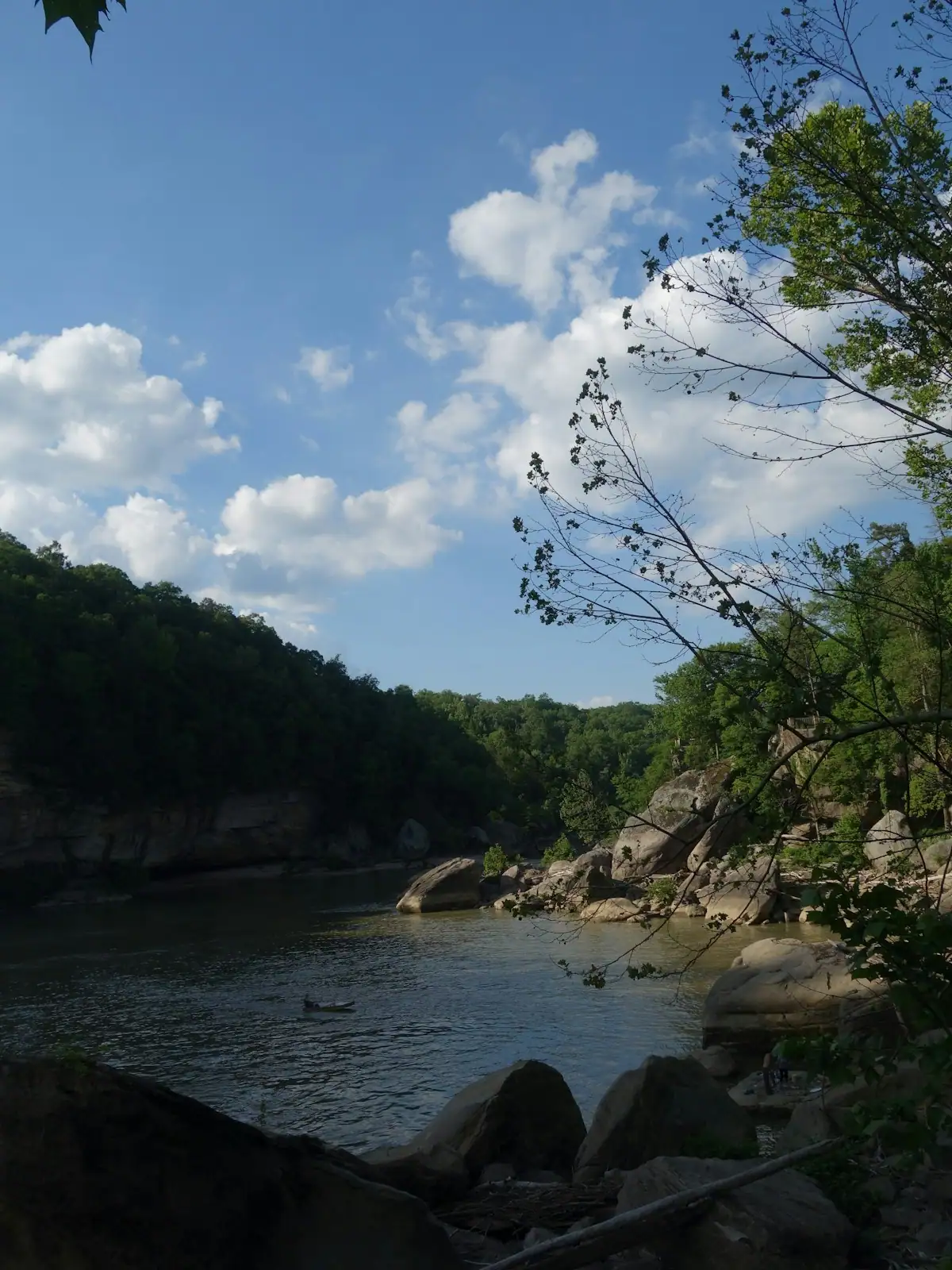
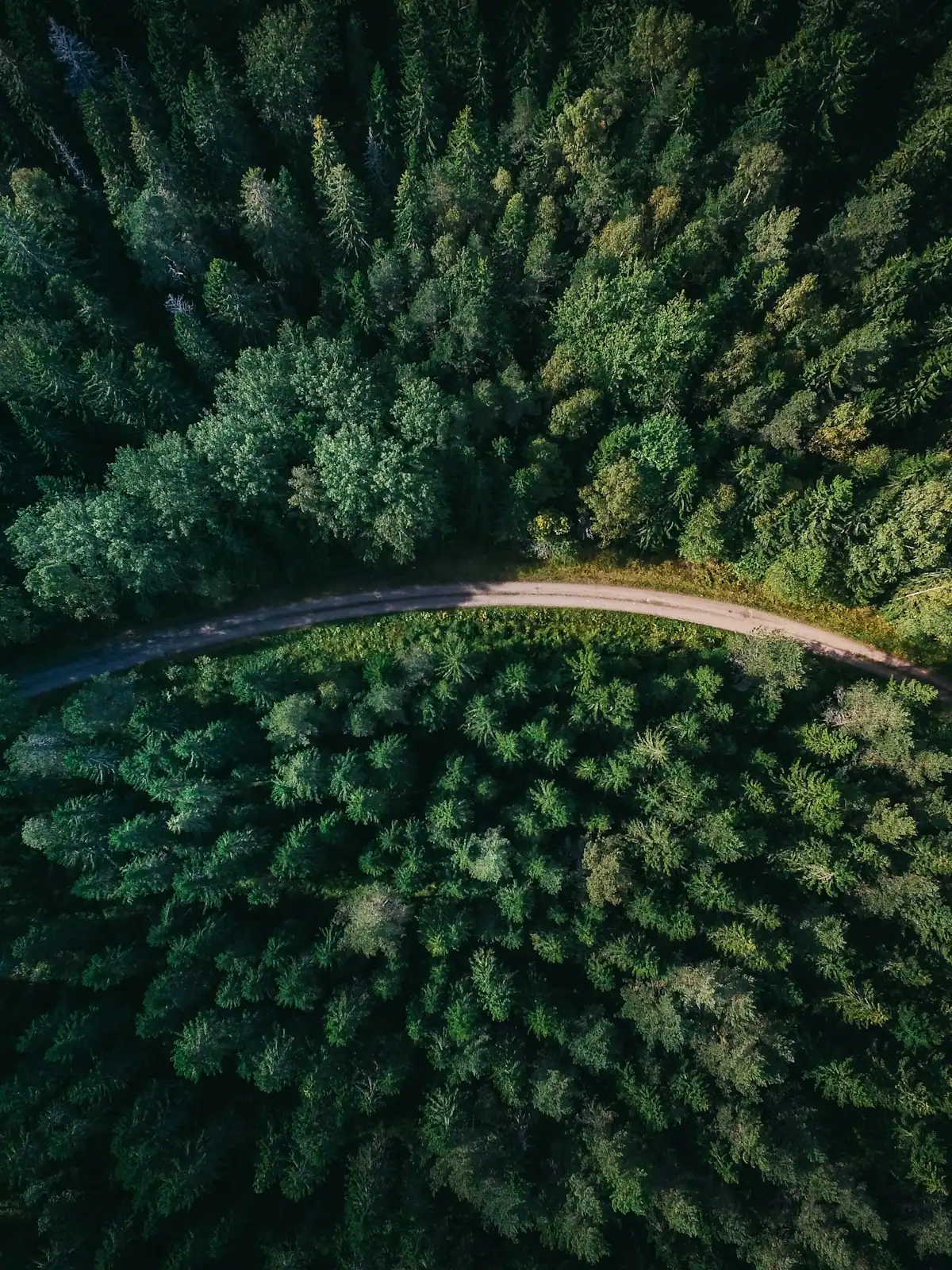
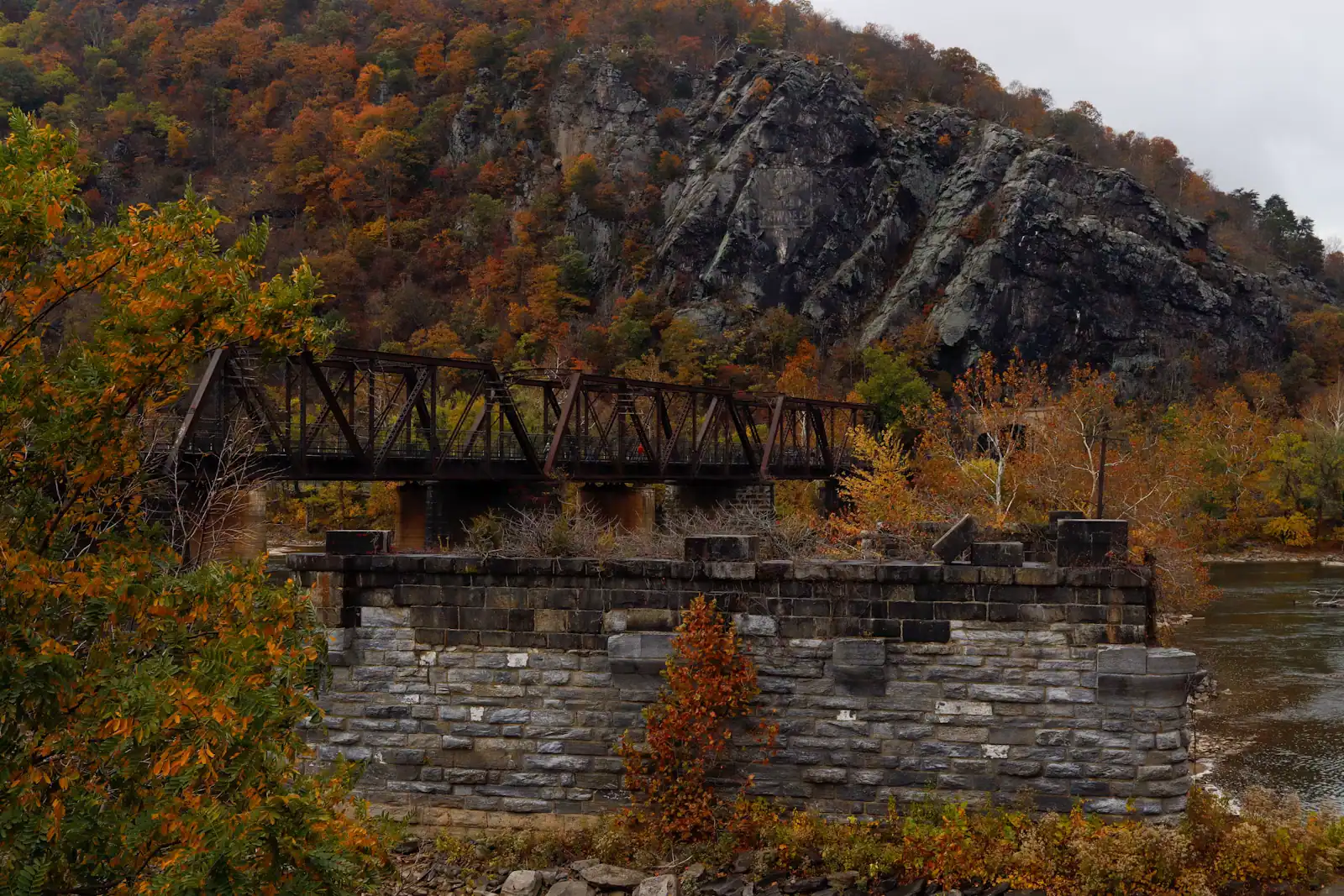
UnsplashThe line leaves the depot, clears the edge of town within a few minutes and then spends almost the whole of the outbound run beside the Toccoa. That is the ride. There is no summit, no tunnel and no dramatic trestle: it is thirteen miles of a mountain river at close range, with the water sometimes directly below the car and sometimes a field away behind trees.
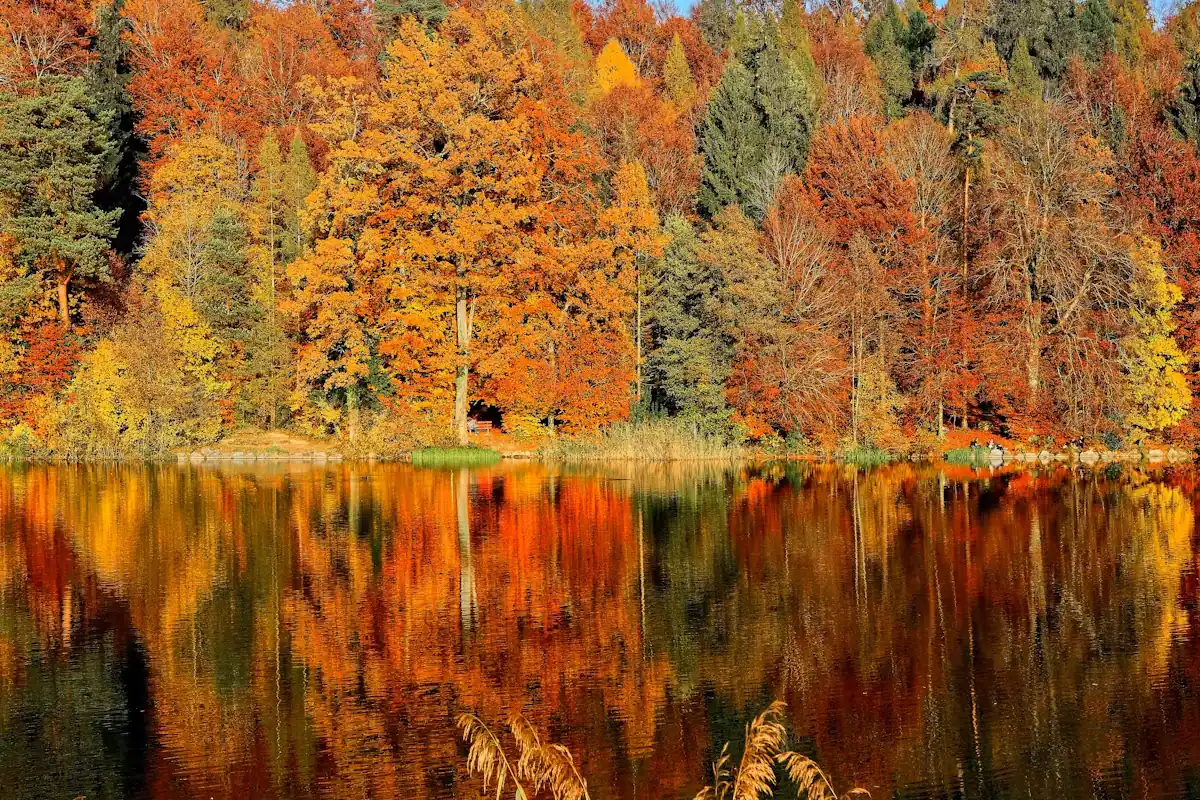
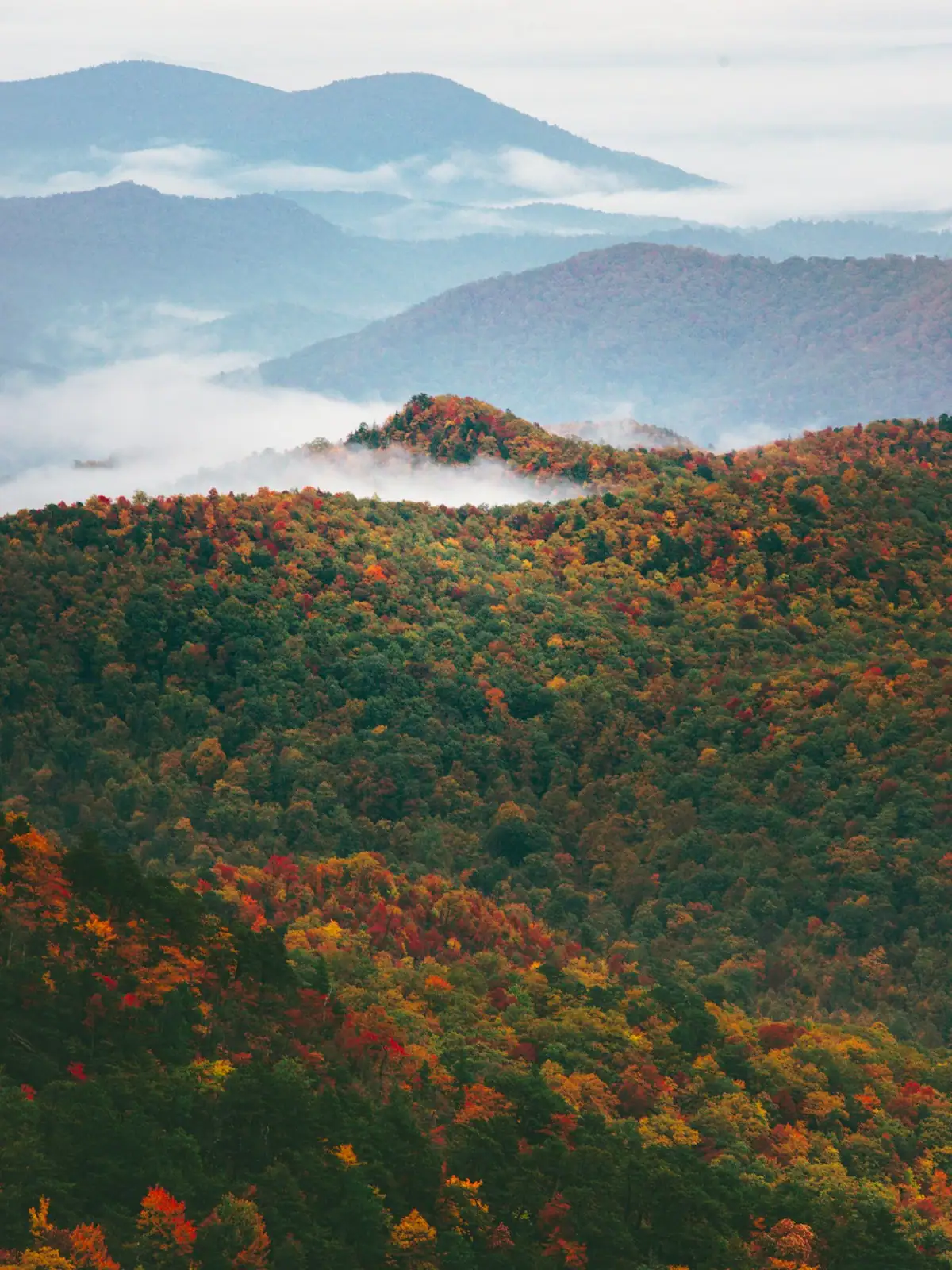
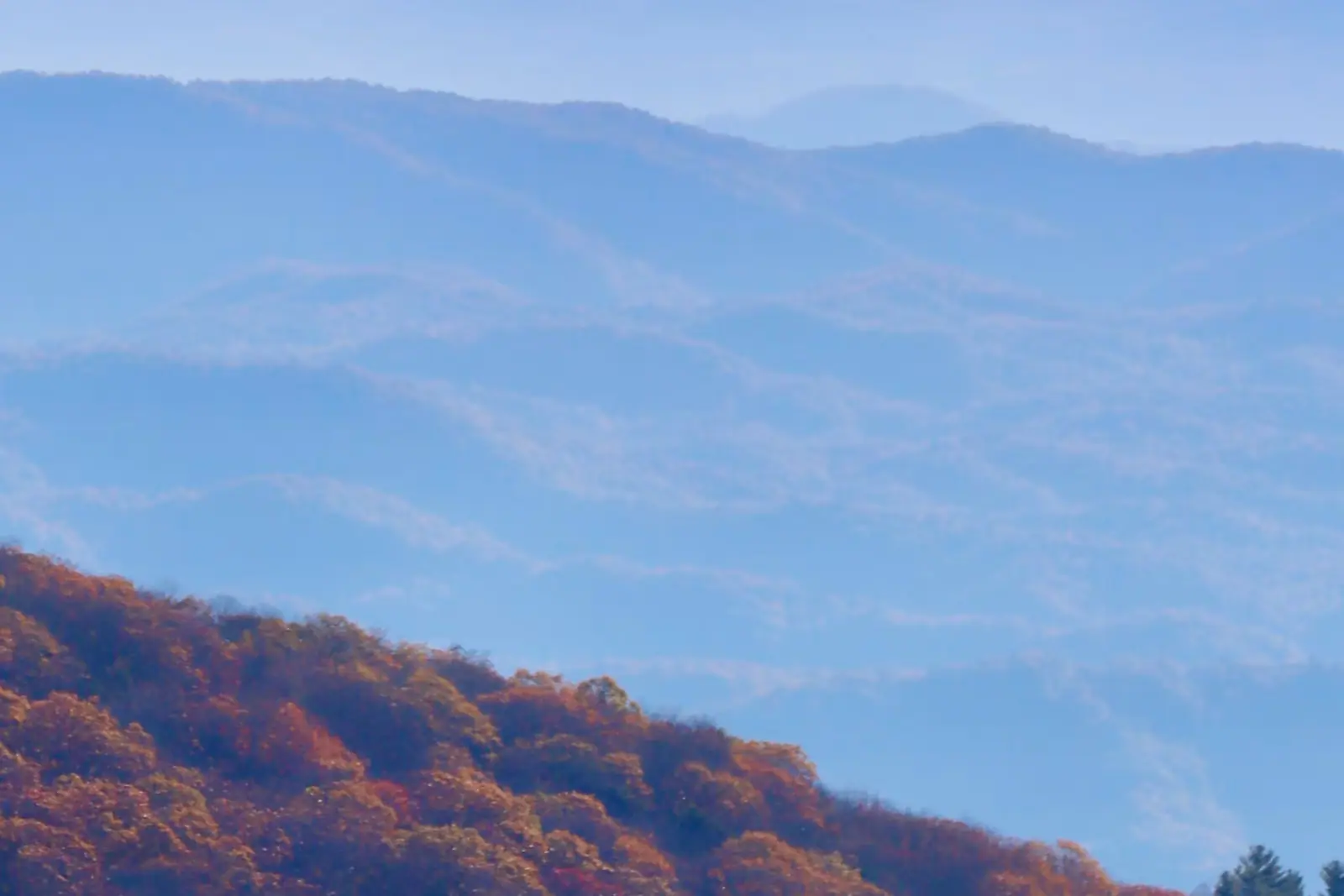
What changes is the season, and it changes the trip more than most people expect. In April the river is high and loud and the hardwoods are still bare enough to see through, so you get the shape of the valley. By July the leaf canopy has closed and the view narrows to green walls and glimpses of water, with tubers and fly fishermen in it. From the last week of September the same thirteen miles turn over into orange and red at a rate that varies year to year, and the train becomes very hard to get a seat on.
You will also pass the backs of things: river cabins on stilts, a swinging footbridge or two, jon boats pulled up on gravel bars, and long stretches of nothing but water and rhododendron. It is a slow, low-drama, genuinely pretty ride, and the people who come away disappointed are almost always the ones who expected a theme-park attraction rather than an hour beside a river.
The train sets you down at the twin towns and leaves you there for around two hours. McCaysville is the Georgia side, Copperhill is the Tennessee side, and they are one small place with a river and a border through the middle.
The border is the attraction. A line painted on the pavement in McCaysville marks where Georgia stops, there is usually a queue of people taking turns to straddle it, and everybody does it. Two things about that line are worth knowing. It is a tourist marker rather than a surveyor's monument, so do not expect legal precision. And crossing it does not change your watch: East Tennessee runs on Eastern time, the same as Georgia. What does change is the phone system. Georgia numbers here are 706 and Tennessee numbers are 423, which is the only part of the border most locals think about.
Two hours is enough for lunch and a wander and not much more. The towns are small, some of the trade is seasonal, and in the quieter months a proportion of the shopfronts will be shut on the day you arrive. Come with the layover framed as a pleasant small-town stop with a novelty line in it, and it delivers. Come expecting a destination in its own right and it will not.
If anyone in your group struggles with heat, note that shade on the platform and along the main street is limited, and a July layover in the middle of the day is a long time to stand in the sun.
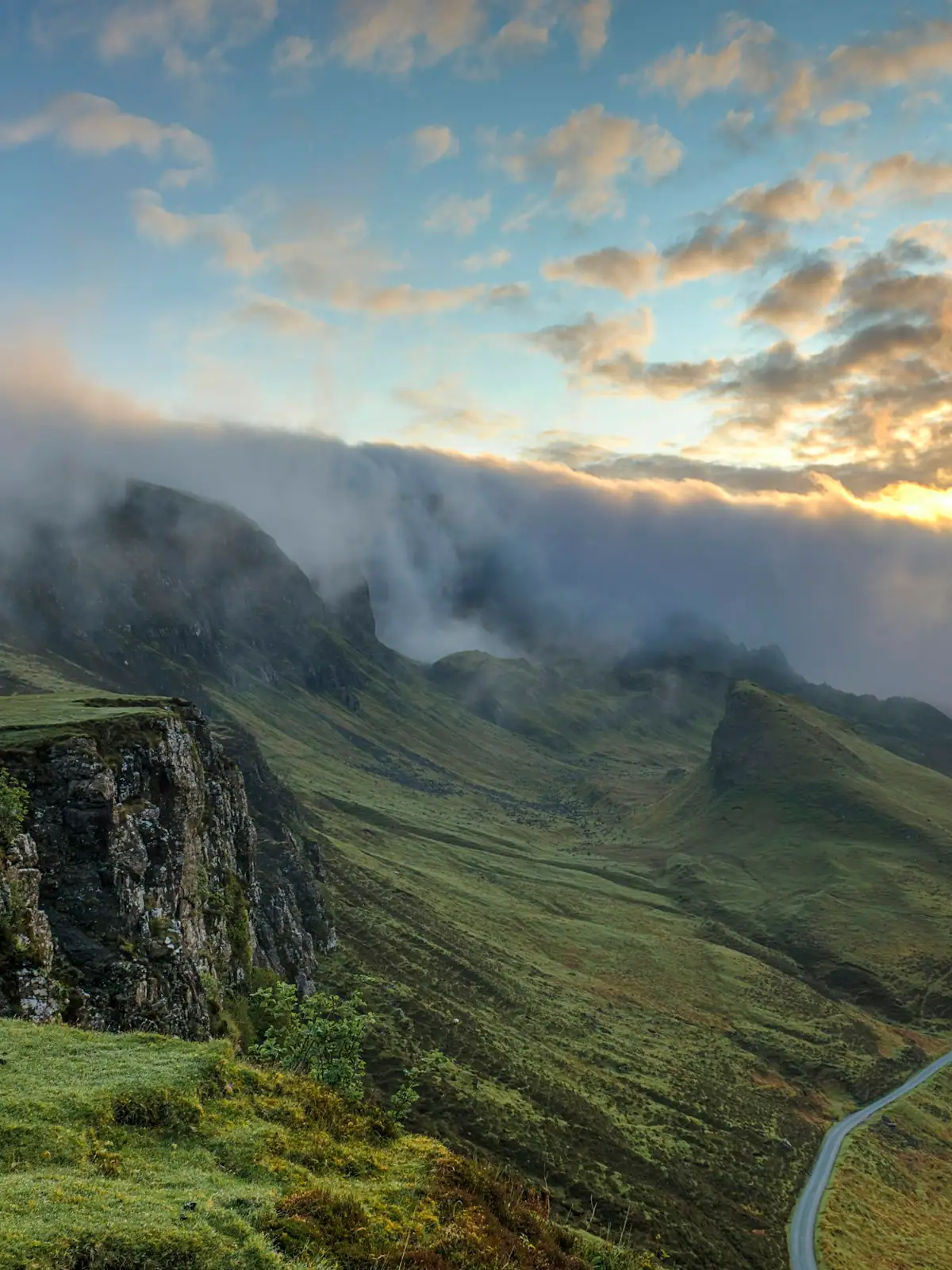
Stand in Copperhill and look at the slopes around you, and there is something slightly off about them compared with the Georgia side you have just ridden through. Younger trees. More uniform. Less of that layered Appalachian mess of ages and species.
That is not an accident of geology. Copper ore was found in this basin in 1843 and commercial mining began in 1847, and for well over a century this was one of the great copper districts in the eastern United States. During the Civil War the basin supplied the overwhelming majority of the Confederacy's copper. The mining itself was not the problem: the smelting was. Roasting the ore in open heaps released sulphur dioxide, the acid killed the vegetation, and the forests that survived that were cut down to fuel the furnaces. Something like 32,000 acres of a roughly 60,000-acre basin ended up bare red ground, gullied and treeless, and it was routinely described as looking like a desert dropped into the Appalachians.
Replanting began in 1939 with the TVA and the mining companies working together, a Civilian Conservation Corps camp arrived in 1941 to lime the acid soil, and the effort ran for decades. The last mine closed in 1987. What you are looking at from the train platform is a landscape that was destroyed and then deliberately rebuilt, which is a considerably more interesting thing to explain to a child than a painted line.
Local tips
In October the train sells out. That is not a reason to cancel the day, because the destination is a twenty-minute drive from the depot.
Driving north out of Blue Ridge puts you in McCaysville without a ticket, and the painted line, the river and the two-state photograph are all exactly where the train would have left you. You lose the ride, which is the best part, and you gain the ability to arrive at nine in the morning and leave when you like. For a family with a toddler who will not sit still for two hours, that trade is often the better one anyway.
The other substitution worth knowing about is the river itself. The train shows you thirteen miles of the Toccoa from a seat. You can get considerably closer to the same water for nothing at the public access points along it, or spend an afternoon floating a stretch of it in summer, and a lot of people who ride the train once end up preferring the river at ground level.
One thing that does not substitute: there is no way to ride one leg and drive the other. Tickets are sold as a round trip from Blue Ridge, and the layover is not a drop-off.
How they compare
The railway sells several ways to make the same journey. Names and inclusions are revised from season to season, so check the current descriptions before you choose, but the shape of the decision has been stable.
| Option | What you get | Best for | The catch |
|---|---|---|---|
| Open-air car | No glass between you and the river, the sound of the water, unrestricted photographs | Anyone here for the scenery, and autumn above all | No shelter. Cold in March, hot in July, and genuinely wet in a shower |
| Enclosed car | Windows, a seat out of the weather, climate control | Summer afternoons, winter departures, small children, anyone heat-sensitive | Glass and reflections between your camera and the Toccoa |
| Premier Class | The railway lists extras such as a canvas bag, a photograph, drinks and snacks | A birthday, an anniversary, grandparents you are treating | Costs more for the same 26 miles of river |
| Two-hour express | The same run without the stop, on selected dates | Very small children, tight schedules, a rainy day | No layover. You do not get off at the state line |
For a first trip with a family, the honest recommendation is an enclosed seat in July, an open-air seat in October, and the four-hour ride either way. The layover is what people remember.
On the ground
Every place below has its own page — hours, parking, what it costs and what to expect when you get there.

Twenty-six miles of river running to a town cut in half by a state line, in an open-sided coach with the windows down.
2–5 hoursTicketed. Fares vary by coach class, trip length and season.
Photograph: Thomson200

One river, two personalities: a lazy summer float above the lake, and a cold tailwater below the dam that fishes all year.
2–7 hoursFree to access. Forest Service recreation areas charge a day-use parking fee, and rentals and shuttles are extra.
Photograph: Thomson200

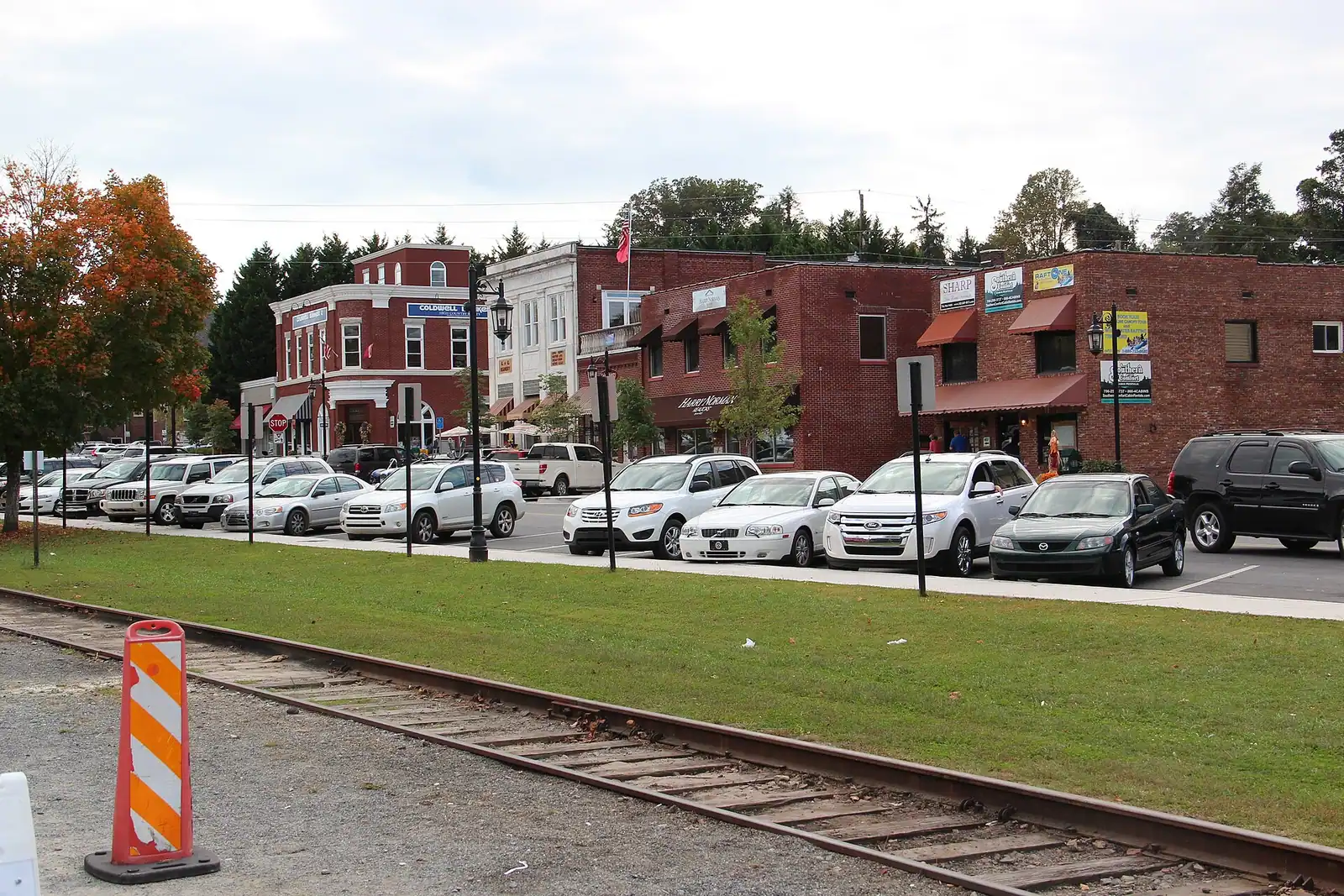
Four blocks of shopfronts facing a working railway depot, small enough to walk twice and busy enough to need a parking plan in October.
1–4 hoursFree. Street parking is free and scarce on peak weekends.
Photograph: Thomson M

A Georgia town of about 1,150 people that shares its high street, its river and its bridge with a different state.
1–3 hoursFree. Walking to the state line and the river costs nothing.
Photograph: Unknown authorUnknown author or not provided

The oldest working thing in Blue Ridge: a Register-listed railway building still selling tickets to a train that still runs.
15–45 minutesFree to visit the building, platform side and yard. Train tickets are separate.
Photograph: Unknown author

The Tennessee half of the twin towns, and the edge of a copper basin that was stripped to bare red clay and then replanted.
1–2 hoursFree. Walking the town, the bridge and the river bank costs nothing.
Photograph: Thomson20192
Straight answers
The main trip is advertised as about four hours in total for a 26-mile round journey, and roughly two of those hours are the layover on the ground in McCaysville and Copperhill rather than time on the train. The railway also runs a two-hour express on selected dates, which covers the same route and returns without setting passengers down. Check the current calendar before booking, because both the timings and the operating days are revised each season.
It leaves the depot at 241 Depot Street, follows the Toccoa north for thirteen miles to McCaysville on the Georgia bank and Copperhill on the Tennessee one, and then comes back the same way. Those two towns face each other across the water with the state line running between them, and a painted line on the pavement in McCaysville marks it. The river changes name at that point too: the Toccoa becomes the Ocoee.
Yes, and almost everyone does. A line painted across the pavement in McCaysville marks where Georgia ends and Tennessee begins, and there is usually a short queue of people taking turns to stand astride it. Treat it as a tourist marker rather than a survey monument. Crossing it does not change the time, because East Tennessee is on Eastern time like Georgia, but the phone area code changes from 706 to 423.
October, and it is not close. The Toccoa valley turns over through the second half of the month at these elevations, and an open-air car in leaf season is the best version of this ride. That is also when it sells out first, so book weeks ahead. If you want the same route without the crowds, late April gives you high water and bare enough hardwoods to see the shape of the valley, and midweek summer departures are the quietest of the year.
Open-air for the scenery, enclosed for the weather. The open cars put nothing between you and the river, which is the whole reason to take this train, and they are the right choice in autumn and on mild spring mornings. The enclosed cars make more sense in the heat of July, on cold winter departures and with very young children. There is no shelter in an open car if a shower arrives, so pack a layer either way.
It can be, with the right ticket. Four hours is a long commitment for a two-year-old, but only about half of it is sitting still, and the layover breaks the trip in the middle. The steps up into the cars are real steps, so a carrier works better than a pushchair. If your child will not tolerate a long sit, take the two-hour express, or skip the train and drive the twenty minutes to McCaysville instead.
For any departure between the third week of September and the first week of November, book as early as you reasonably can and treat the ticket as the fixed point your weekend is built around. Autumn is the peak of the year here by a wide margin. Outside that window there is usually more availability, but weekend departures in summer still fill, and the railway's operating days thin out considerably in midwinter.
Lunch, the painted state line, a walk along the river and a look at the shops on both sides of the border. That fills two hours comfortably and does not fill four. The twin towns are small, some trade is seasonal, and in the quieter months you should expect a proportion of shopfronts to be closed. If it is hot, plan around the limited shade on the main street rather than assuming you can wait indoors.