Copperhill
The Tennessee half of the twin towns, and the edge of a copper basin that was stripped to bare red clay and then replanted.
1–2 hoursFree. Walking the town, the bridge and the river bank costs nothing.0.2 mi away
Photograph: Thomson20192
Neighbourhood
Last updated
A Georgia town of about 1,150 people that shares its high street, its river and its bridge with a different state.
Photo: Unknown authorUnknown author or not providedPublic domain
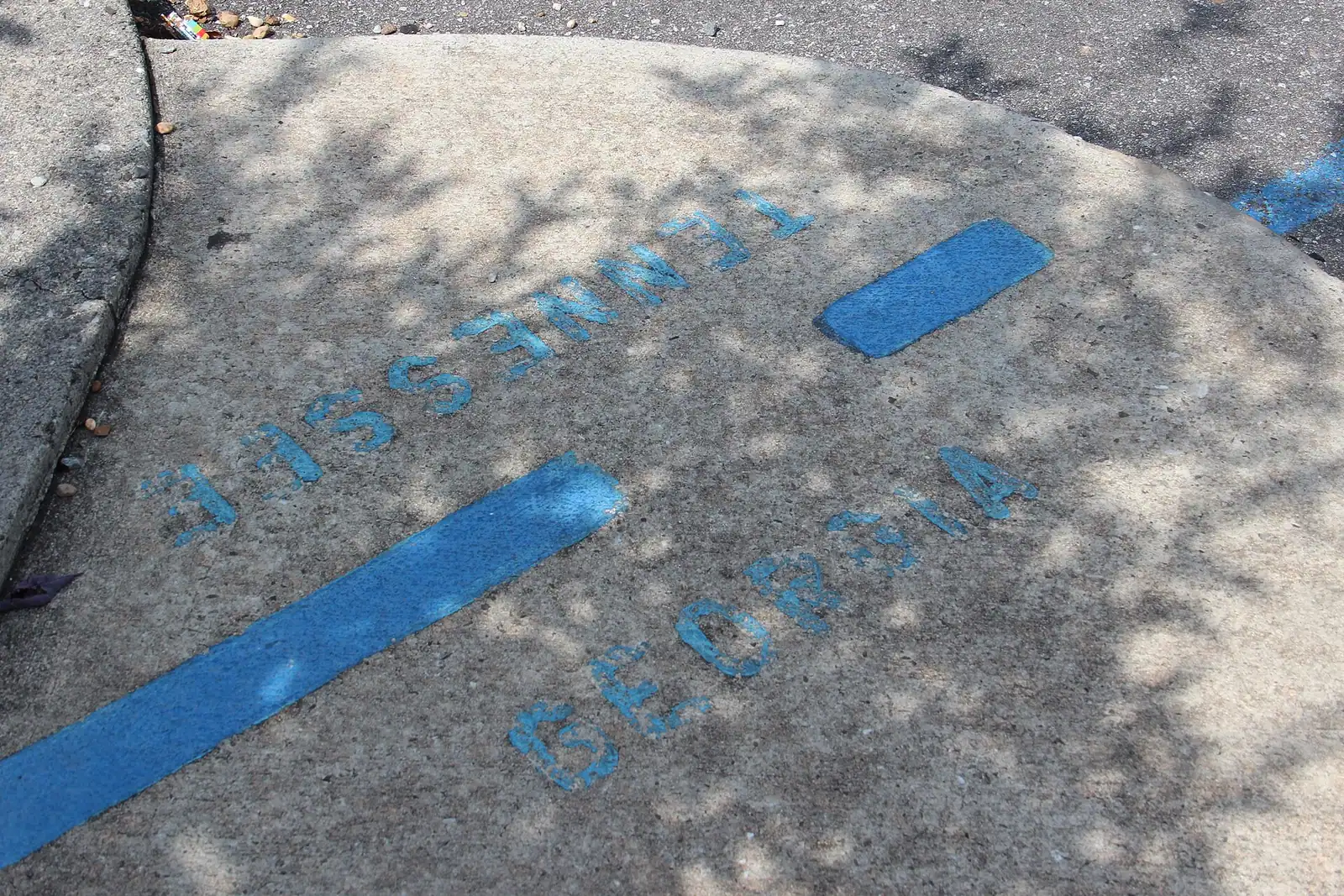
McCaysville is the Georgia half of a downtown that sits in two states. The boundary does not follow the river and it does not follow the street grid; it runs diagonally across both, so the change from Georgia to Tennessee happens mid-block, mid-pavement, in the middle of an ordinary small-town high street. Somebody painted a line on the ground to mark it, and the result is the most photographed few square feet in Fannin County.
That is the reason most visitors come, and it is a better attraction than it sounds, because the split is not decorative. Dial a number on the Georgia side and you are calling 706. Cross the line and it is 423. The alcohol rules have differed, the school districts differ, the police forces differ. Standing on the line with a foot in each state is a gimmick. Understanding that the shop on one corner and the shop opposite operate under different state law is the actual curiosity.
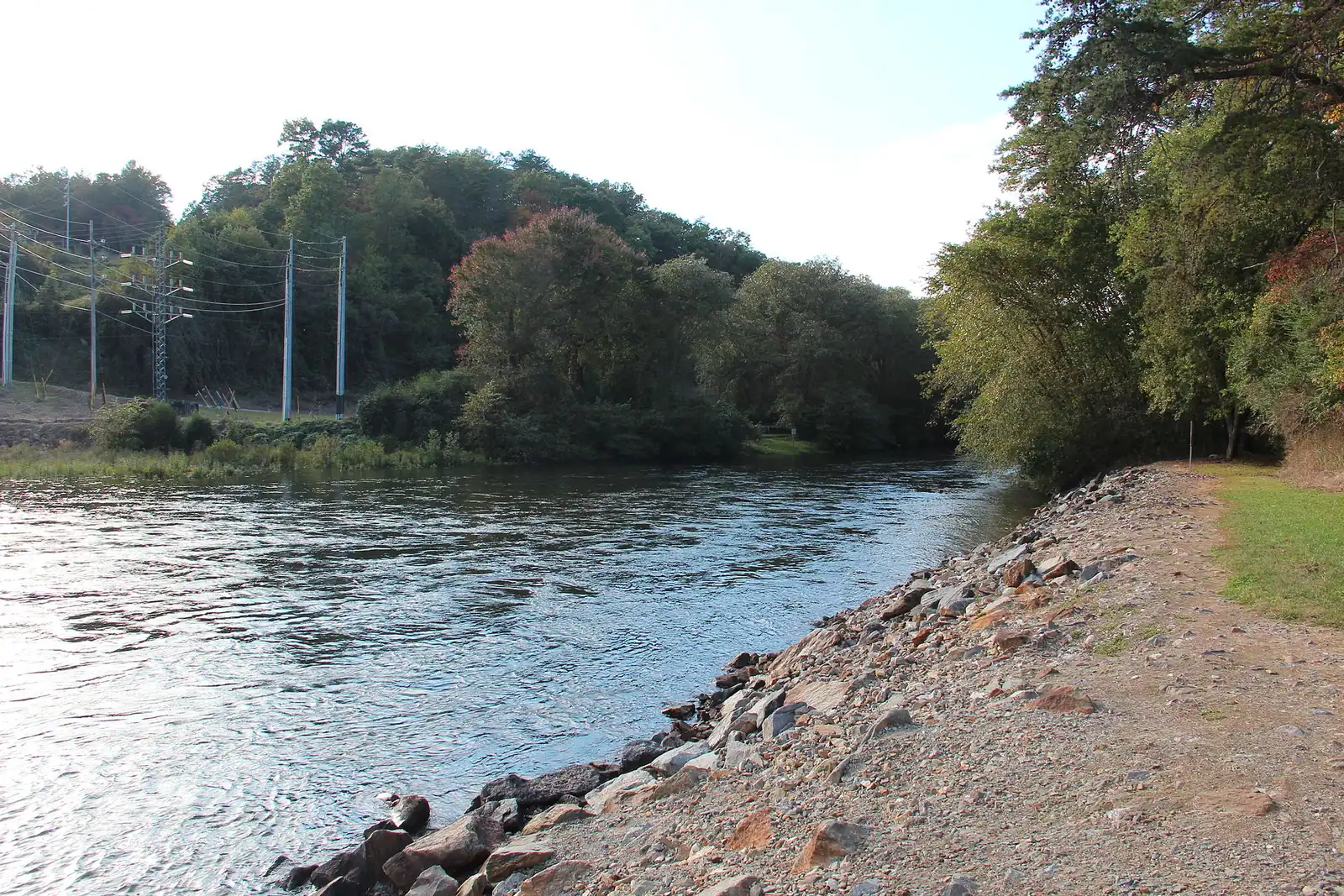
The other half of the town's identity is the river. The Toccoa comes down from Lake Blue Ridge, runs through the middle of McCaysville past a low dam, and changes its name at the state line: it is the Ocoee from the moment it crosses into Tennessee. Same water, two names, one bridge. Downstream in Tennessee it becomes one of the most heavily used whitewater rivers in the country. Here it is a gentle, clear mountain river that people tube in summer.
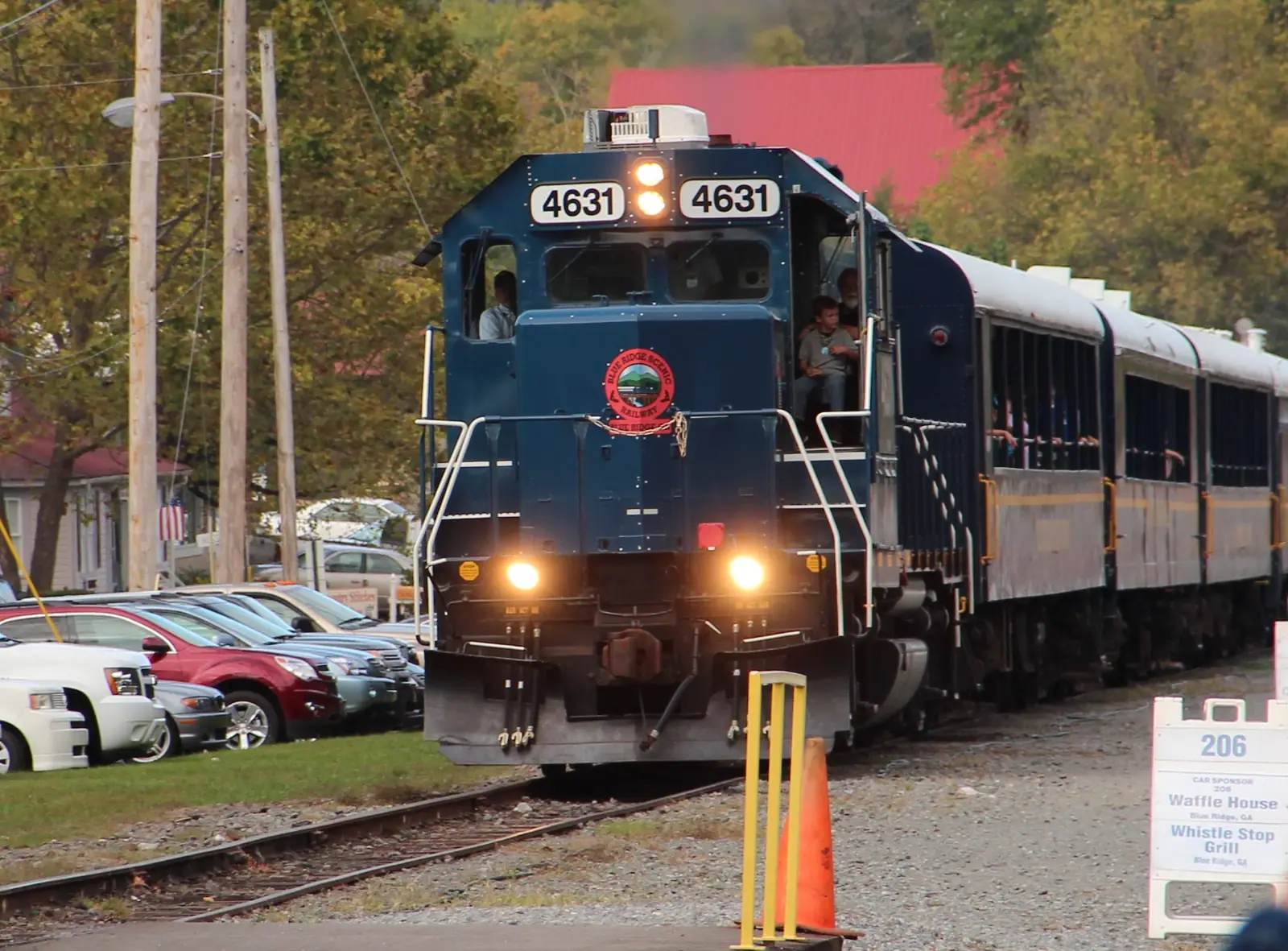
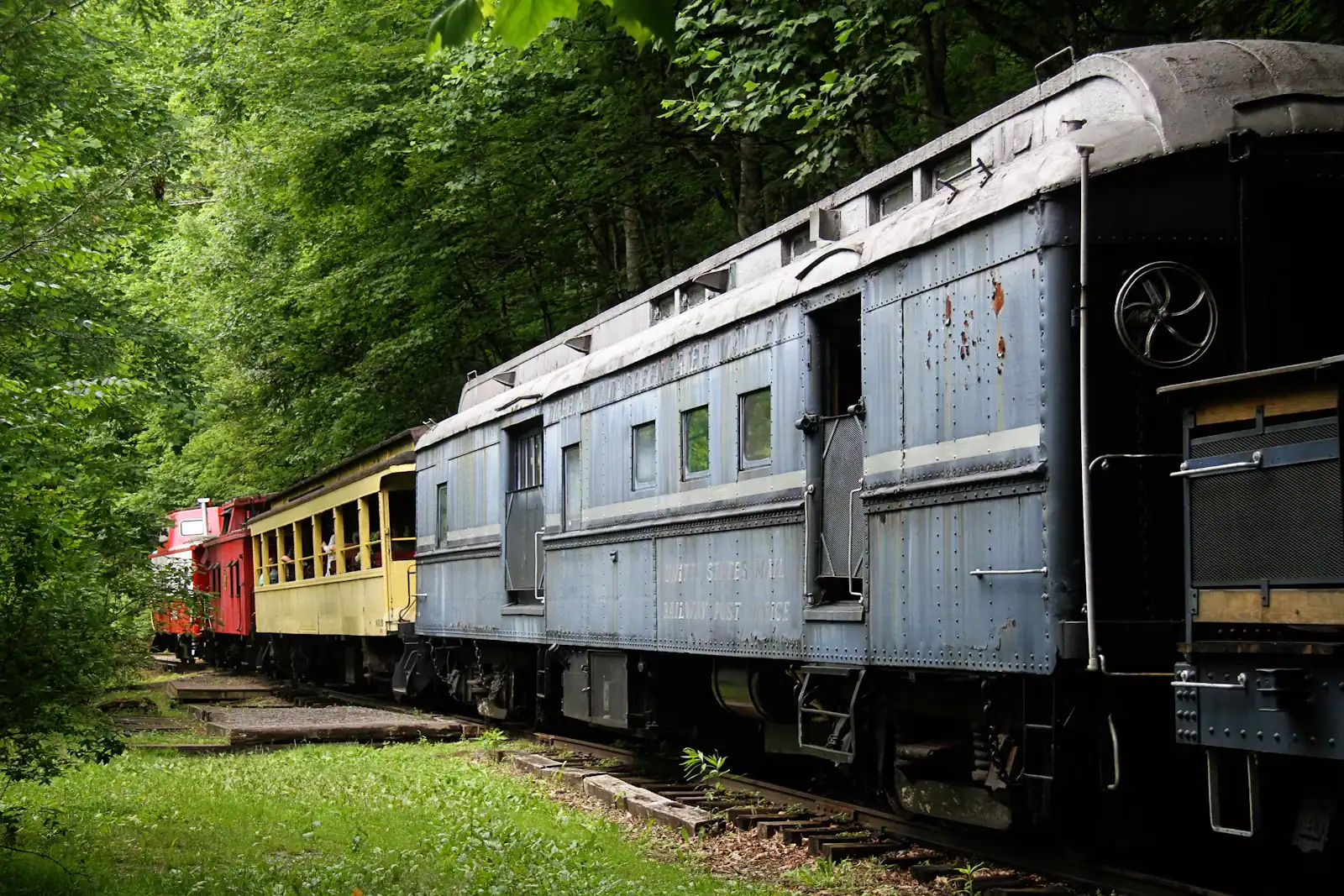
Most visitors arrive by train. The Blue Ridge Scenic Railway runs 26 miles round trip from Blue Ridge and lays over here for about two hours on the extended trip, which is long enough to do the town properly and short enough to feel it.
McCaysville had 1,149 residents at the 2020 census, at an elevation of about 1,460 feet.
By train: the Blue Ridge Scenic Railway runs north along the Toccoa and terminates here, 26 miles round trip from the depot in Blue Ridge, with a layover of about two hours on the extended service. That is how the large majority of visitors arrive.
By car: GA-5 north from Blue Ridge, roughly 25 minutes, passing Mercier Orchards on the way. From Chattanooga it is about an hour and a half via the Ocoee corridor. From Blairsville, take the Murphy road west and drop down.
Parking in the shared downtown is on-street and free, and it is easy on a weekday and difficult in the half hour after a train arrives. Coming by car, aim for mid-morning or late afternoon and you will park outside whatever you want.
Both towns keep Eastern time despite the state line, so there is no clock change to worry about.
The painted boundary marker is the thing everyone queues for, and the queue is real on a train day.
Some practical notes that will save you ten minutes.
The line is on the pavement in the shared downtown, a short walk from the depot area. It is not signposted from a distance in the way people expect; ask anyone or follow the group with the camera.
The best photograph is not the one everybody takes. The standard shot is feet-only, from above, one shoe in each state. It is fine. The better frame is from a low angle along the line itself, with the buildings of both towns receding either side, because that shows the actual oddity: one street, two states.
If a train has just come in, wait fifteen minutes. The whole coach arrives at once and then disperses. The gap between the rush and the departure is the quiet window.
The paint is repainted periodically and its condition varies. It is a painted line on a public pavement in a mountain town, not a monument, and treating it as one is how people arrive disappointed.
Everything around it is ordinary small-town retail, which is part of the charm and also the honest warning.
The extended railway trip gives you roughly two hours here before the return. That is more than enough and less than you would want on a good day, so it pays to have a plan before you step down.
A workable order: line first, while the rest of the coach is still deciding; then the river and the bridge; then food; then shops if there is time. Doing it in the reverse order means queueing for everything.
Eat early. A single train unloading several hundred people into a town of eleven hundred residents overwhelms the kitchens at exactly the same moment every day. The places closest to the depot go first. Walking three minutes further is the single most effective thing you can do.
Keep an eye on the clock rather than on the conductor. The train leaves when it leaves and the walk back always takes longer than you think, particularly with ice cream and children.
If you are driving rather than riding, come at a different hour entirely. Mid-morning or late afternoon on a weekday, McCaysville is a quiet river town where you can park outside anything you want.
The river is the reason the town exists and it is the best twenty minutes here.
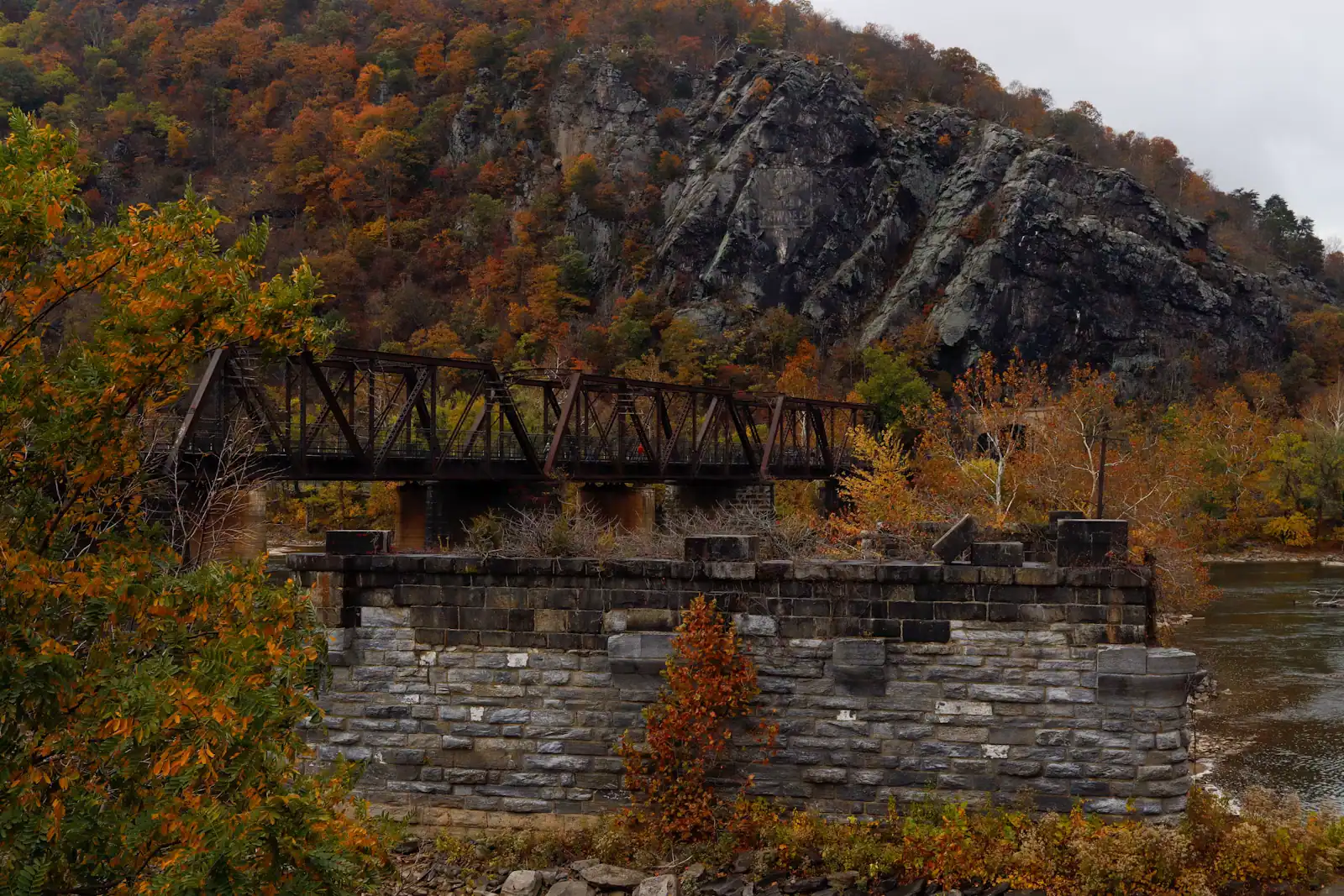
The Toccoa arrives from the south, released from Blue Ridge Dam upstream, and runs through the middle of the twin towns over a low dam that makes a pleasant noise and a good photograph. There is public access to the bank in places and a bridge from which you can see both states and, in effect, both rivers.
The name change is genuine and not a tourist story. The watercourse is the Toccoa for 56 miles across Georgia and becomes the Ocoee at the Tennessee state line. Names for rivers in these mountains were given separately on either side of a boundary that mattered, and nobody ever reconciled them.
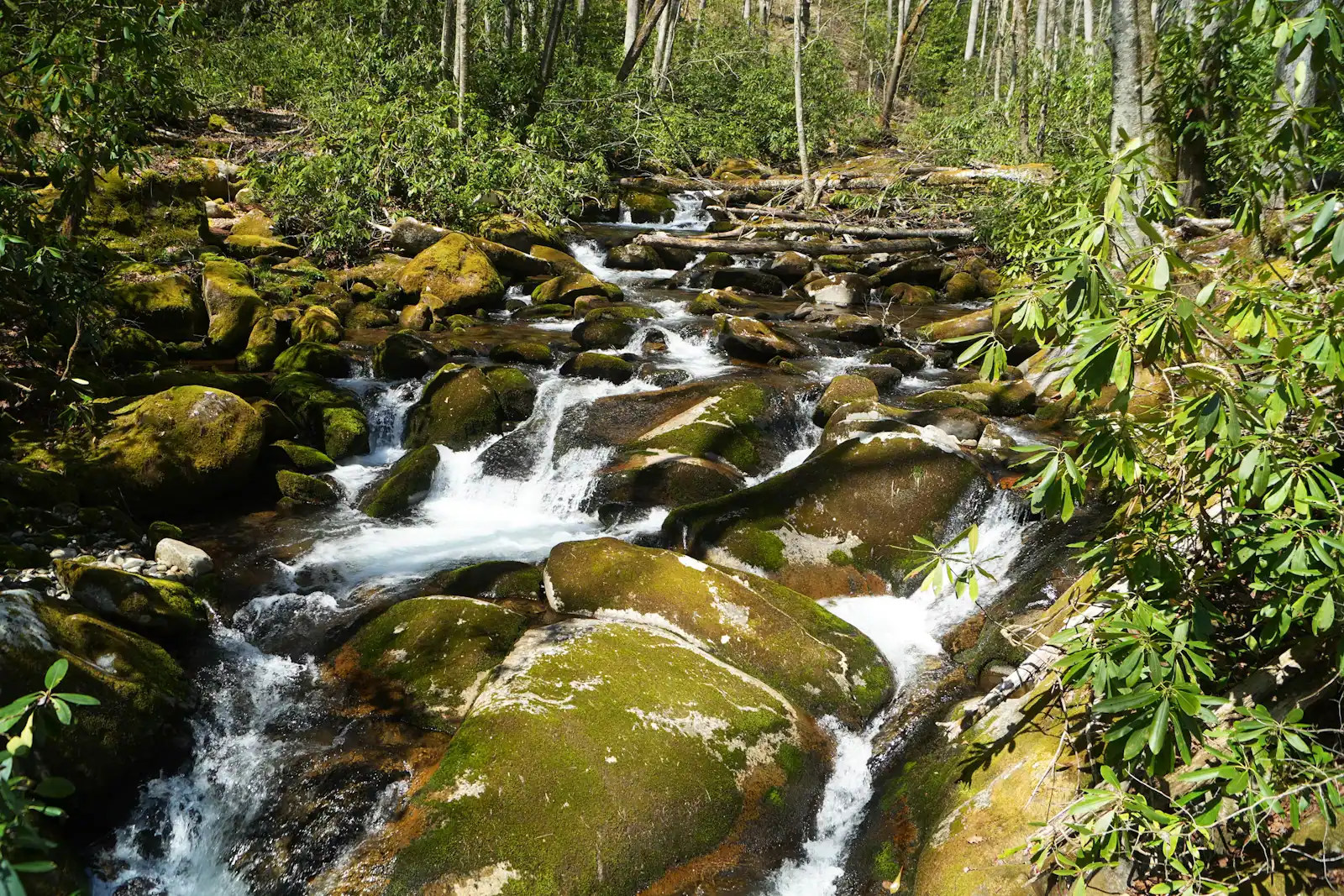
The consequence is more than nomenclature. Downstream in Tennessee, the Ocoee carries dam-released whitewater and hosted the 1996 Olympic canoe and kayak events, which makes it one of the most paddled rivers in the United States. Upstream in Georgia, the Toccoa is a cold, clear, gentle river that people float on inflatable rings in July and fish for trout in April.
One river. Two names. Two entirely different reputations, a hundred yards apart.
Living and shopping across a state line produces a set of small strangenesses that are worth knowing about as a visitor.
Phone numbers change across the street. Georgia numbers here carry the 706 area code and Tennessee numbers 423, so a business on one corner and one opposite are a long-distance call apart in the old sense.
State sales tax differs, alcohol rules have differed, and the two towns have separate police departments, separate fire arrangements and separate municipal governments for what a visitor experiences as a single high street.
Emergency services co-operate, which they have to. A road accident on the bridge involves both.
For a visitor the practical points are smaller. Your phone may switch time zone display in odd ways near the line, although both towns keep Eastern time. Fuel prices can differ either side. And if you are given directions "just over in Tennessee", that may mean a ninety-second walk.
Blue Ridge is about a twenty-five minute drive south on GA-5, past Mercier Orchards, which is the usual route for anyone not on the train.
Straight-line distances, so allow more on the road — the island is long and has one main parkway.

The Tennessee half of the twin towns, and the edge of a copper basin that was stripped to bare red clay and then replanted.
1–2 hoursFree. Walking the town, the bridge and the river bank costs nothing.0.2 mi away
Photograph: Thomson20192

Twenty-six miles of river running to a town cut in half by a state line, in an open-sided coach with the windows down.
2–5 hoursTicketed. Fares vary by coach class, trip length and season.8.7 mi away
Photograph: Thomson200

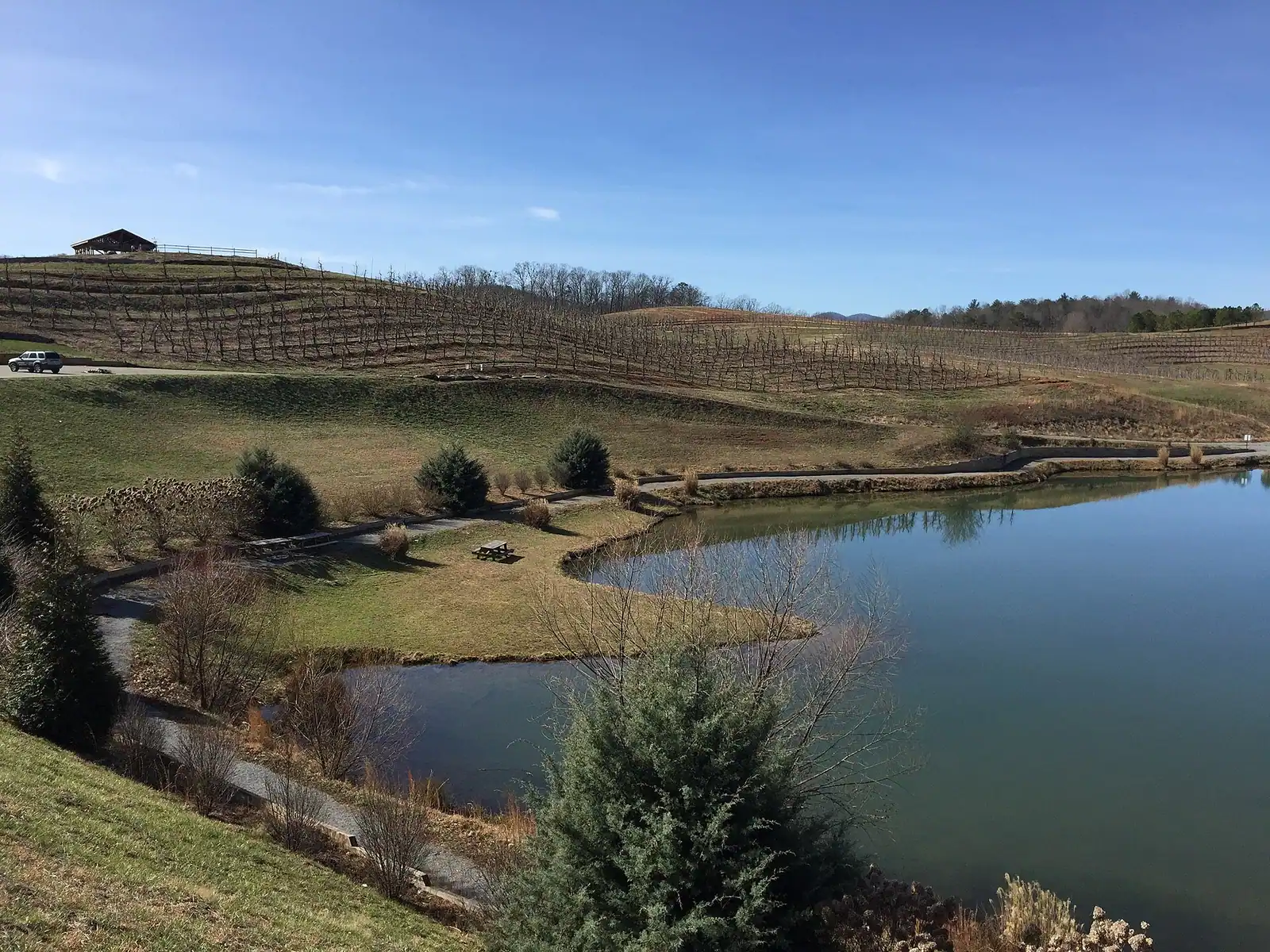
A fourth-generation apple farm with a bakery, a hard cider house and, on an October Saturday, a car park like a county fair.
1–3 hoursFree to visit the market, bakery and cider house. U-pick and tastings are charged.7.1 mi away
Photograph: Thomson200

The same water as the Toccoa, over the state line and released from a dam: class III-IV rafting about an hour from a Blue Ridge cabin.
4–8 hoursThe river corridor is free to visit; commercial rafting is booked and paid per person.7.7 mi away
Photograph: Thomson200
Where this place fits into a day, and the pages that plan one.

Almost nobody comes to Blue Ridge and stays in a hotel. They rent a cabin, usually for two or three nights, usually up a slope somewhere off a…
Photograph: Unsplash

Fannin County does not have many attractions in the sense a city has attractions. It has one excursion railway, one very large apple farm, one…
Photograph: Unsplash

Blue Ridge is here because a railway got here first. The Marietta and North Georgia pushed its line this far up the mountains in 1886, the town was…
Photograph: Unsplash

Once the cabin is paid for, Fannin County is close to free, and that is not a budget-travel writer's spin. It is a consequence of what the place is…
Photograph: Unsplash

Fannin County sits in the top corner of Georgia, which means the most interesting things within an hour of your cabin are frequently not in Georgia…
Photograph: Unsplash

Nearly everything free in Fannin County is free at the point of use and costs you a tank of fuel and forty minutes of gravel. Here is what is worth that trade.
6 min readWyatt Ledford
Photograph: Unsplash

The train is perfect at four and hard work at two. The orchard is a triumph at nine in the morning and a disaster at one. A family guide organised by age rather than by attraction.
6 min readNadine Colquitt
Photograph: Unsplash

Twenty-six miles up the Toccoa and back, with two hours on the Georgia-Tennessee line in the middle. The choices that matter are made at booking, not at the depot.
7 min readDarlene Pickett
Photograph: Unsplash
On the pavement in the shared downtown of McCaysville, Georgia and Copperhill, Tennessee, a short walk from where the excursion train stops. The state boundary runs diagonally across the street grid rather than along the river, so the change happens mid-block, and the painted line marks it. It is repainted periodically and its condition varies; it is a painted line on a public pavement, not a monument.
Because the two states named it separately. The watercourse runs 56 miles across Georgia as the Toccoa and becomes the Ocoee the instant it crosses into Tennessee, and nobody ever reconciled the two names. It also changes character downstream: the Ocoee carries dam-released whitewater and hosted the 1996 Olympic canoe and kayak events, while the Toccoa above the line is a gentle river people tube and fish.
About two hours on the extended Blue Ridge Scenic Railway trip. The shorter express service does not lay over at all. Two hours is enough to see the state line, walk down to the river and the bridge, eat and browse a few shops, provided you do them in roughly that order. Eating first means queueing, because a whole train arrives at the kitchens at the same minute.
No. This is a boundary between two American states, not an international border, and you cross it by walking across a pavement. There is no checkpoint, no document and nothing to declare. What does change is state law: sales tax, alcohol rules, area codes and policing all differ across a line that runs through the middle of a single high street, which is the genuinely interesting part.
Yes, and arguably it is a better visit by car, because you choose the hour. Drive up GA-5 from Blue Ridge in about twenty-five minutes, arrive mid-morning or late afternoon on a weekday, and you will park outside whatever you want and stand on the state line without a queue. The river through town, the low dam and the bridge are the best twenty minutes here regardless of how you arrive.