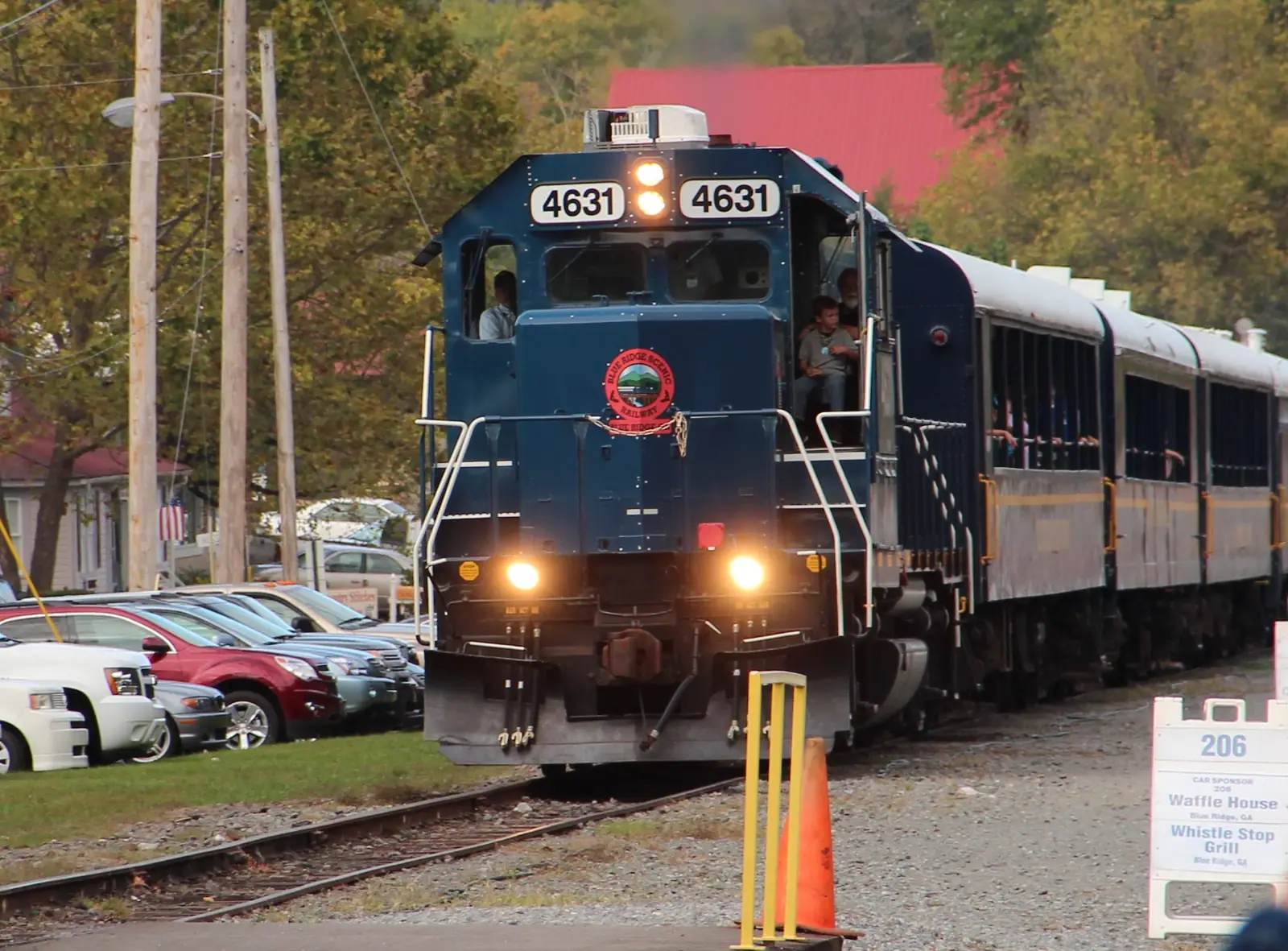
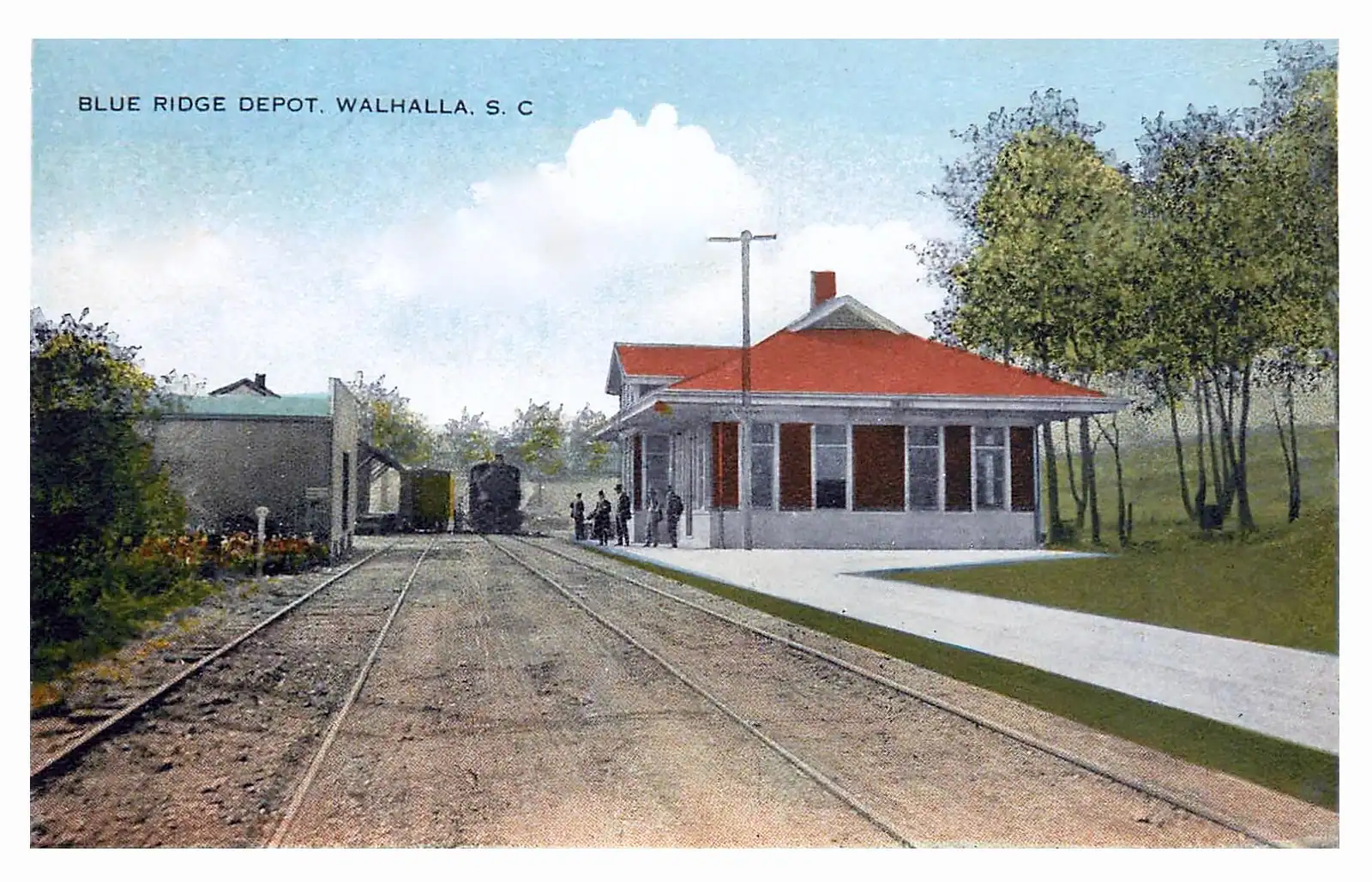
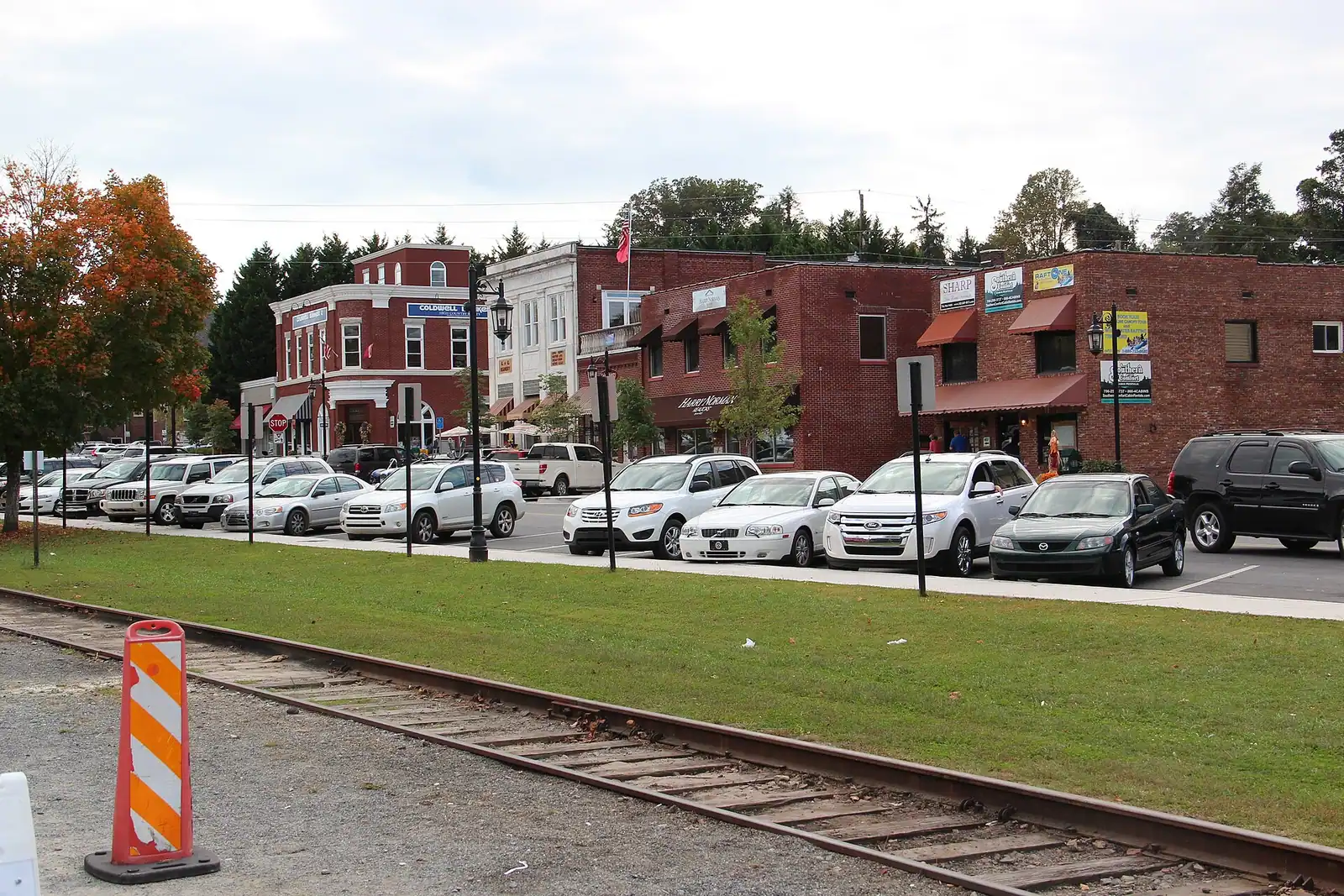
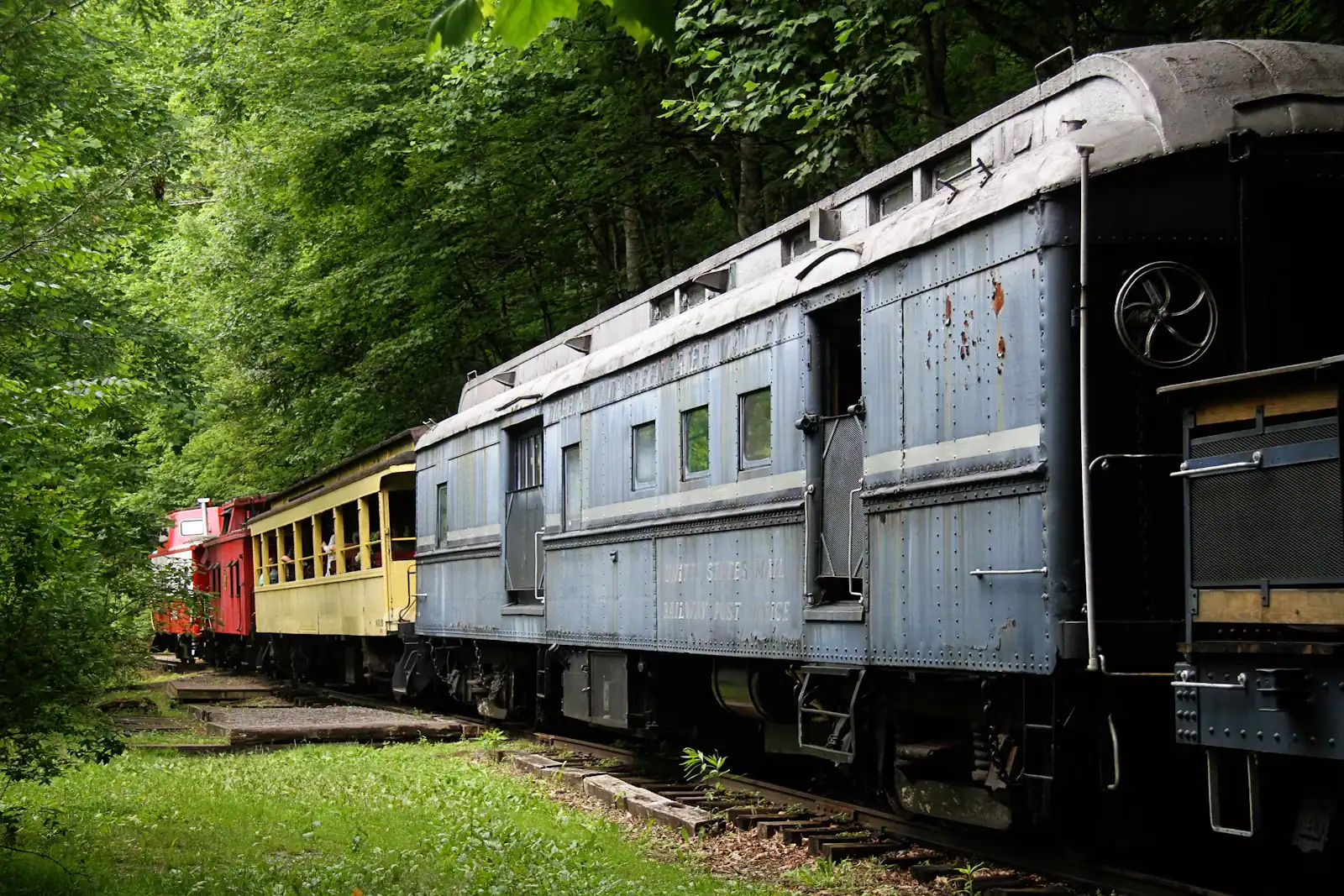
The railway is the reason Blue Ridge has a downtown worth walking. Trains have left this site since the Marietta and North Georgia Railroad arrived in 1886 and laid the town out around its own depot, and excursion trains have run since 1998 under the Georgia Northeastern Railroad, which still hauls freight over the same rails on days the passenger cars are parked. That is an unusual arrangement for a heritage line. It also means the track is maintained as working railroad rather than as a museum piece.
The route runs north out of town and picks up the Toccoa River, then stays with it for most of the way. Twenty-six miles round trip, riding the inside of the valley with the water below you on the left going out and on the right coming back. There is no summit, no tunnel and no spectacular trestle. What there is instead is close, quiet river: shoals, sycamores leaning over the bank, fishermen who wave, and about a dozen private footbridges strung across to cabins that have no road access on the far side.
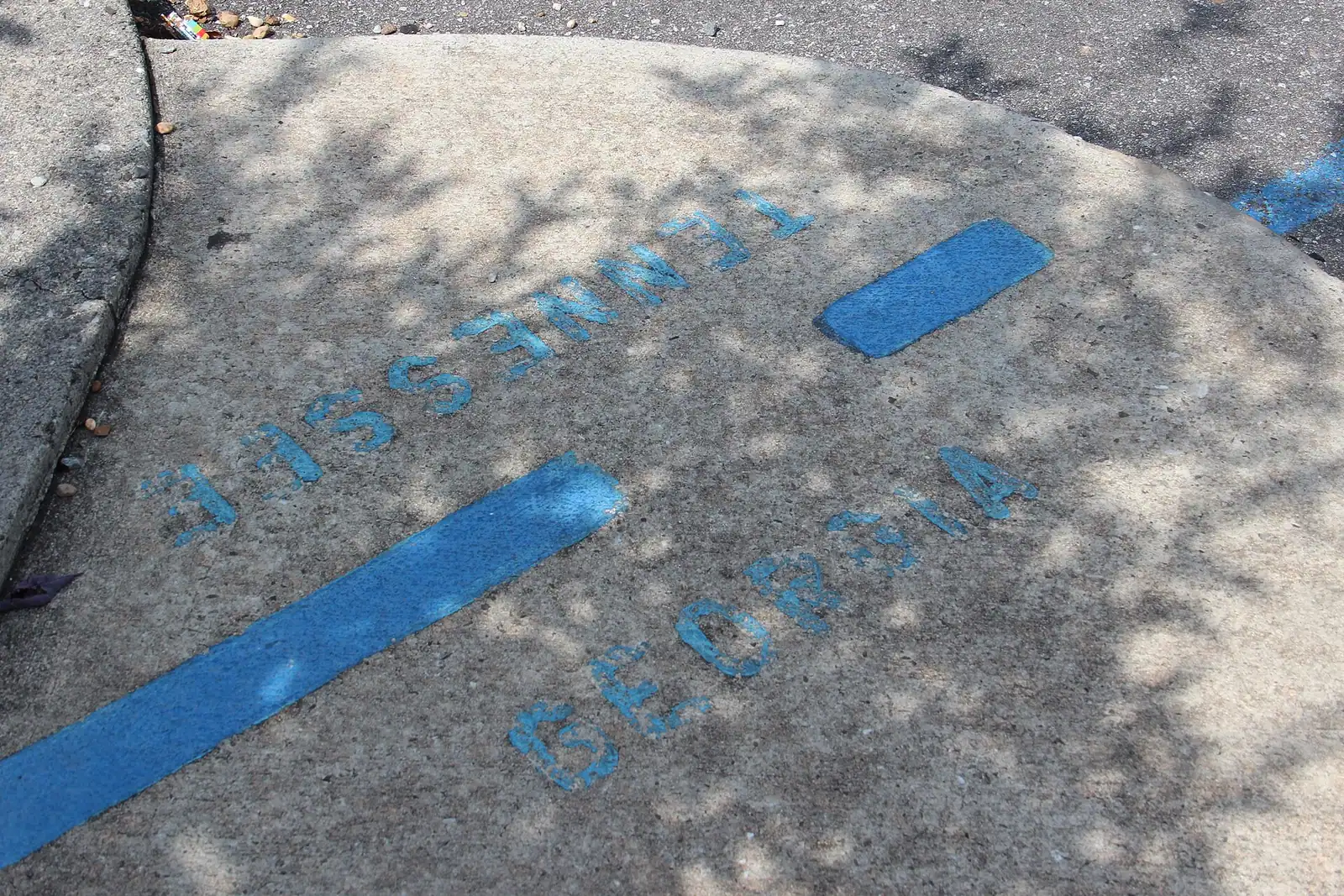
The far end is the part people remember. The line stops at McCaysville, Georgia, which shares a single downtown with Copperhill, Tennessee, and the boundary between the two states is painted on the pavement. People queue to be photographed with a foot in each. On the extended trip you get roughly two hours off the train there, which is enough for the line, an ice cream, a look at the Toccoa going over the low dam, and the odd realisation that the same river is called the Ocoee once it crosses.
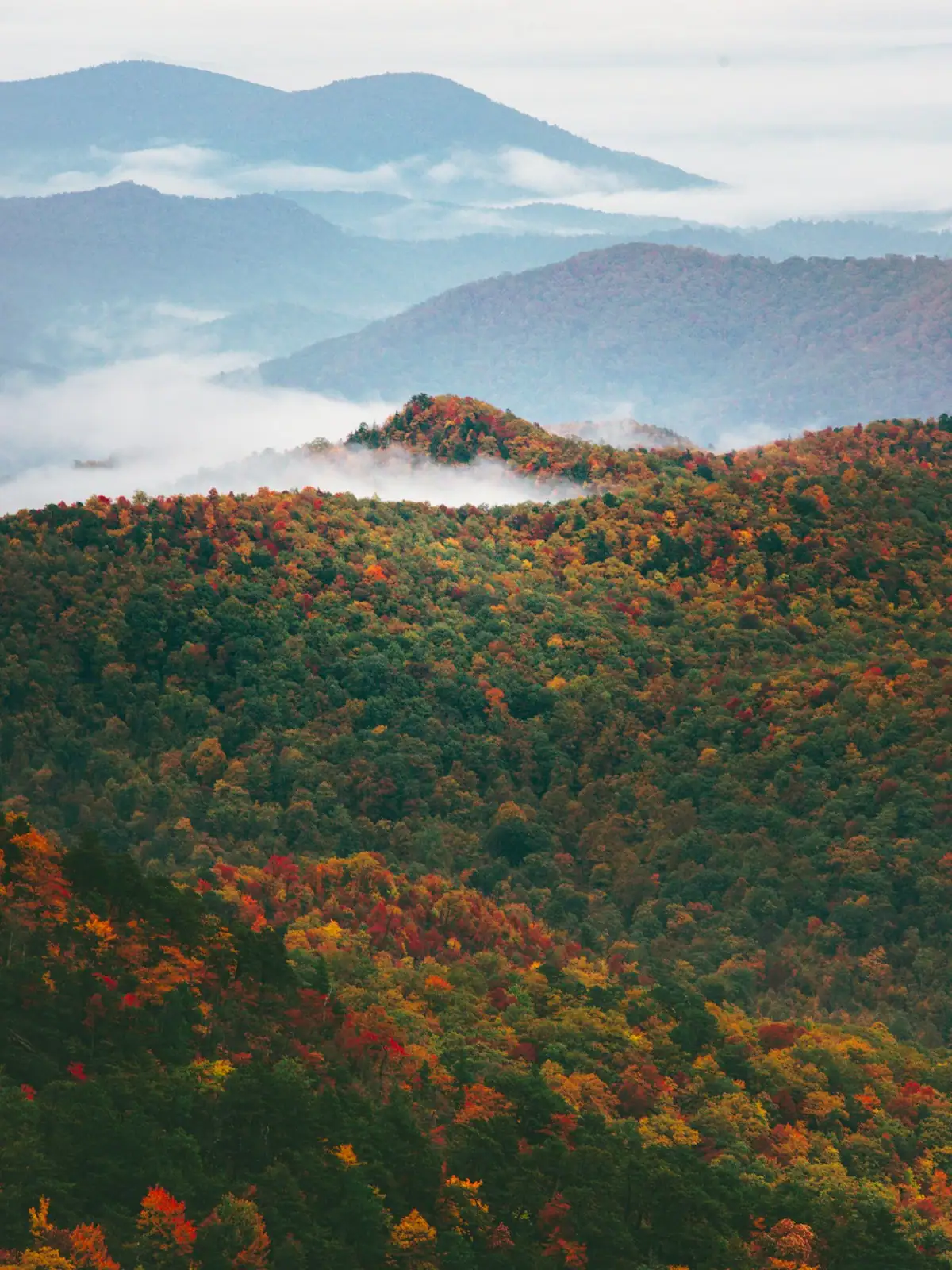
Two things to settle before you book. First, trip length: the express turns straight around, the extended gives you the layover. Second, coach type. The open-air cars have benches facing outward through unglazed windows, which is the better ride in October and a cold one in December. The enclosed coaches are climate controlled with seats in fours. Autumn Saturdays sell out well in advance, and the railway is candid that trains reach capacity.