Skip to content
Search
Menu

These bookings pay us a commission through Viator. Your price does not change, and neither did our picks because of it.

Things to Do

Tubing and Kayaking on the Toccoa

Last updated

Floating the Toccoa near Blue Ridge, Georgia: which stretch, why you need a shuttle, what it costs, and how the gentle river differs from the Ocoee.

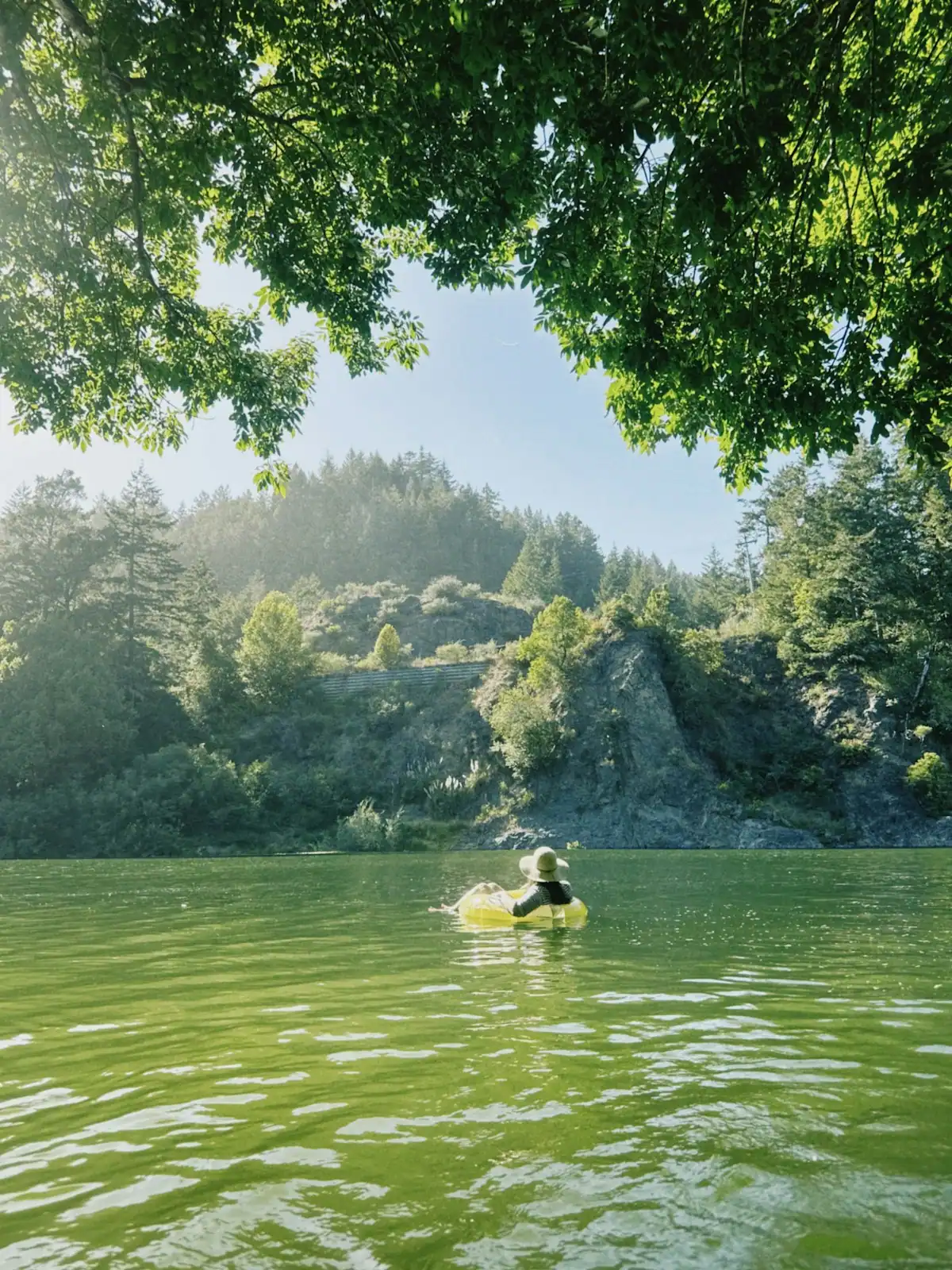
A person drifting on an inflatable ring down a green river walled on both sides by treesUnsplash

There are two rivers in this conversation and they are not interchangeable. The Toccoa above Lake Blue Ridge is a shallow, rocky, mostly Class I mountain river that you float on an inner tube with a drink in your hand. The Ocoee, forty-five minutes or so north-west across the Tennessee line, is Class III and IV whitewater that you raft with a guide, a helmet and a safety briefing. They are the same water. They are not the same day out, and an afternoon that starts with somebody saying the rafting is nearby ends badly if nobody checks which river is meant.

For most people staying in a cabin, the Toccoa is the right answer. A float on the upper river takes an easy couple of hours, works with children, works with a cooler, and finishes with everybody sunburnt and pleased with themselves. The river is knee to waist deep over most of a normal summer run, the current does the work, and the scenery is close-in hardwood forest with the occasional gravel bar to stand up on.

The thing that stops people doing it independently is the shuttle. A point-to-point float needs a vehicle at each end, and a family in one rental car cannot solve that problem. This is the whole business model of the tubing outfitters on this river, and paying one of them fifteen or twenty dollars a head is a far better idea than a complicated plan involving two cars, a bicycle and somebody's patience.

Two calendar facts shape the season. The upper Toccoa needs water, and by late August after a dry summer the shoals get bony enough that a two-hour float turns into three hours with dragging. The Ocoee, by contrast, does not depend on rain at all: it runs on scheduled releases from upstream dams, and the rafting calendar is published in advance, which is why an Ocoee trip can be booked for a specific date in March and a Toccoa float cannot be guaranteed for a specific water level in September.

And one hard line. Whatever you do, do not put a tube in below Blue Ridge Dam. That water comes off the bottom of a deep reservoir, it is cold in August, and its level changes when the turbines run. It is superb trout water and a thoroughly bad float.
Why you cannot do this without a shuttle

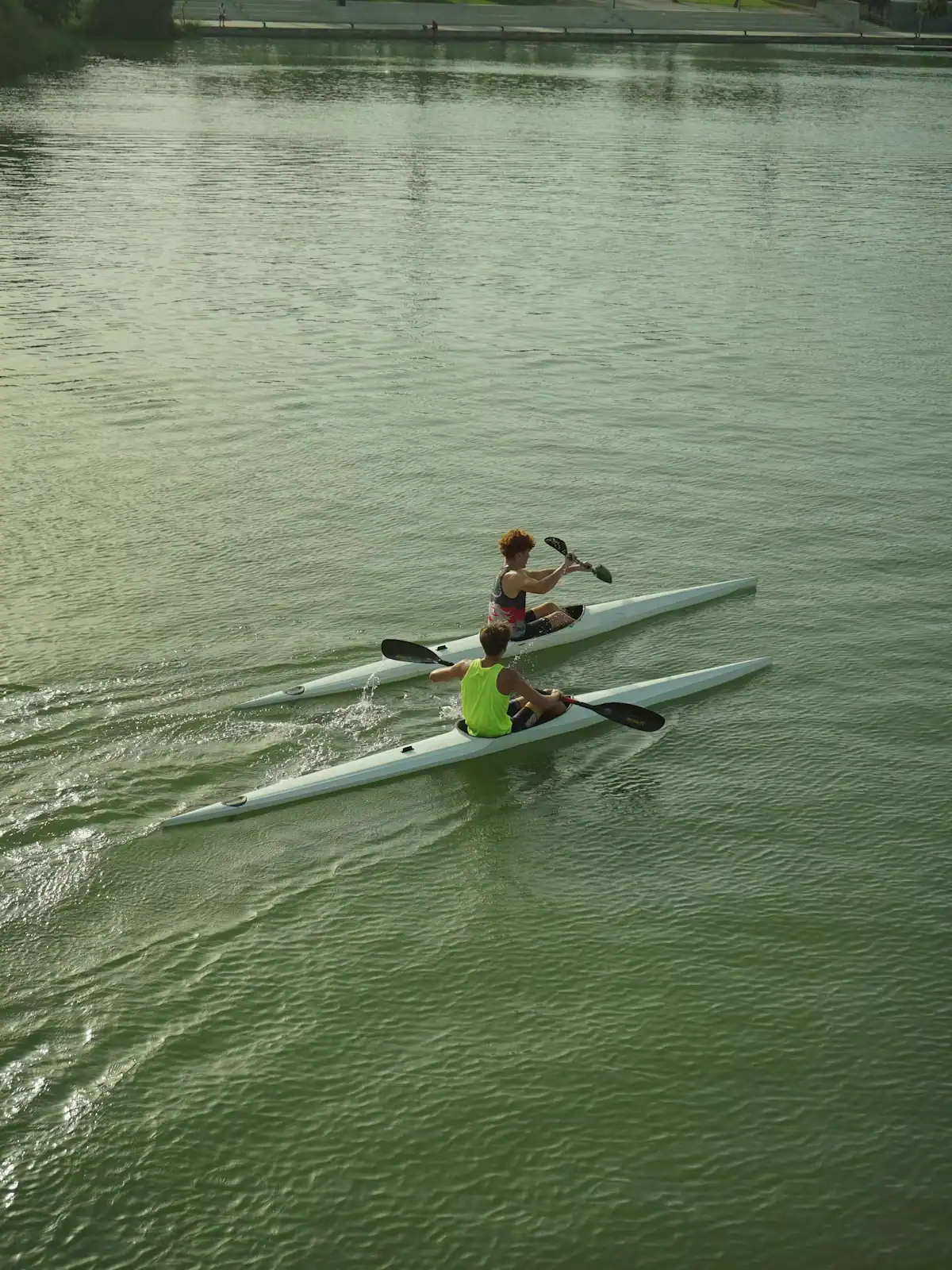
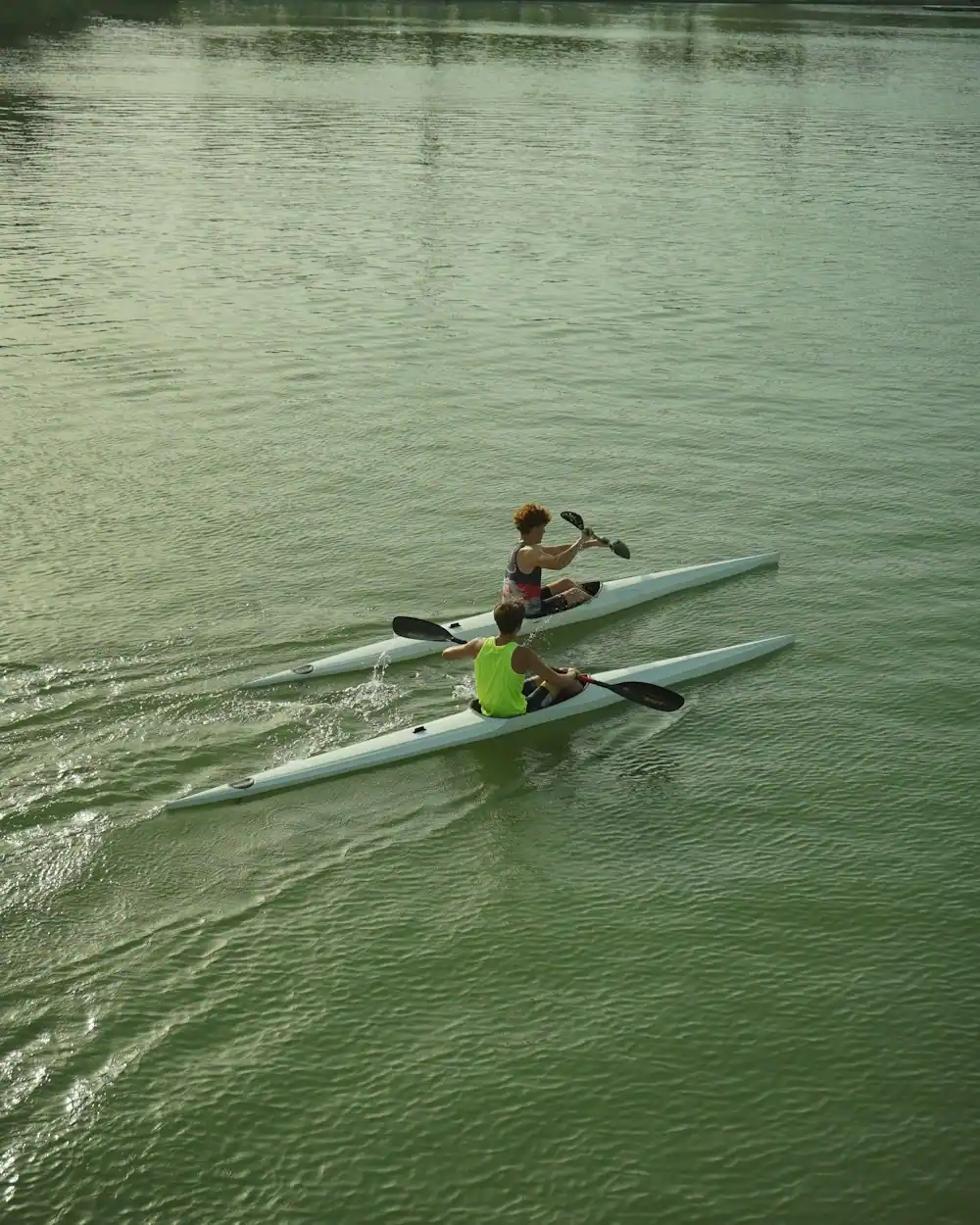
Two paddlers in kayaks on flat green water below a steep wooded bankUnsplash
Two paddlers in kayaks on flat green water below a steep wooded bank

A river float is one-way. You end up several miles downstream of your car, on a road with no pavement, in a wet swimsuit, carrying an inner tube. This is the whole problem and it is worth understanding before you decide to save money.

What an outfitter sells you is not really the tube. It is the logistics: a tube that will survive contact with rock, a launch point on land you are allowed to be on, a take-out where a bus is waiting, and a driver. The price commonly sits somewhere in the fifteen to thirty dollar range per person for a standard float, more for a larger tube or a cooler tube, and it is one of the better-value things you can buy in this county.

If you have your own boats there are public launches on the upper river, the Forest Service site at Deep Hole on GA 60 being the main developed one, and some outfitters will run a shuttle for private craft for a fee. Ring ahead rather than turning up with a roof rack and a hopeful expression.

A few operational notes that save arguments. Most outfitters run last launches in the early to mid afternoon, because they have to get everybody off the water. Most do not take card payments reliably at the launch, so carry some cash. Most have rules about glass and about alcohol, and those rules are not negotiable on a river with children in it. And parking at the busier launch points on a July Saturday fills by late morning.

Water level is the whole experience

When to go

The upper Toccoa is not dam-controlled, so what it does is what the weather did.

Spring, March to May. High, fast and cold. The outfitters are generally not running tubes yet and this is not a float to improvise. Experienced paddlers have a good time; nobody should be on an inner tube.

Early summer, June into July. The sweet spot. Enough water to carry you, warm enough to be in for two hours, and the season is fully open. This is when to book.

Late summer, August into September. Warm and low. After a dry fortnight the shoals become a series of scrapes, and a float that was two hours in June becomes a longer, bumpier walk-and-drift. Some people prefer it, because the pools are warm and there is nowhere to be. Take shoes.

Autumn. Water is low, air is cooling and the season winds down. October is glorious to paddle a kayak through and cold to sit in an inner tube for two hours.

Winter. No.

A good habit before booking: look at the river gauge readings published for the Toccoa, and ring the outfitter. They are on the water daily and will tell you straightforwardly whether today is worth it. A company that tells you not to come is a company worth booking with next time.

Kayaks, canoes and paddleboards

Tubing gets the attention, but the paddling here is quietly better and it lasts longer in the year.

The upper Toccoa in a kayak or canoe. Class I with shoals, so the skill is reading which side of a gravel bar carries water, not running rapids. It is a good river to learn on. The stretch through the Sandy Bottom and swinging bridge country is the prettiest, and it is remote enough that you will see nobody for long stretches midweek.

Lake Blue Ridge at dawn. A flat-water paddle in the coves of a lake ringed by national forest, with almost no houses, before the first pontoon starts up. If your cabin has a kayak in the shed, this is the thing to do with it. Wind gets up by late morning in the main channel, so go early and stay in the arms.

Paddleboards. Fine on the lake, awkward on the river once the water drops, because falling off in ankle-deep rock is how ankles get hurt.

Hire is limited. Some cabin companies include boats, one or two outfitters rent them, and the lake marina end has a small fleet in season. Nobody here has a large rental operation, so if you need three kayaks on a Saturday in October you should have arranged it in September.

Wear flotation, tell somebody your plan, and put the phone in a dry bag with the expectation that it will be useless anyway once you are in the valley.

Toccoa or Ocoee: pick before you book

How they compare

Upper ToccoaOcoee
WhereFannin County, above Lake Blue RidgePolk County, Tennessee, across the state line
Drive from Blue RidgeHalf an hour or so, some of it slowAround three quarters of an hour
WaterMostly Class I, shoals and gravel barsClass III and IV, continuous rapids
How you goInner tube, kayak, paddleboard, self-guidedRaft, with a guide, in a helmet
Who it suitsFamilies, small children, anyone with a coolerTeenagers and adults who want to be thrown about
SeasonWarm months, depends on water levelScheduled dam releases, published in advance
Cost bandOften around $15-$30 a head for tube and shuttleTypically several times that per person

Two further points people get wrong.

The Ocoee is the Toccoa; it just changes name at the state line at McCaysville. The rapids are well downstream of the border, so nothing dangerous appears in the river as it flows through Fannin County.

Nobody floats the Ocoee on an inner tube. It is a guided-raft river and the operators are concentrated along US 64 in Tennessee. If your holiday needs one whitewater day and four lazy ones, that is a perfectly good plan, but they are separate bookings.

The three things that actually hurt people on this river

Before you book

This is a gentle river and it is still a river. The hazards are specific and they are not the ones people arrive expecting.

Strainers. A fallen tree in the current lets water through and does not let you through. They appear on the outside of bends and after storms, and they are the single most dangerous feature on any low-gradient river. If you are being carried towards one, get off the tube, swim hard for the inside of the bend, and if you cannot avoid it, go at it head-first and climb up and over rather than letting the current pull you underneath.

Foot entrapment. The instinct in shallow moving water is to stand up. In water above your knees, with a rocky bottom, that is how a foot gets wedged and a body gets pushed under by the current. Float on your back with your feet downstream and your toes at the surface until the water is genuinely shallow, then stand.

Cold. Not on the upper river in July, which is pleasant. On the tailwater below the dam, and on the upper river in April and May, when the air is warm and the water is not. Cold water takes the breath out of people who were not expecting it, and that is where the trouble begins.

Beyond those three: wear something on your feet, because the bottom is rock and broken glass exists everywhere humans swim; and put small children in a properly fitted life jacket. Georgia's boating rules require a wearable flotation device aboard for each person and require children under thirteen to wear one while a vessel is under way; the state publishes the current regulations and they are worth two minutes before you launch anything.

What to take on a float here

What to bring

  • Shoes you can swim in. Not flip-flops, which the first shoal takes off you. Old trainers or proper water shoes. The riverbed is rock, and standing barefoot on it while trying to steer a tube is how the afternoon stops being fun.
  • Sun cover rather than more sunscreen. You are on open water in a valley for two hours with the sun coming off the surface as well as down. A long-sleeved rash top does more than a fourth application.
  • A cheap dry bag. Keys, cards, a phone that will not have signal anyway. Assume everything not in the bag gets wet, including the thing you were sure would stay dry.
  • Water, not just beer. Dehydration on a slow float in August creeps up on people, and the take-out is a long way from the cabin.
  • A cooler tube if you want drinks. Outfitters rent them. Cans only. Glass is banned by every operator on this river and it is a genuinely serious rule where children are wading.
  • Nothing you would mind losing. Sunglasses without a strap, hats, and the good camera all end up in the Toccoa every summer.
  • Cash. Launch fees and shuttle payments are much simpler with it, and the mobile card terminal at a river launch is at the mercy of the same signal as everything else out here.

On the ground

Where to go

Every place below has its own page — hours, parking, what it costs and what to expect when you get there.

  • Pine-covered slopes running down to still green water on a mountain reservoir
    Water feature

    Lake Blue Ridge

    Free

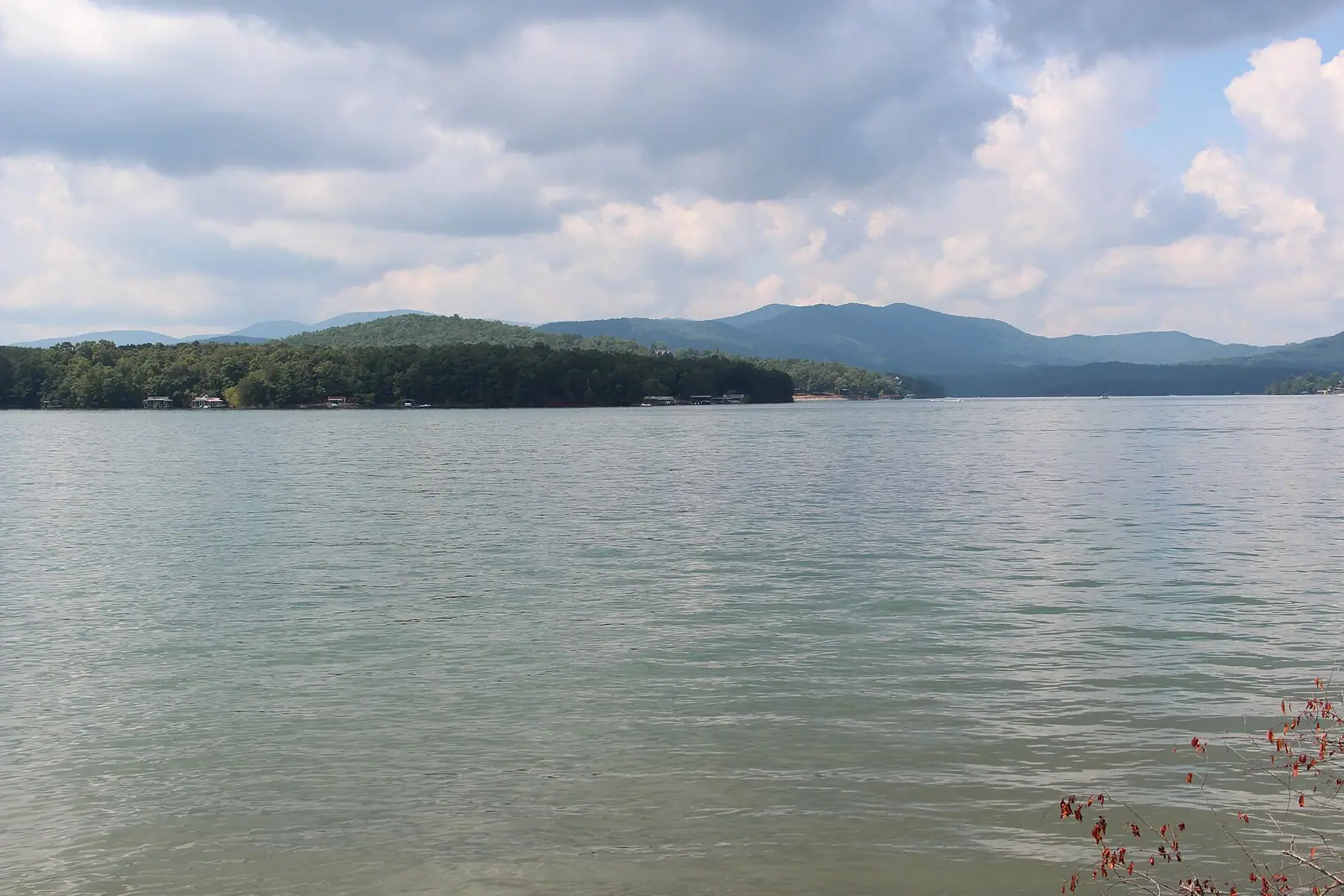
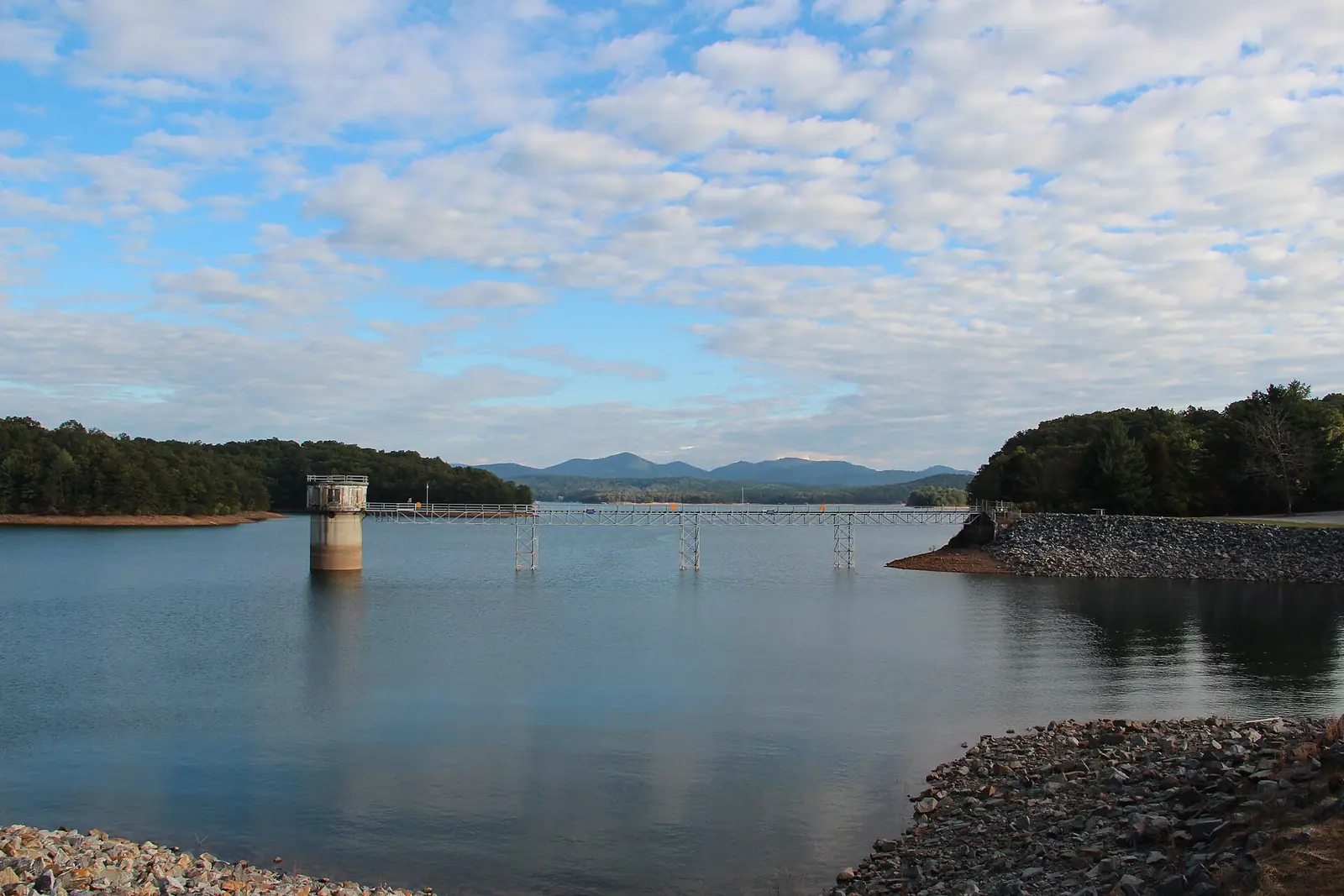
    Thirty-three hundred acres of cold green water with national forest around most of it, and a level that TVA moves by dozens of feet a year.

    1.5–8 hoursFree to look at and to fish from public land. Recreation areas and ramps may charge.

    Photograph: Thomson200

  • A shallow river running over rock ledges between steep banks of dense forest
    Water feature

    Toccoa River

    Free

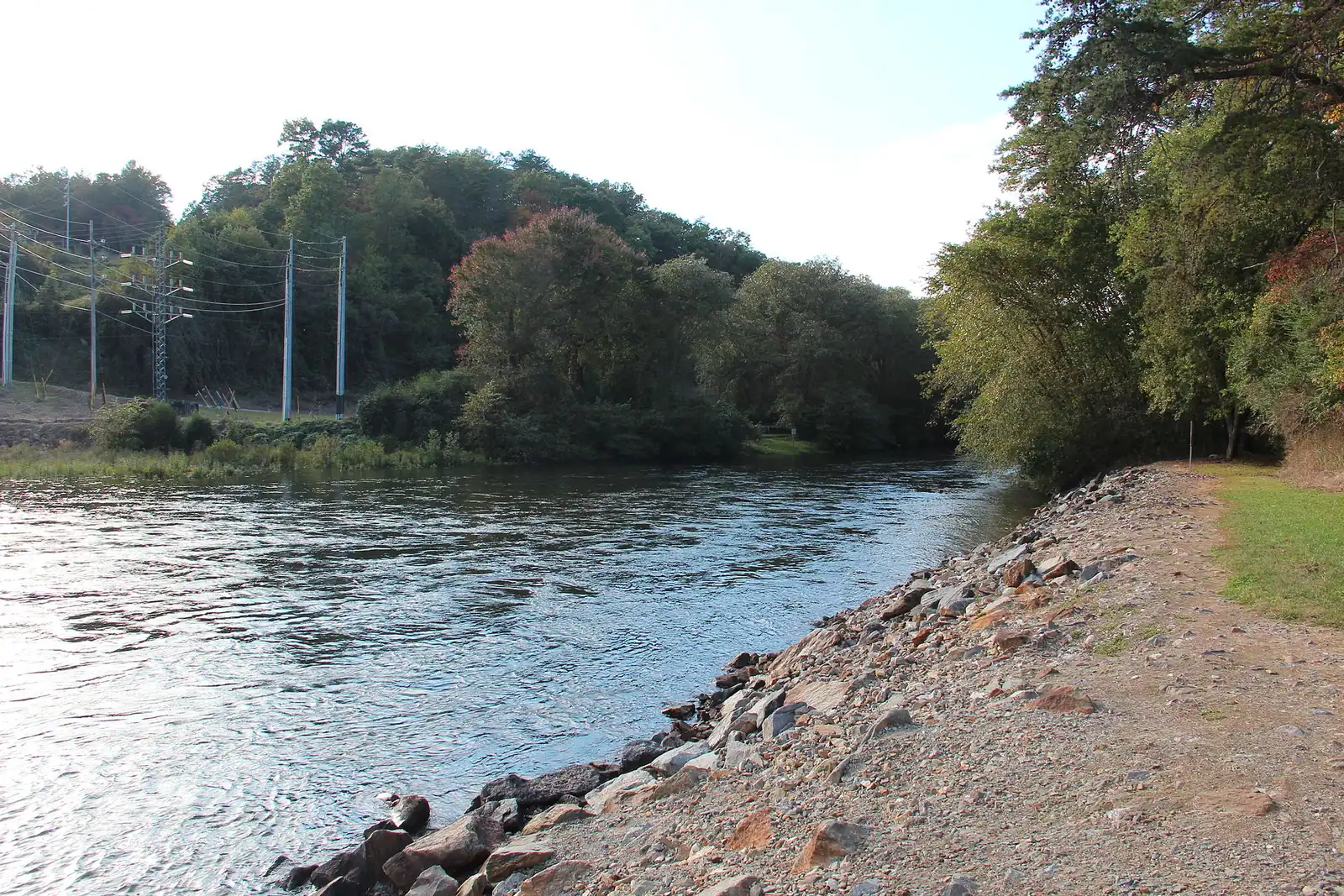
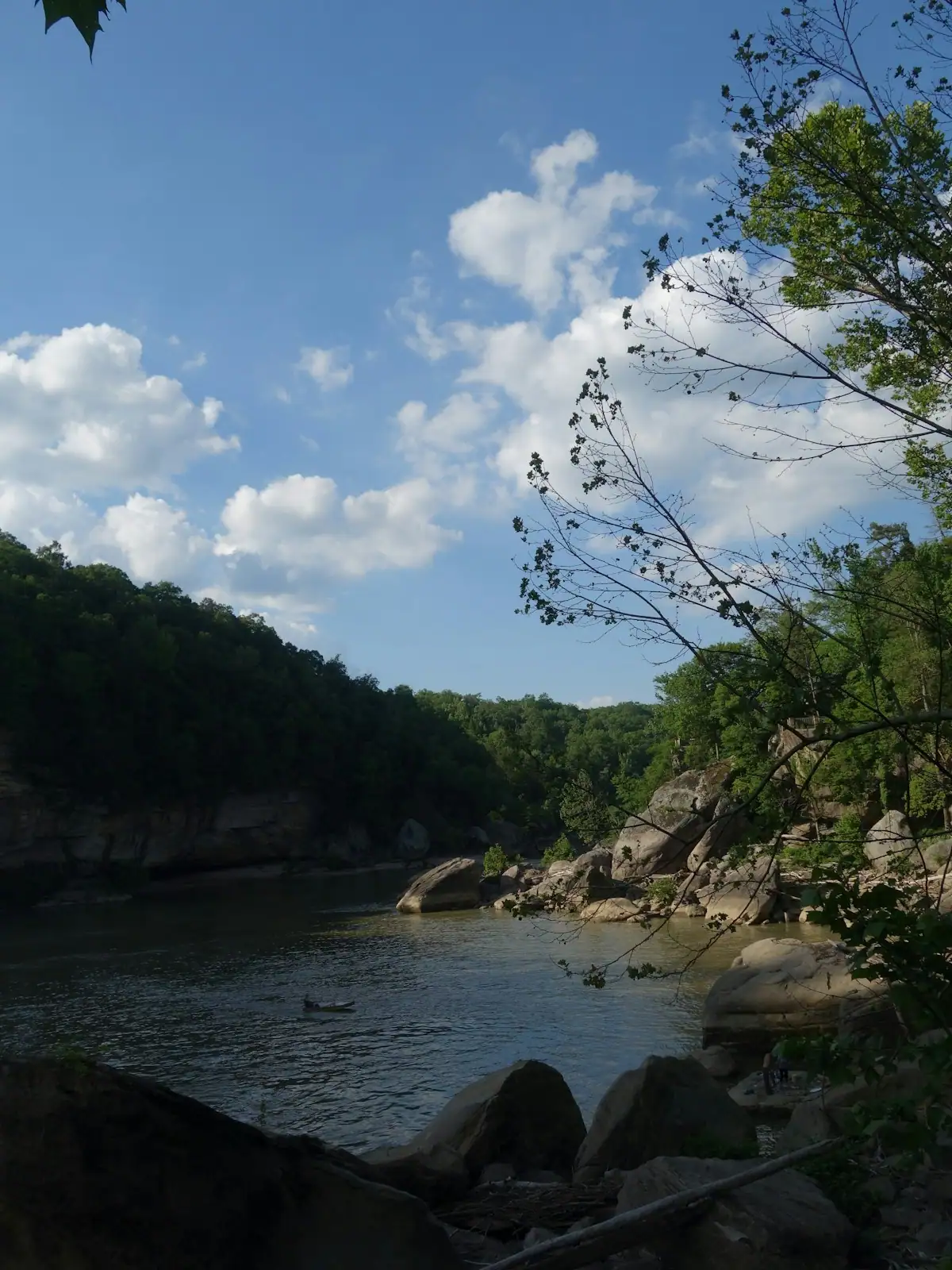
    One river, two personalities: a lazy summer float above the lake, and a cold tailwater below the dam that fishes all year.

    2–7 hoursFree to access. Forest Service recreation areas charge a day-use parking fee, and rentals and shuttles are extra.

    Photograph: Thomson200

  • A raft of paddlers in helmets dropping through a wall of white water between boulders
    Water feature

    Ocoee River

    Free

    The same water as the Toccoa, over the state line and released from a dam: class III-IV rafting about an hour from a Blue Ridge cabin.

    4–8 hoursThe river corridor is free to visit; commercial rafting is booked and paid per person.

    Photograph: Thomson200

  • A narrow timber suspension footbridge crossing a river in dense woodland
    Landmark

    Toccoa River Swinging Bridge

    Free

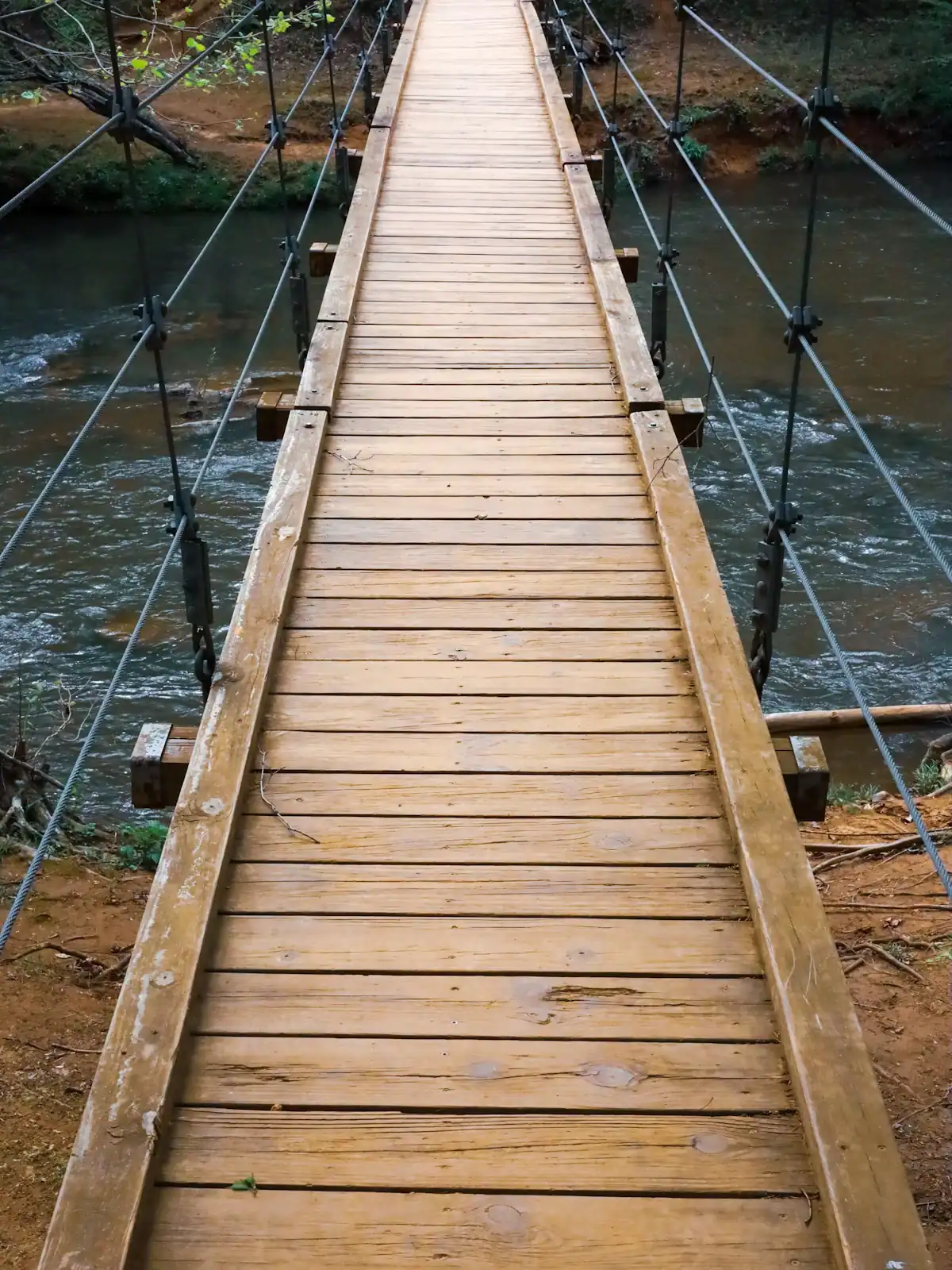
    A cable footbridge that genuinely sways, hung over the Toccoa on the Benton MacKaye Trail, at the end of a gravel forest road.

    0.5–4 hoursFree. No fee, no gate, no facilities.

    Photograph: Unsplash

  • Layered ridges covered in autumn hardwood colour under a pale sky
    Nature preserve

    Chattahoochee National Forest

    Free

    Around 106,000 acres of public land in Fannin County alone, almost none of it signposted, gated or supervised in the way visitors expect.

    2–8 hoursFree to enter. Developed campgrounds and some day-use areas charge a fee.

    Photograph: USFWS

  • A timber dock running out to covered boat slips on a calm lake
    Marina

    Blue Ridge Lake Marina

    The lake's main rental and fuel point, sitting near the dam on a reservoir whose level TVA changes by dozens of feet a year.

    2–8 hoursBoat rental, fuel and slips are charged. Looking at the lake is free.

    Photograph: Thomson200

  • Two paddlers in kayaks on flat green water below a steep wooded bank
    Park

    Deep Hole Recreation Area

    The Forest Service put-in at the head of a 13.8-mile river trail, forty minutes up the Toccoa valley from Blue Ridge.

    2–8 hoursDay-use parking fee; camping charged per night.

    Photograph: Unsplash

Straight answers

Questions people actually ask

Where do you go tubing near Blue Ridge, GA?

On the upper Toccoa River, above Lake Blue Ridge. Outfitters run floats on that stretch through the warm months, and the reason to use one is the shuttle rather than the tube. A standard float typically takes a couple of hours and commonly costs somewhere in the fifteen to thirty dollar range per person, though rates move, so confirm when you book. Do not float below Blue Ridge Dam; that water is cold and release-driven.

Is tubing on the Toccoa River safe for kids?

Generally yes, on the upper river in summer flows. It is shallow, slow and largely Class I. Put children in a properly fitted life jacket, which Georgia requires for under-thirteens while under way, and put shoes on their feet because the bottom is rock. The real hazards are fallen trees in the current and standing up in knee-deep moving water, so teach them to float feet-first and to stay off their feet until it is shallow.

How long does it take to float the Toccoa?

A standard outfitter float runs around two hours in normal summer water. The number is water-dependent rather than fixed: in June, with good flow, it moves along; by late August after a dry spell the same stretch can take three hours with a fair amount of scraping and walking. Ring the outfitter on the morning rather than planning a tight afternoon around a published figure.

What is the difference between the Toccoa and the Ocoee?

They are the same river with two names, split at the Georgia-Tennessee state line at McCaysville. The Toccoa in Fannin County is gentle, Class I, and floated on inner tubes. The Ocoee downstream in Tennessee is Class III and IV whitewater, rafted with guides on scheduled dam releases, and is around three quarters of an hour's drive from Blue Ridge. Nothing on the Georgia stretch resembles the Ocoee rapids.

Can you kayak on Lake Blue Ridge?

Yes, and the coves at first light are the best paddling in the county: flat water, national forest to the shoreline and very few buildings. Wind picks up in the main channel by late morning, so stay in the arms if it is breezy. Hire is limited on this lake, some cabins include boats, and the marina end has a small seasonal fleet. Book ahead for summer weekends and for October.

When does tubing season start in Blue Ridge?

Outfitters generally open once the water warms and the spring flows drop, which usually means late spring, and run into early autumn. Exact opening dates move year to year with rainfall and temperature, so check with the operator rather than assuming a fixed date. June and early July are the most reliable weeks: enough water to carry a tube and warm enough to sit in for two hours.

Can you bring alcohol tubing on the Toccoa?

Outfitters here rent cooler tubes and most allow cans, but every one of them bans glass outright, and several restrict alcohol more tightly than that. Rules vary by operator and are enforced, because these floats carry a lot of small children. Ask when you book, bring cans rather than bottles, and take your rubbish off the river with you. Nothing spoils this stretch faster than litter on the gravel bars.