Skip to content
Search
Menu

These bookings pay us a commission through Viator. Your price does not change, and neither did our picks because of it.

Things to Do

Eating in Blue Ridge

Last updated

Eating in Blue Ridge, Georgia: why the kitchens close early, how long the October wait gets, what mountain trout and meat-and-three mean, and when to cook.

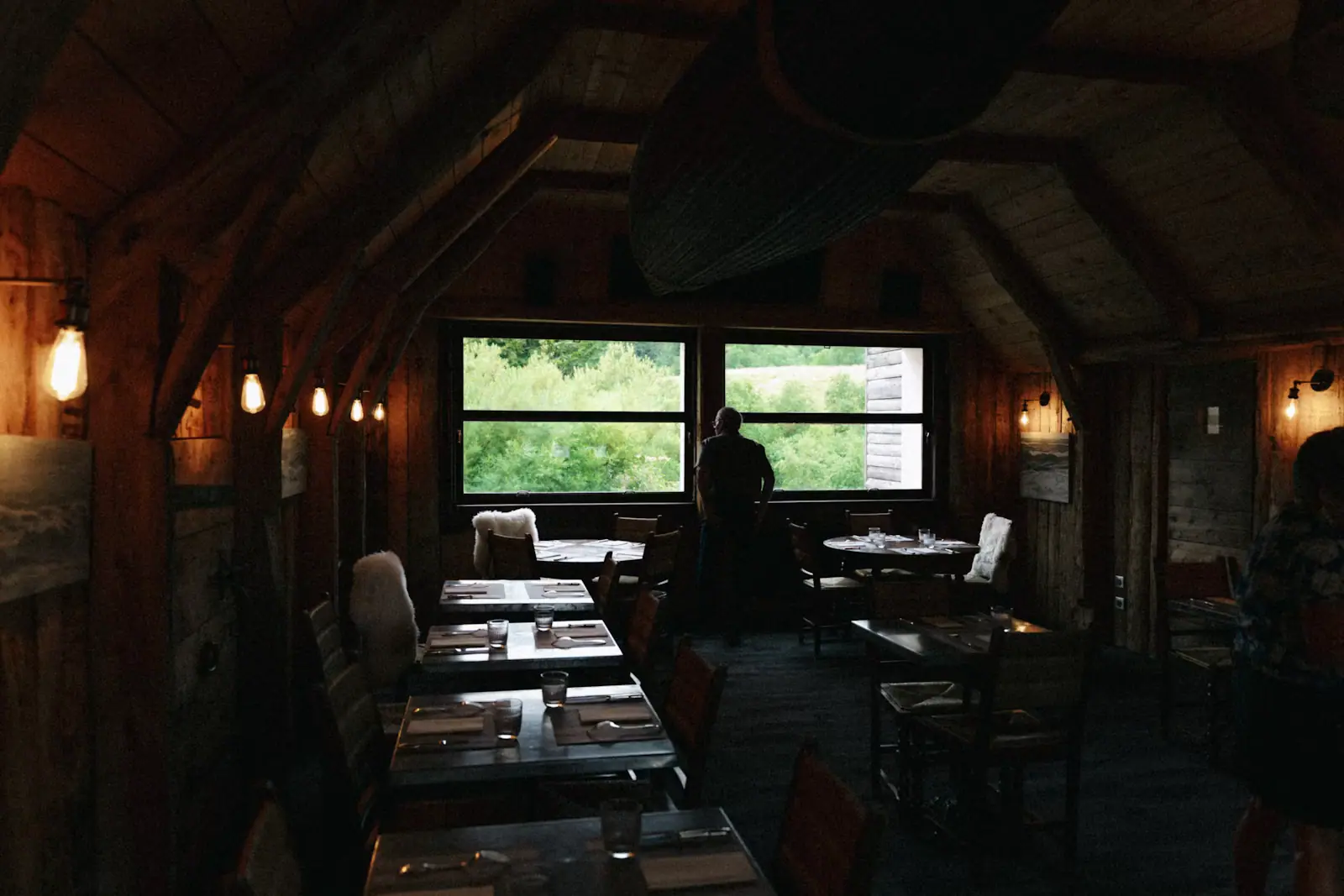
A dining room lined in old timber with a canoe hung under the pitched ceiling and windows looking out onto green woodsUnsplash

Start with the arithmetic, because it explains everything else. Fannin County has 25,319 residents. The town of Blue Ridge has 1,253 of them. On a Saturday in the middle of October, the county is feeding a number of people several times its own population, and it is doing so through a few dozen kitchens, most of them independent, many of them small, and a good number of them staffed by people who also work somewhere else.

That mismatch is not a failure. It is the structural condition of eating in a mountain county with a large seasonal visitor economy, and once you understand it, almost every frustration a visitor has here becomes predictable and avoidable. The wait at seven on a Friday. The kitchen that stopped seating at eight thirty when you arrived at eight forty. The place you drove twenty minutes to that turned out to be closed on Tuesdays in February. None of those are bad luck.

There is a second structural fact that makes this destination different from almost anywhere else on this network. Nearly everybody here is staying in a cabin with a full kitchen, a grill and a deck. That changes the question from "where shall we eat" to "which nights are we eating out", and the honest answer for most groups is two or three out of seven. Planning a cabin week around restaurants every evening means a lot of driving in the dark and a lot of waiting, and it is not how the people who come back every year do it.

What is worth going out for is a specific and fairly short list. Mountain trout, which the town's own self-description as the trout fishing capital of Georgia is not idle about. Barbecue, which in north Georgia means pork and a vinegary sauce more often than it means brisket. Meat-and-three, the Southern lunch format where you choose a protein and three vegetable sides off a board and it costs less than a sandwich in a city. Biscuits and gravy for breakfast. And, increasingly over the last decade, a genuine farm-to-table layer aimed at weekenders from Atlanta, which is where the county's better cooking now lives.

This page names no restaurants. Kitchens in a county this size open, close, change hands and change chefs, and a list of trading names would be wrong within a year. What follows is the shape of eating here, which changes a great deal more slowly.
Eat early, or plan to wait

When to go

The single most useful sentence about dining in Fannin County is that dinner service is earlier than city visitors expect and shorter than they expect.

A rough shape, which varies by kitchen and by season: dinner gets going around five, the crush is between six and half past seven, and a good number of kitchens stop seating somewhere between eight and nine. Midweek in winter that can be considerably earlier. This is not a late-night county.

The consequences are simple. If you want to eat at nine, phone first rather than driving down and hoping. If you are a party of six or more in October, treat a table as something to organise rather than something to find. And if you dislike waiting, eat at five. The difference between a five o'clock table and a seven o'clock table on an autumn Saturday downtown can be an hour and a half of standing on a pavement.

Reservation policy varies enormously. Some places take bookings, some run a waiting list by phone, some are strictly first come. Because it varies, the useful habit is to ring in the afternoon and ask, rather than assuming either way.

One more timing note that catches people out. Sunday lunch after church is a genuinely busy service in this part of Georgia, and Sunday evening is frequently the quietest of the week, with several kitchens closed entirely.

What the food here actually is

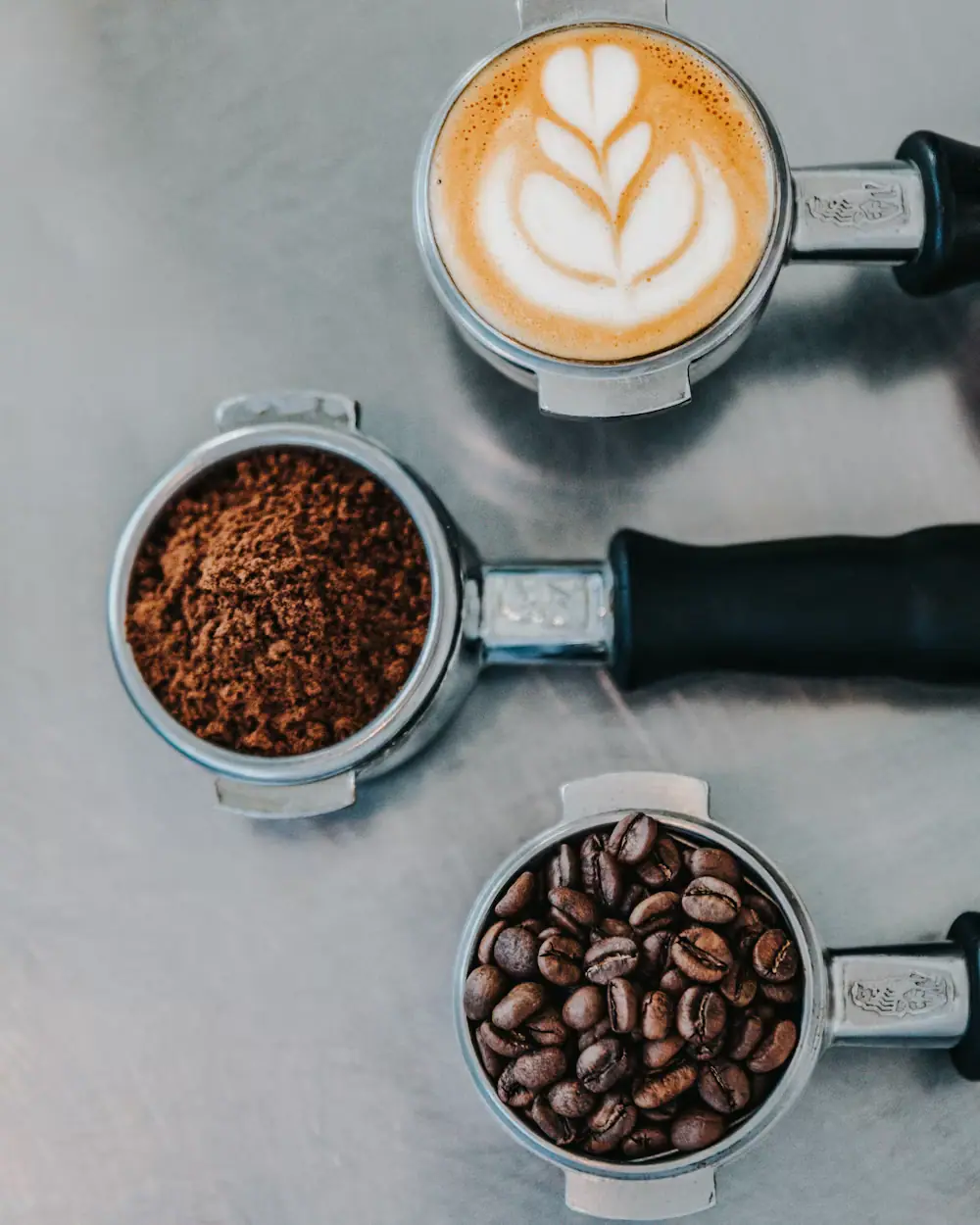
Three espresso portafilters on a steel counter holding whole beans, fresh grounds and a poured coffee with latte artUnsplash
Three espresso portafilters on a steel counter holding whole beans, fresh grounds and a poured coffee with latte art

Four strands, and it helps to know which one you are walking into.

Trout. Blue Ridge calls itself the trout fishing capital of Georgia, and the claim has a basis: the Chattahoochee National Forest holds something in the order of 1,367 miles of trout stream, and the Toccoa tailwater below the dam is cold year round. Trout on a menu here is usually pan-fried or smoked, often whole, and it is the most local thing you can order. Smoked trout dip turns up as a starter almost everywhere and is better than it sounds.

Barbecue. North Georgia barbecue means pork before it means beef, pulled rather than sliced, with a thin vinegar-and-pepper sauce or a sweeter tomato one depending on the pit. Sides matter as much as the meat: slaw, beans, mac and cheese, greens cooked long. Good barbecue places run out and close early, which is a mark of quality rather than poor planning.

Meat-and-three. A Southern lunch format that visitors from outside the region consistently underrate. Pick a meat, pick three vegetables from a board that might include fried okra, collards, pinto beans, squash casserole and mac and cheese, and take the cornbread. It is the cheapest good meal in the county.

The weekender layer. Over the past decade a more ambitious kind of cooking has arrived, aimed squarely at people driving up from Atlanta: seasonal menus, local produce, a proper wine list, a room designed to be photographed. It is where the county's best cooking now is, it is the hardest to get into on a Saturday, and it costs what it would cost in a city.

Cooking in the cabin, which is what most people do

Local tips

  • Plan two or three nights out of seven, not seven. The cabin, the deck and the fire are what you paid for. Driving twenty-five minutes each way in the dark to queue for a table is not.
  • Shop once, properly, on the way in. The supermarkets are on the GA-515 corridor. From most cabins a forgotten ingredient is a forty-minute round trip.
  • Assume you are grilling. Almost every cabin has a grill, and it is the single best thing in the kitchen. Charcoal or propane varies; check the listing, and buy fuel with the groceries rather than assuming a full tank.
  • Buy the trout locally rather than at the supermarket if you can. Several producers in the county sell it, and cooking a whole mountain trout on a cabin grill is the most on-theme dinner available.
  • Bring the seasoning. Cabin cupboards contain whatever the last guests left. Salt, pepper, oil and one or two things you actually cook with take no space in a car.
  • Breakfast is the meal to keep in. The queue for a downtown breakfast on an autumn Saturday is not worth it when you have a deck and a view.
  • Buy the fried pies and the cider donuts when you pass the orchard, not as a special trip. They are an excellent cabin breakfast and they do not improve overnight.
  • Take the rubbish in at night. Bears. See the cabin page.

Eating on a day out

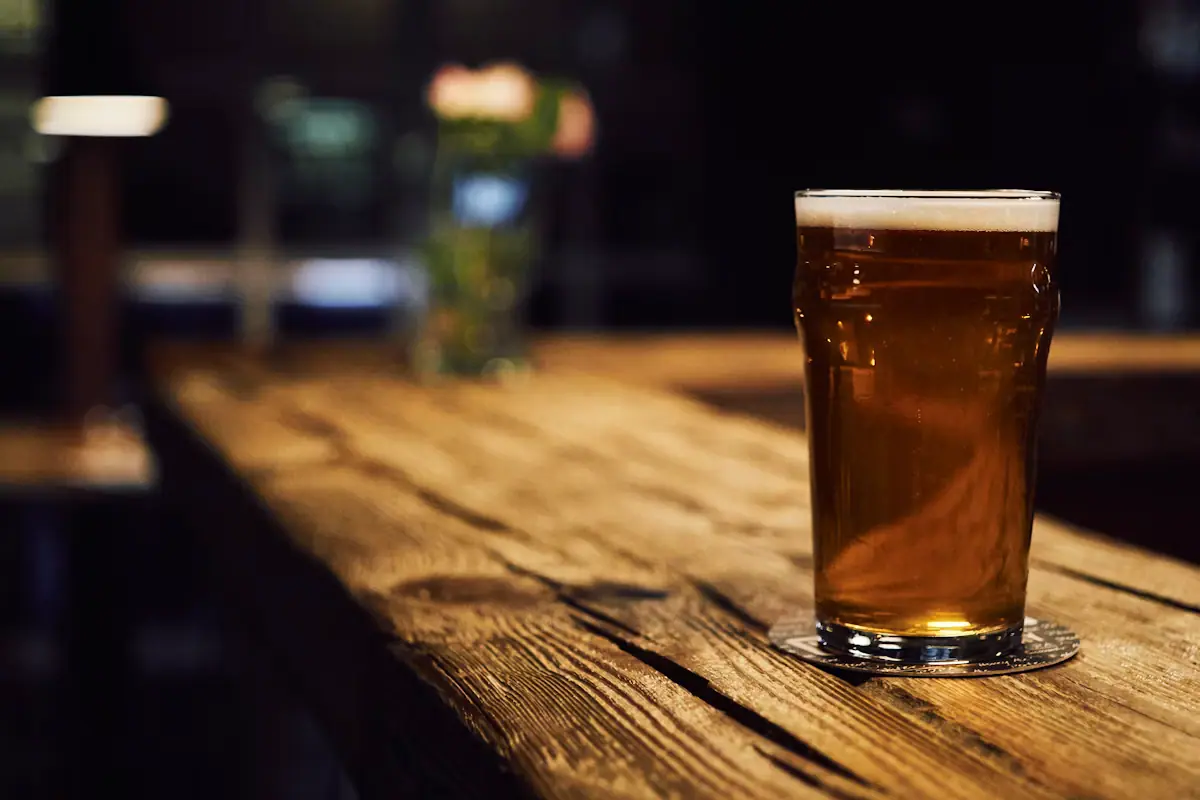
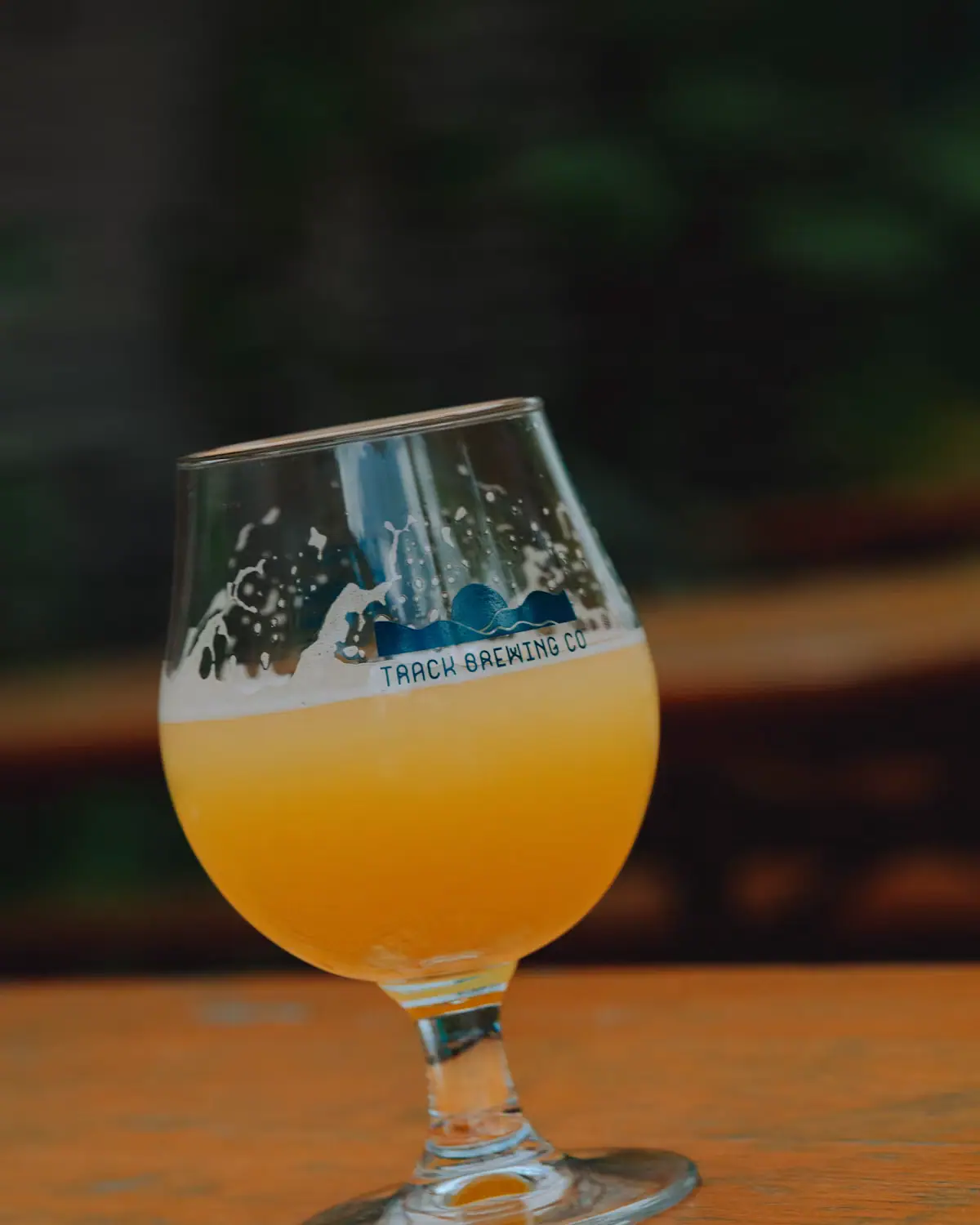
A pint of amber beer standing on a scarred wooden bar counter with a dark room behind itUnsplash
A pint of amber beer standing on a scarred wooden bar counter with a dark room behind it

Most days here involve leaving town, and the food strategy changes when you do.

The railway layover. The excursion train sets you down in McCaysville and Copperhill for roughly two hours, which is comfortably a lunch. The twin towns have a modest run of places on both sides of the state line and a proportion of them trade seasonally, so in the quiet months expect fewer doors open than you were hoping for. Do not wander far: the return departure is a published time.

Ellijay and Gilmer County. A short drive south, a bigger square with more choice than its size suggests, and the best concentration of orchard bakeries in the region. It makes a natural lunch stop on an apple day.

The lake and the trails. There is nothing to buy at most of the access points on Lake Blue Ridge or at the trailheads in the Aska area, and mobile signal is poor enough that you should not count on looking something up. Take the picnic with you. A cooler in the car is the standard equipment of a Fannin County day out.

The far day trips. Heading over to the Ocoee or up into the Cohutta, you are well beyond the reach of anything quick, and food options thin out fast once you leave the highways. Fill the car and the cooler before you go, and treat any roadside stand you pass as a bonus rather than a plan.

Downtown, the highway, or up the road

How they compare

Where you eat in this county is really a question of which of three places you are in.

Downtown Blue RidgeThe GA-515 corridorOut in the county
The offerIndependents, the weekender layer, coffee, bakeries, a couple of barsChain food, family diners, the late options, the big car parksBarbecue pits, meat-and-three rooms, general stores with a griddle
AtmosphereWalkable, lively in season, lovely in DecemberNone. It is a highwayThe real thing, and often the best food
ParkingThe hard part of the evening in OctoberTrivialTrivial
Best forA night out, lunch between shopsFeeding tired children fast, late arrivalsA long lunch on a driving day
Watch forWaits, early closingNothing, but you will not remember the mealShort hours, cash-only tills, closed Sundays

Most visitors default to downtown for everything, which is why downtown has the queue. The county roads are where a lot of the better and cheaper eating is, and a barbecue place with a gravel car park twelve minutes outside town on a weekday lunchtime is one of the more reliably good meals available here.

Worth knowing on arrival day: the highway is where you will find something open if you get in at nine at night, and downtown is not.

Closed today: the traps worth knowing

Before you book

Small independent kitchens in a seasonal county keep hours that make sense for them and not for you, and the resulting disappointments are all avoidable with one phone call.

Mondays and Tuesdays. In a town this size these are the standard closing days, especially outside the autumn peak. A place that is open seven days in October may be open four in February.

Winter shutdowns. It is normal for a kitchen here to close for a couple of weeks in January or February entirely. Nothing is wrong; the owner is taking the only holiday available to them.

Sundays. Busy at lunch and frequently closed in the evening. This is a church-going county and the rhythm of the week reflects it.

Public holidays. Thanksgiving, Christmas, New Year's Day and Easter close a great deal of the county, including the orchard, which publishes those four closures. Plan Thanksgiving week and the days between Christmas and New Year with the assumption that you are cooking.

Running out. Barbecue pits, bakeries and anywhere smoking meat all day will simply stop when it is gone. Arriving at two for barbecue is optimistic.

Private events. In a county with few venues, a wedding party can take an entire restaurant on a Saturday in October with nothing on the website to warn you.

The habit that fixes all of it: ring in the afternoon before you drive anywhere in the evening.

On the ground

Where to go

Every place below has its own page — hours, parking, what it costs and what to expect when you get there.

  • An apple tree carrying a heavy crop of unpicked fruit
    Entertainment

    Mercier Orchards

    Free

    A fourth-generation apple farm with a bakery, a hard cider house and, on an October Saturday, a car park like a county fair.

    1–3 hoursFree to visit the market, bakery and cider house. U-pick and tastings are charged.

    Photograph: Thomson200

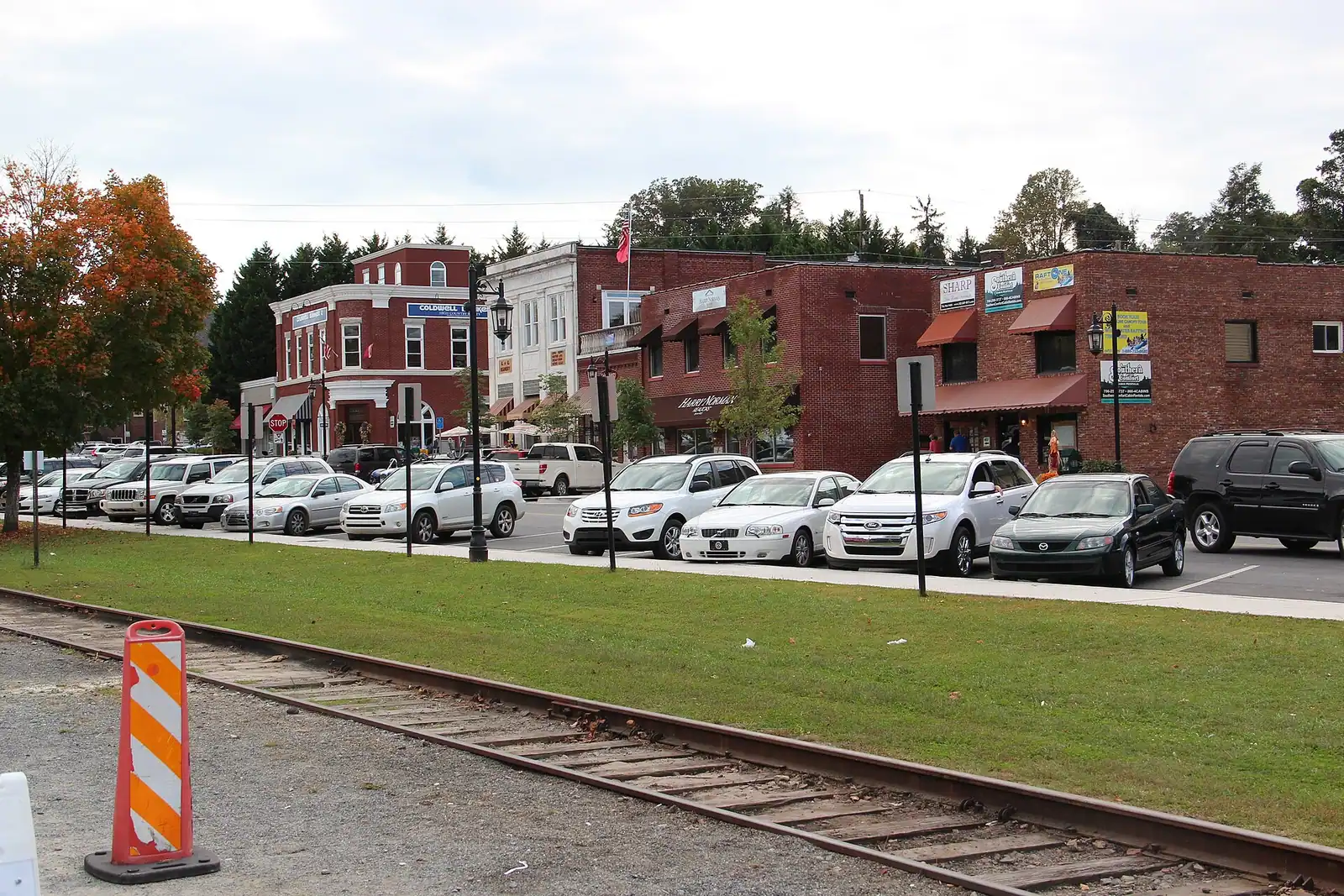
  • A small-town storefront in white and red painted brick seen from the pavement
    Neighbourhood

    Downtown Blue Ridge

    Free

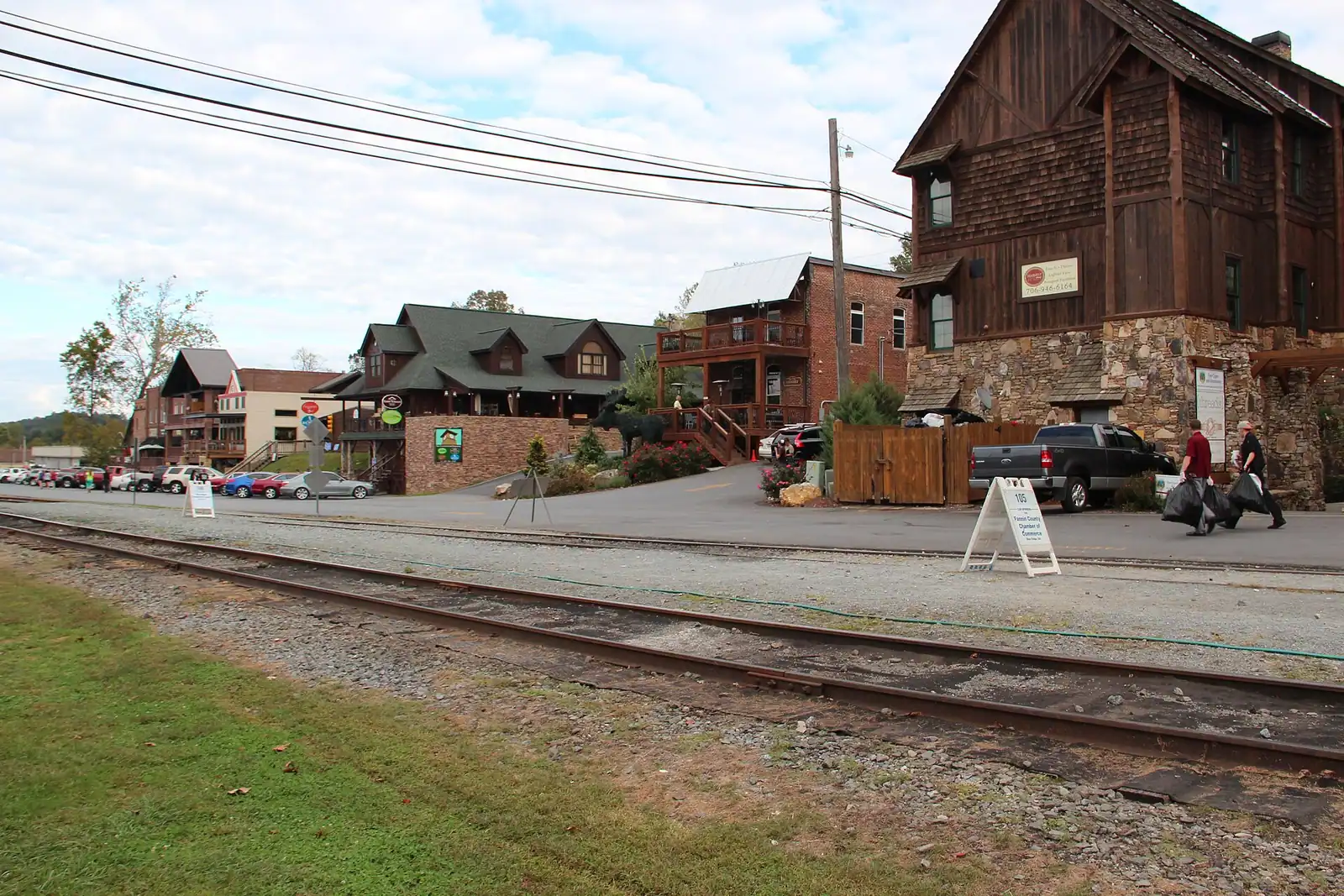
    Four blocks of shopfronts facing a working railway depot, small enough to walk twice and busy enough to need a parking plan in October.

    1–4 hoursFree. Street parking is free and scarce on peak weekends.

    Photograph: Thomson M

  • A river running through the middle of a small town beside a road bridge
    Neighbourhood

    McCaysville

    Free

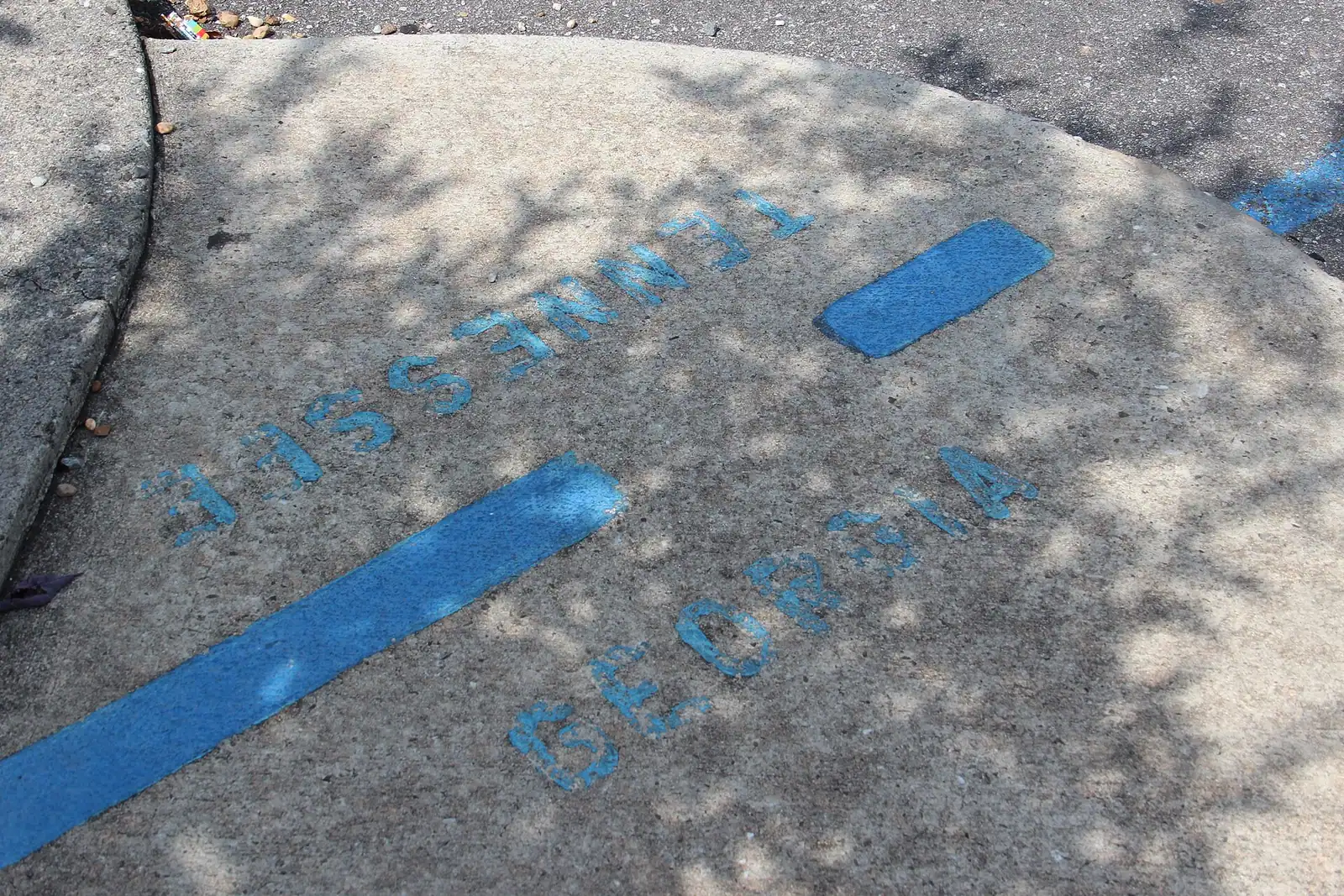
    A Georgia town of about 1,150 people that shares its high street, its river and its bridge with a different state.

    1–3 hoursFree. Walking to the state line and the river costs nothing.

    Photograph: Unknown authorUnknown author or not provided

  • A railway depot with locomotives standing on the tracks below a forested hill
    Historic site

    Blue Ridge Depot

    Free

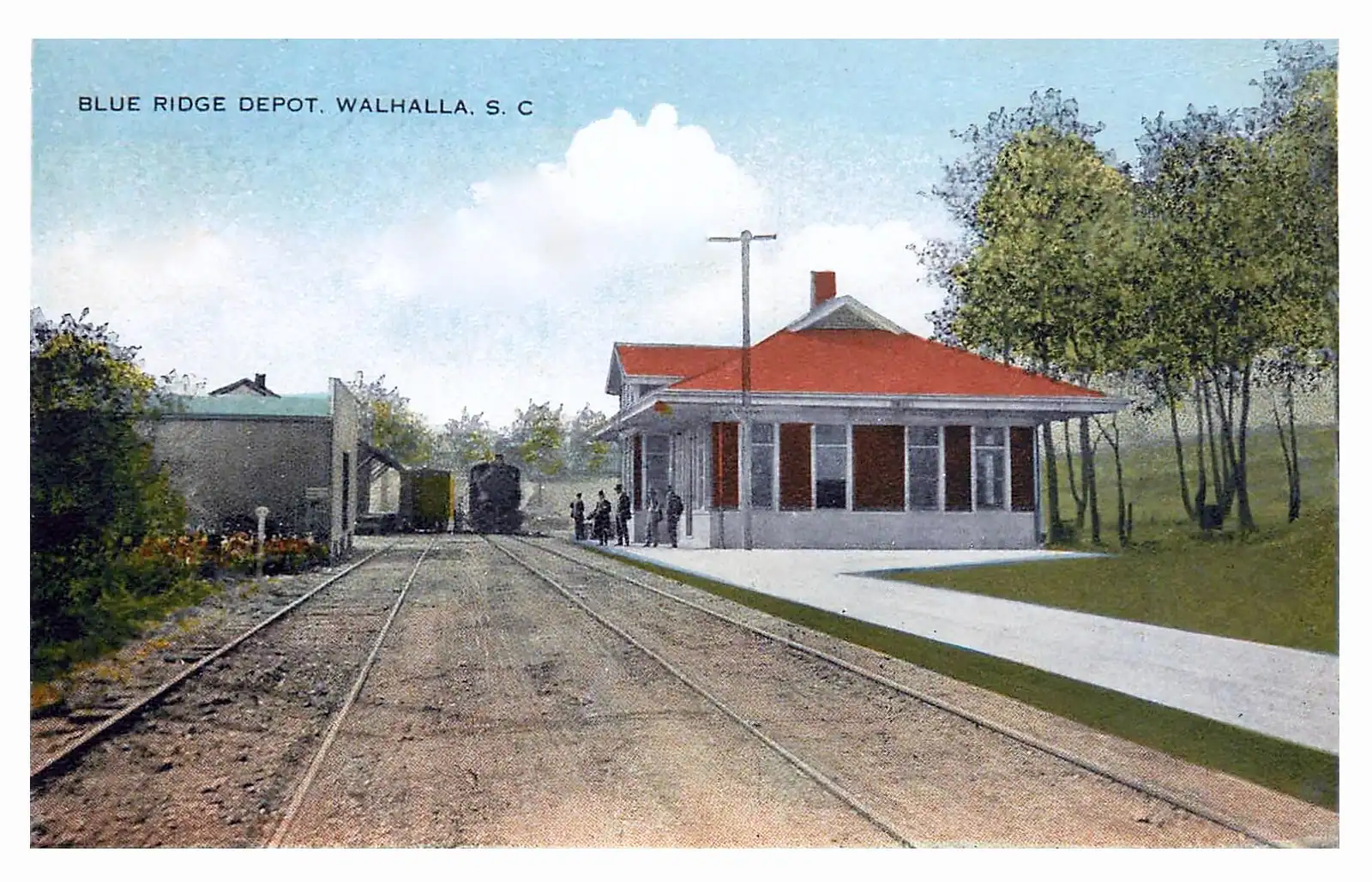
    The oldest working thing in Blue Ridge: a Register-listed railway building still selling tickets to a train that still runs.

    15–45 minutesFree to visit the building, platform side and yard. Train tickets are separate.

    Photograph: Unknown author

  • A small-town street of low brick buildings with a wooded mountain rising directly behind the rooftops
    Neighbourhood

    Ellijay

    Free

    The Apple Capital of Georgia: a courthouse square, two rivers meeting, and orchards that turn the whole county into a queue in October.

    2.5–6 hoursFree to visit. Orchards charge for fruit and for u-pick by weight.

    Photograph: Nyttend

  • A road bridge over a river with town buildings clustered on the far bank
    Neighbourhood

    Copperhill

    Free

    The Tennessee half of the twin towns, and the edge of a copper basin that was stripped to bare red clay and then replanted.

    1–2 hoursFree. Walking the town, the bridge and the river bank costs nothing.

    Photograph: Thomson20192

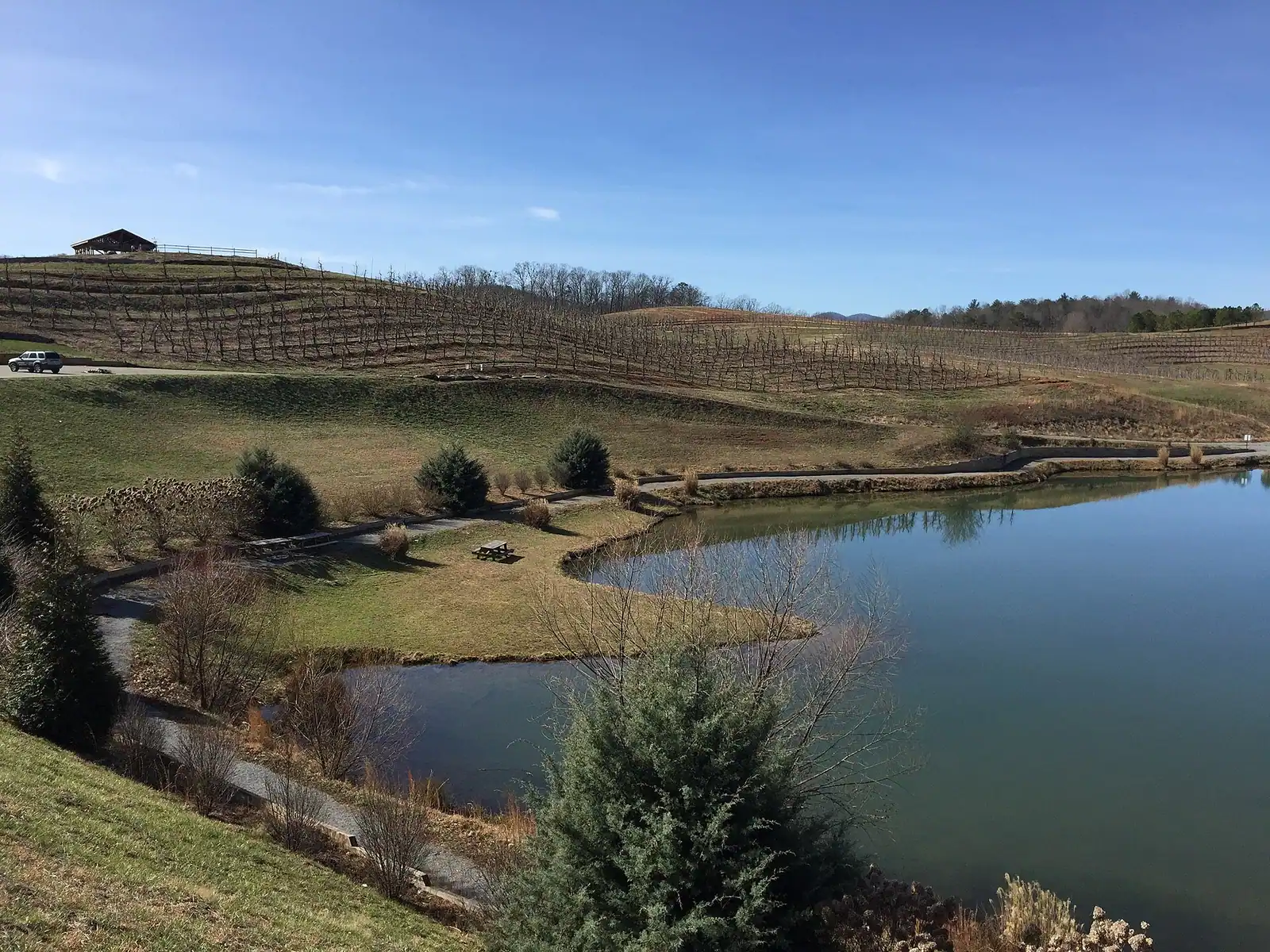
  • Rows of vines running across rolling green farmland with woodland behind
    Entertainment

    Sugar Creek Vineyard

    Small-batch wine and mead from the ridges above Blue Ridge, in a county that is a long way from Georgia's established wine country.

    1–2 hoursTastings charged per flight; bottles sold at the door.

    Photograph: Thomson M

Straight answers

Questions people actually ask

Do you need reservations for restaurants in Blue Ridge?

It depends on the kitchen, which is why the useful habit is to ring in the afternoon and ask. Some take bookings, some run a phone waiting list and some are strictly first come. What is consistent is that on an autumn Saturday downtown, a party of six or more without a plan will wait, potentially for well over an hour. Eating at five rather than seven solves most of it.

How late do restaurants serve in Blue Ridge, Georgia?

Earlier than most visitors expect. Dinner service tends to build from around five, peak between six and half past seven, and a good number of kitchens stop seating somewhere between eight and nine, with earlier closes midweek in winter. If you want to eat at nine, phone first rather than driving down. The GA-515 corridor is where you will find something open latest on an arrival night.

What food is Blue Ridge, Georgia known for?

Trout above everything, since the town calls itself the trout fishing capital of Georgia and the surrounding national forest holds something like 1,367 miles of trout stream. Beyond that: north Georgia barbecue, which means pulled pork rather than brisket; meat-and-three lunches; biscuits and gravy; and apples in everything from fried pies to cider. There is also a more ambitious farm-to-table layer aimed at weekenders from Atlanta.

Should you cook in your cabin or eat out?

Most people who come back every year do both, weighted towards cooking. Nearly every cabin has a full kitchen, a grill and a deck, and driving twenty-five minutes each way in the dark to queue is a poor use of an evening you paid for. Two or three nights out of seven is the pattern that works. Do one proper shop on the way in and treat the grill as the main appliance.

Are restaurants in Blue Ridge open on Mondays?

Many are not, and Tuesdays are the other common closing day, particularly outside the autumn peak. A place trading seven days in October may open four in February, and it is normal for a kitchen to shut entirely for a fortnight in midwinter. Sunday is busy at lunch and often closed in the evening. One phone call in the afternoon saves a wasted drive in the dark.

Where do you eat during the scenic railway layover?

In McCaysville and Copperhill, the twin towns the train lays over in for around two hours. There is a modest run of places on both sides of the state line, which is comfortably enough for lunch and not enough for choice. A share of the trade is seasonal, so in the quiet months expect fewer doors open than you hoped. Stay close to the platform: the return departure is a published time.

Is there anywhere to eat near Lake Blue Ridge and the trails?

Not really, and you should plan for that. Most access points on the lake and the trailheads in the Aska area have nothing to buy, and the mobile signal is poor enough that looking something up on the spot is unreliable. A cooler in the car is standard equipment for a day out in this county. Buy the picnic in town on the way through rather than expecting to find something out there.

Is Blue Ridge expensive for food?

It splits. The meat-and-three rooms and barbecue pits out on the county roads are among the best value meals in north Georgia, and a filling lunch costs less than a sandwich in a city. The farm-to-table restaurants downtown are priced like their Atlanta equivalents, because their customers are from Atlanta. Autumn weekends are when both ends are busiest, and nothing about the pricing gets better in leaf season.