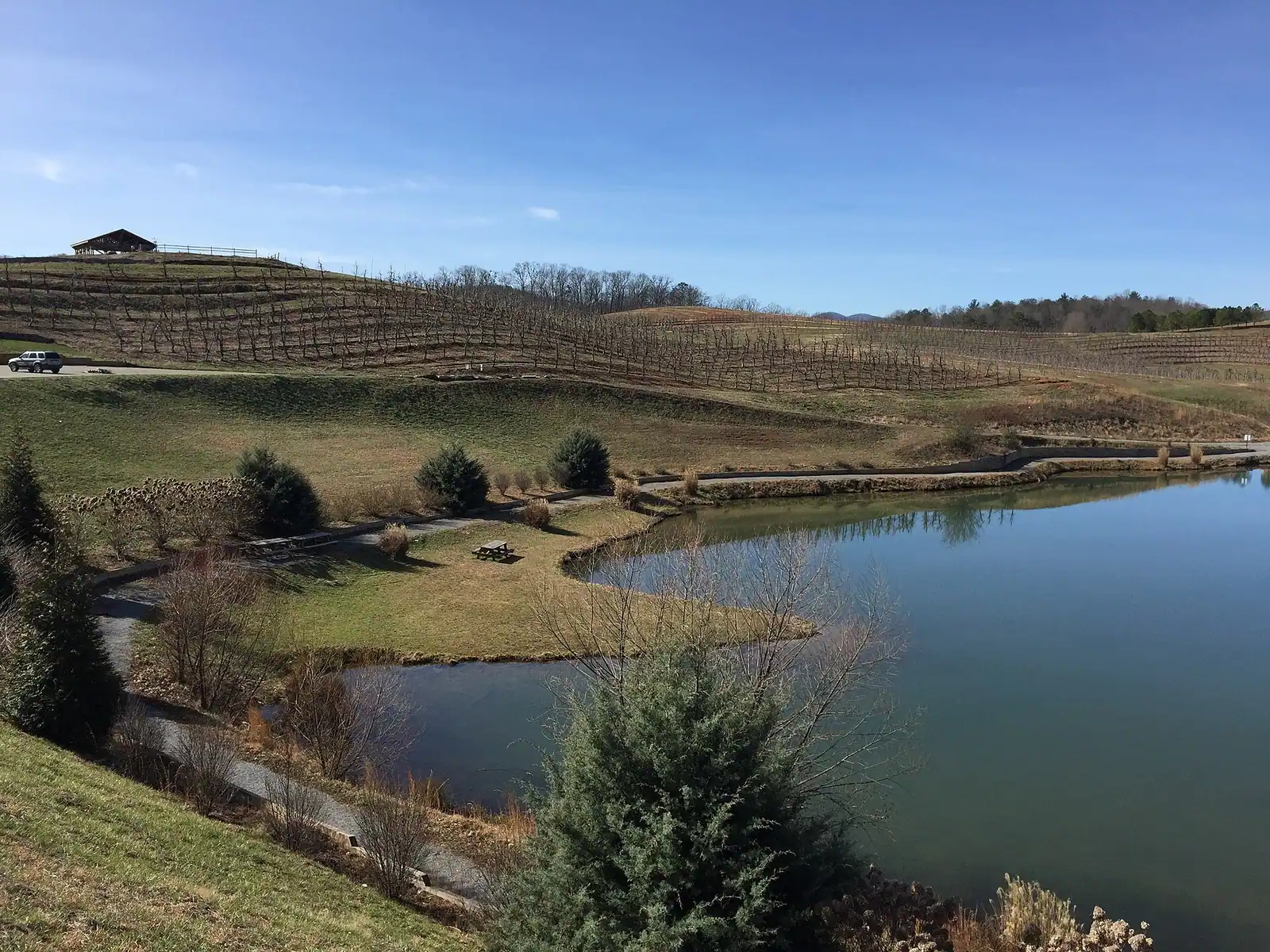
North Georgia has a wine industry, and almost all of it is somewhere else. The state's recognised vineyard country runs through Lumpkin and White counties, around Dahlonega and Helen, an hour and a half east of here, where the tasting rooms are large and the coach parties arrive on Saturdays. Fannin County's version is a scattering of small independent producers making a few thousand bottles a year, and Sugar Creek Vineyard is one of them.
The conditions explain the scale. Blue Ridge sits at 1,762 feet and the vineyards around it sit higher still, which means a short growing season, cold winters and the disease pressure of a humid southern summer. Vinifera grapes, the classic European varieties, struggle here. What works instead are French-American hybrids and cold-hardy crosses bred for exactly this problem, plus fruit wines and mead, which are made across north Georgia in genuine quantity and are not the novelty a visitor from a wine region might assume. Fannin County produces apples, blackberries and honey, and the drinks follow the agriculture.
What that means for an afternoon here is a specific set of expectations. This is not a chateau. The producers in this county are working operations with a room to taste in, often family-run, frequently open only a few days a week, and sometimes closed entirely when there is work to do in the rows. The wines will be sweeter on average than a European palate expects, because the market here likes them that way and because the fruit supports it.
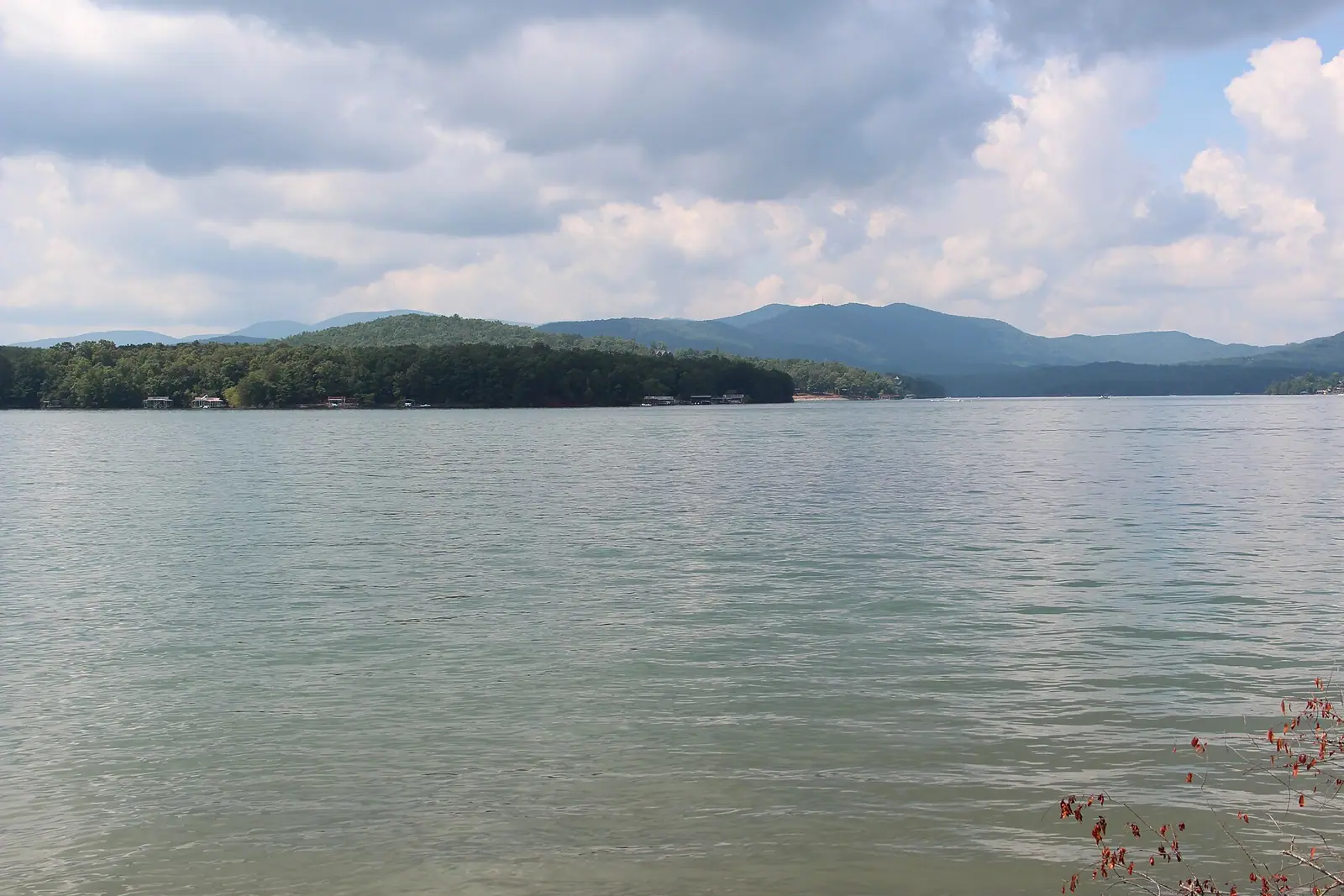
Go for the setting and the conversation rather than for a cellar list. The ridges around Blue Ridge are a handsome place to sit outside with a glass, the people pouring are usually the people who made it, and a tasting here costs a fraction of what the same hour costs in Dahlonega.
Ring or check online before you drive out. Hours at operations this size move with the season and the weather.