Blue Ridge Scenic Railway
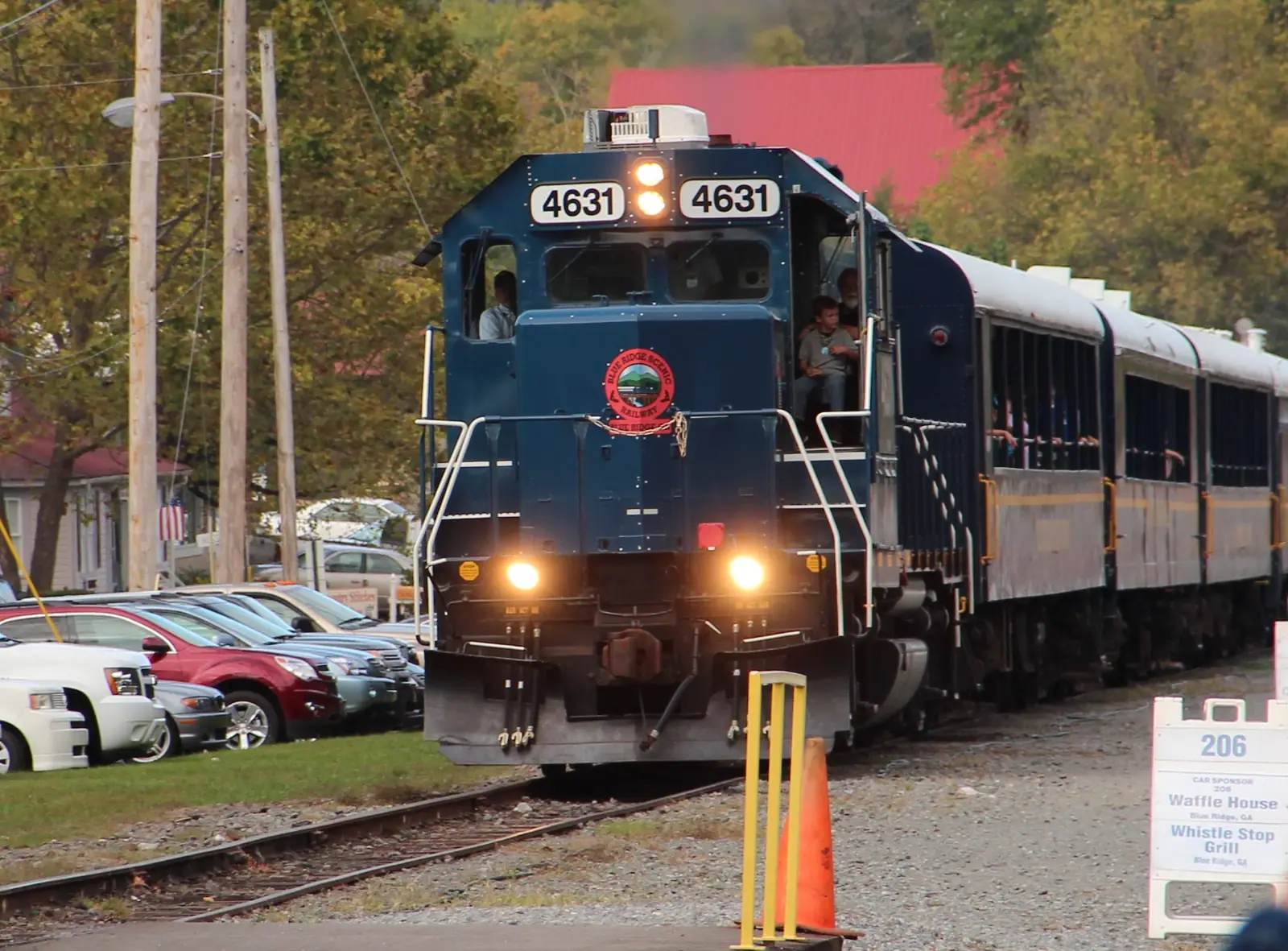
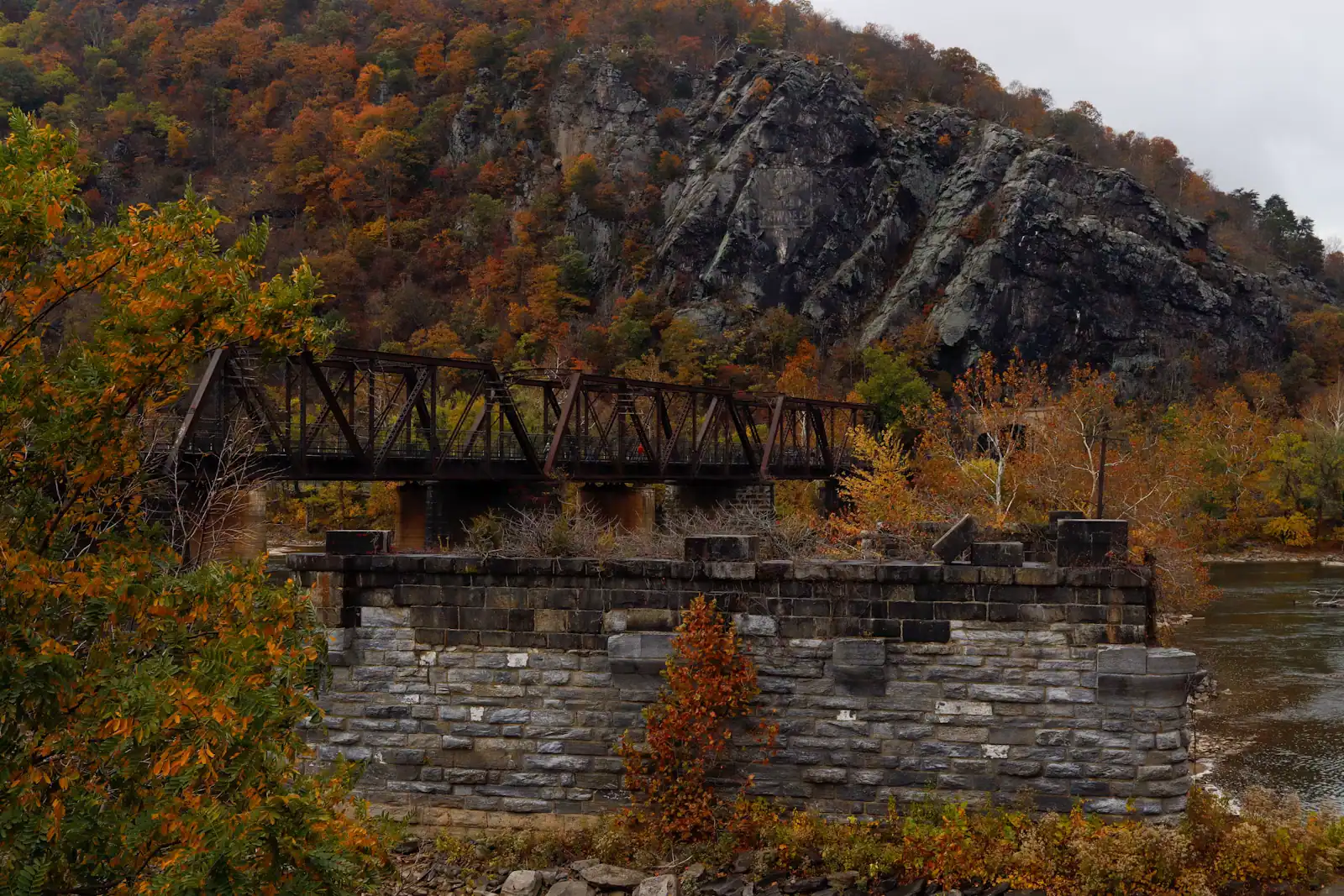
Twenty-six miles of river running to a town cut in half by a state line, in an open-sided coach with the windows down.
2–5 hoursTicketed. Fares vary by coach class, trip length and season.
Photograph: Thomson200
Things to Do
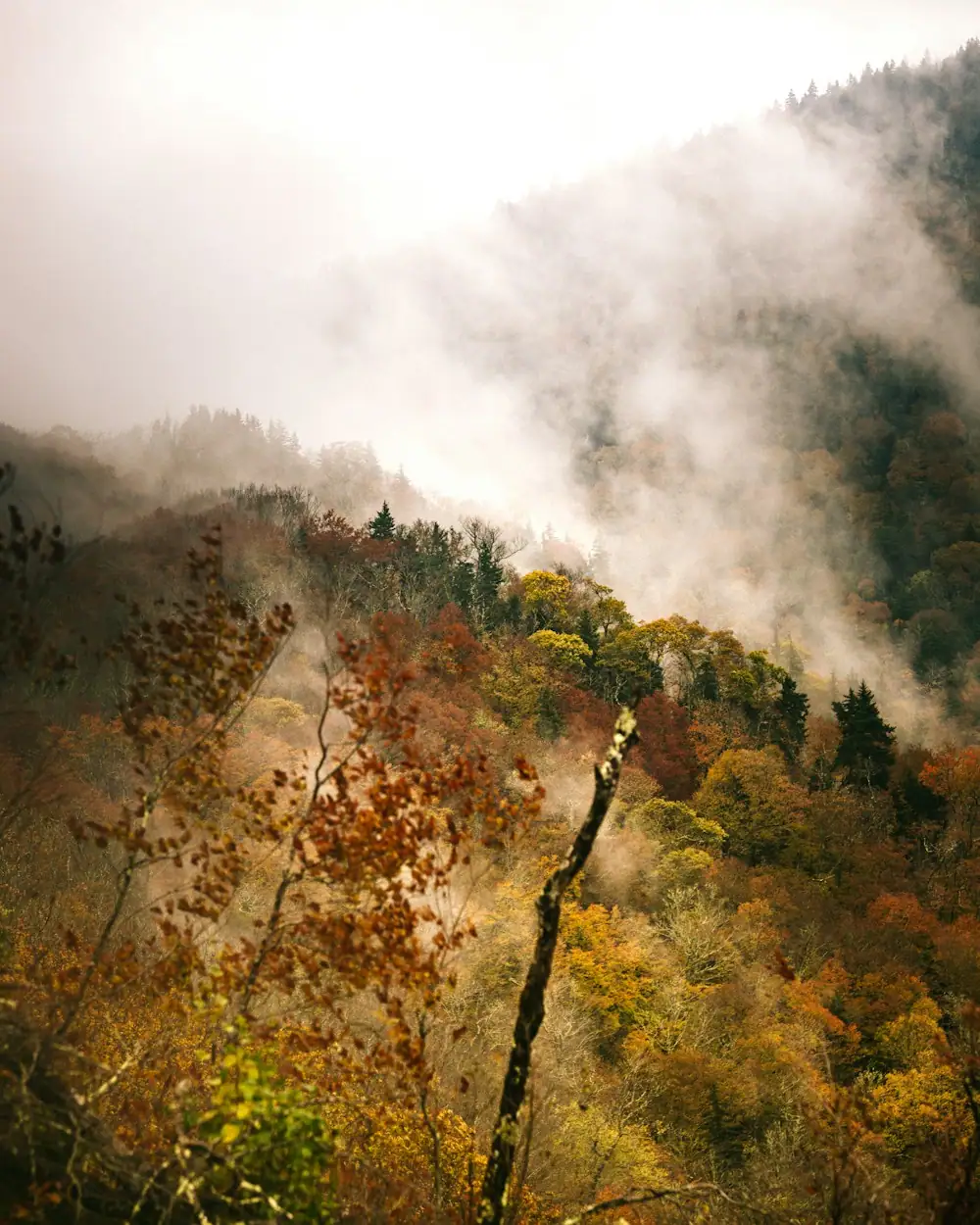
Fall colour around Blue Ridge, Georgia comes down the mountain over two to three weeks. How to time it, how to check, and where to see it without the traffic.
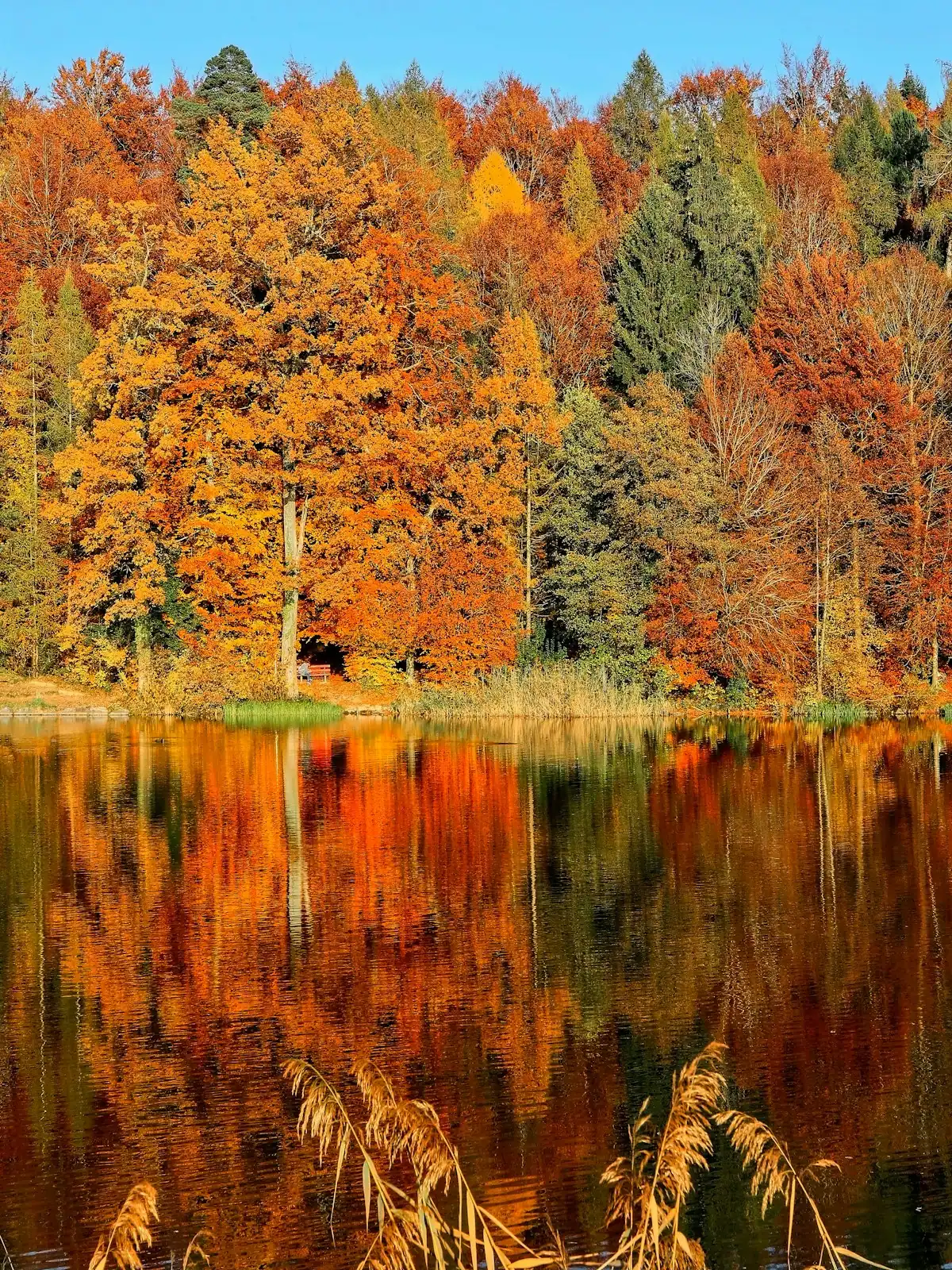
UnsplashAutumn is the reason Fannin County has a visitor economy of the size it has. It is also the season most often mistimed, because people book it against a date rather than against a mechanism, and the mechanism here is elevation.
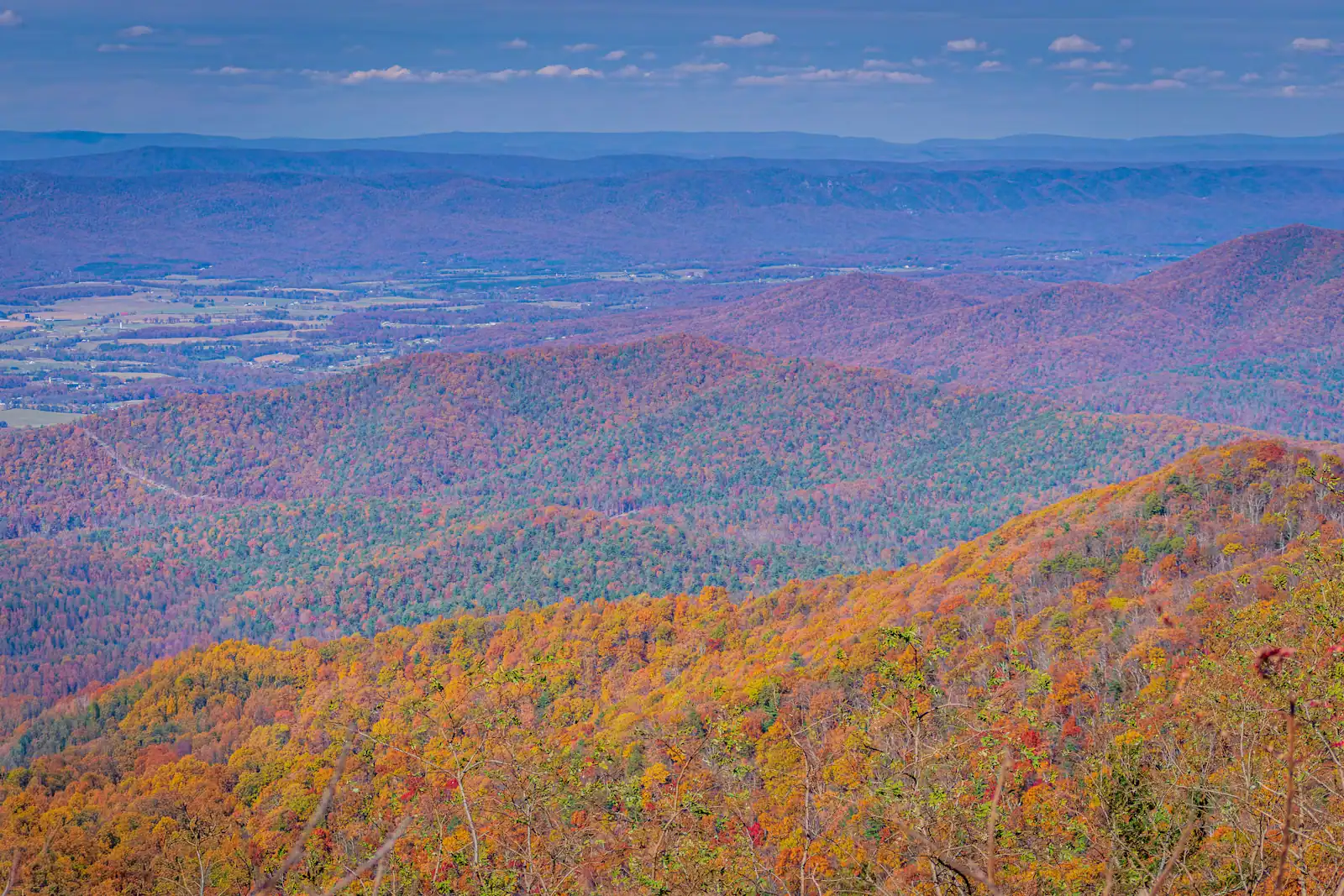
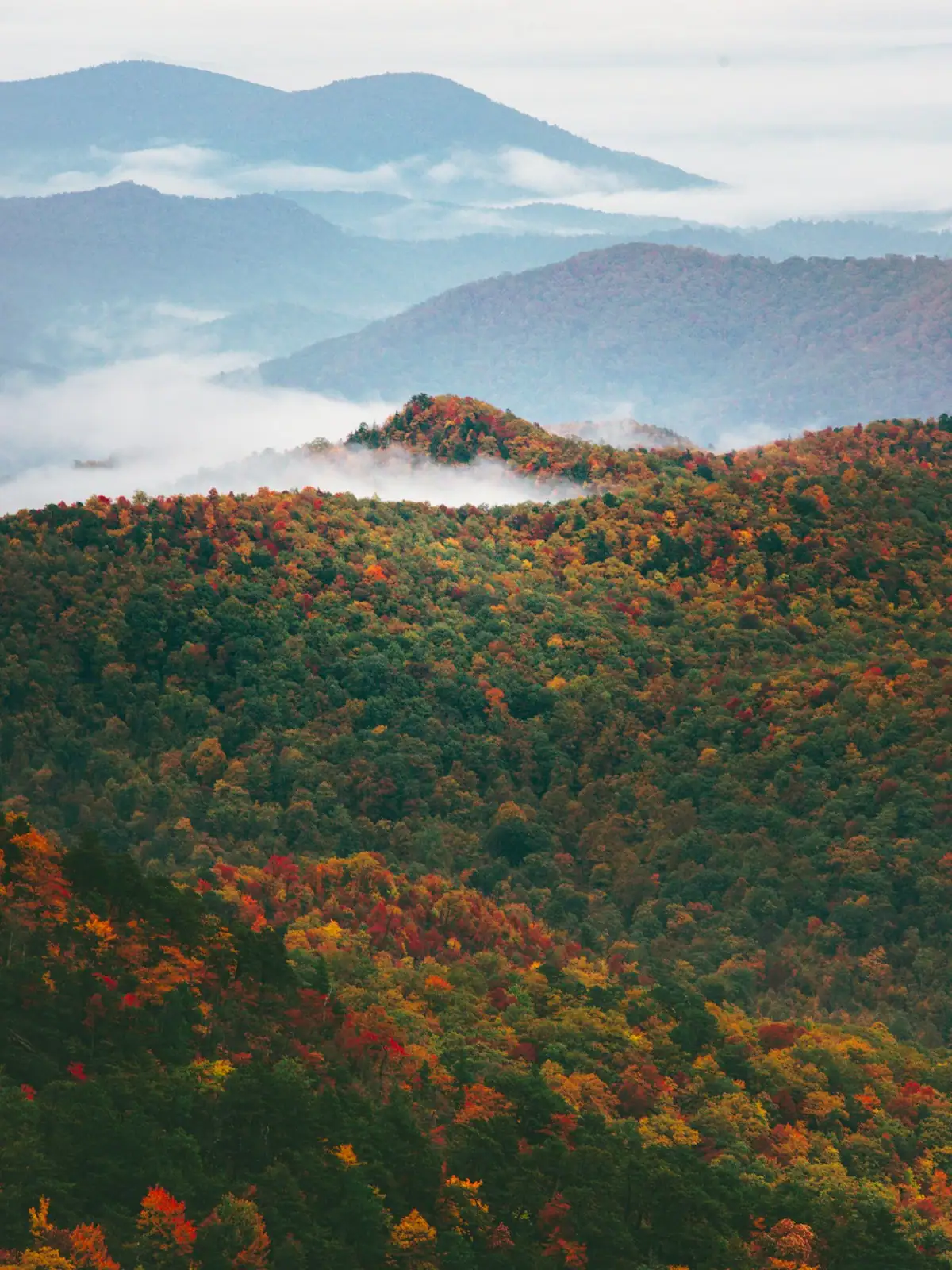
The county runs from a lake held at about 1,686 feet to Springer Mountain at 3,770, with the town sitting somewhere around seventeen hundred. Hardwoods turn from the top down. The high ridges go first, then the middle slopes, then the coves and the river valley and the streets of Blue Ridge itself, and the whole descent usually takes two to three weeks. On any given weekend in the back half of October, something in this county is at peak. It is just not necessarily the thing you are standing under.
That is genuinely good news, and it is the single most useful idea on this page. If you arrive and the town looks green, drive uphill. If you arrive and the ridges are bare, stay low and go to the river. A visitor who understands the ladder can rescue a badly timed weekend; a visitor who booked for a date on a website cannot.
Peak in the southern Appalachians at these elevations usually lands somewhere in the second half of October. Usually. It moves by a week or more in either direction depending on the summer, and anyone who gives you a fixed date in August is guessing. A warm wet late summer pushes it later. An early cold snap without a hard freeze brings it forward and intensifies it. A drought dulls it and drops leaves early. One windy rainstorm at the wrong moment takes a peak week away entirely.
So the honest advice is: book the last two weeks of October if you must commit early, and otherwise wait until about ten days out, look at the reports, and take a cabin on short notice. The second part of that is harder than it sounds, which brings us to the other side of leaf season. This is the most expensive, most booked-out, most congested fortnight of the year in Blue Ridge. Aska Road backs up. The railway sells out. Mercier Orchards on an October Saturday is the busiest place in the county by a distance. Knowing that in advance is what separates a good leaf weekend from a frustrating one.
UnsplashThink of the county as a staircase with about two thousand feet between the top step and the bottom one.
Above roughly 3,000 feet. The Springer Mountain country, the high sections of the Benton MacKaye and Appalachian trails, the Cohutta side. These turn first, and they are usually past their best while the valley is still green. Maples and sourwood go early and go red; the oaks hold on and go bronze weeks later.
Between roughly 2,000 and 3,000 feet. The Aska ridges, Stanley Gap, the shoulders above Lake Blue Ridge. This is the middle of the staircase and, for most visitors, the sweet spot, because it is reachable on tarmac and it holds colour for longer than the tops.
Below 2,000 feet. The lake shoreline, the Toccoa valley, the railway line, downtown Blue Ridge, Mercier. Last to turn and last to drop, often still worth looking at in the first week of November when the high ground is bare.
The practical use of this is simple. Before you drive anywhere on a leaf weekend, ask what elevation you are aiming for. A morning at 3,000 feet and an afternoon at 1,700 gives you two different weeks of autumn on the same day, and it is the reason a well-planned leaf trip beats a lucky one.
The other consequence: the northern slopes and the shaded coves run a few days behind the sunny southern faces at the same height. On a marginal weekend, look north.
When to go
No source predicts this well in August. Several are good in the week before.
Georgia State Parks Leaf Watch. The state parks system runs a leaf page through the season and points at a fall foliage prediction map. Its own observations are a useful calibration: Black Rock Mountain, up at altitude in the north-east corner, is typically one of the first Georgia locations to show colour, while F.D. Roosevelt State Park down in the middle of the state often peaks in early November. That spread is the whole story of Georgia autumn in two data points.
The Forest Service district office. The Blue Ridge Ranger District on East Main Street sees this every year and will give you a straight answer about which elevations are turning.
The county tourism office. Fannin County's visitor bureau posts reports through the season and runs the autumn festival calendar, which is worth checking for its own sake.
A phone call to whoever you are renting from. The single best source. Cabin managers drive these roads daily and have no incentive to tell you the ridges are glorious when they are brown.
Webcams and recent photographs, not stock images. Search for pictures posted in the last week rather than the pretty ones at the top of the results, which are frequently from a different year and occasionally from a different state.
Do all of that at about ten days out and you will get within a few days, which is as good as this gets.
Leaf colour is chemistry with weather sitting on top of it, and three variables do most of the work.
Summer moisture. A summer with reasonable rainfall produces healthy leaves that hold on long enough to develop colour. Drought stress causes trees to shut down early, turn a dull yellow-brown and drop, which is why a dry August is the first sign of a disappointing October.
The autumn temperature pattern. The best displays come from a run of warm sunny days followed by cool nights that stay above freezing. That combination traps sugars in the leaf and produces the deep reds. A hard early freeze does the opposite: it kills the leaf outright and you get brown.
Wind and rain at the wrong moment. A single strong frontal system in the peak week can strip the ridges in a night. Nothing can be done about this and it is worth having a wet-weather plan.
There is also a species effect that visitors notice without naming. Sourwood and black gum go crimson very early, often in September, and give the first hint of the season. Maples follow. The oaks, which dominate a lot of these slopes, turn late and go russet and bronze rather than scarlet, which is why a Fannin County ridge at peak reads warmer and more copper than a New England postcard. That is the honest character of southern Appalachian autumn, and it is beautiful on its own terms rather than as a lesser version of something else.
Local tips
How they compare
| Where | What you get | Best for | The catch |
|---|---|---|---|
| The Aska ridges | Colour at eye level and long views down to the lake | Walkers, photographers | Aska Road and the trailheads are jammed by nine on an October Saturday |
| The Blue Ridge Scenic Railway | Twenty-six miles of river valley from an open car, with the canopy above you | Anyone who does not want to drive, and grandparents | Sells out weeks ahead for October; book first, plan the rest around it |
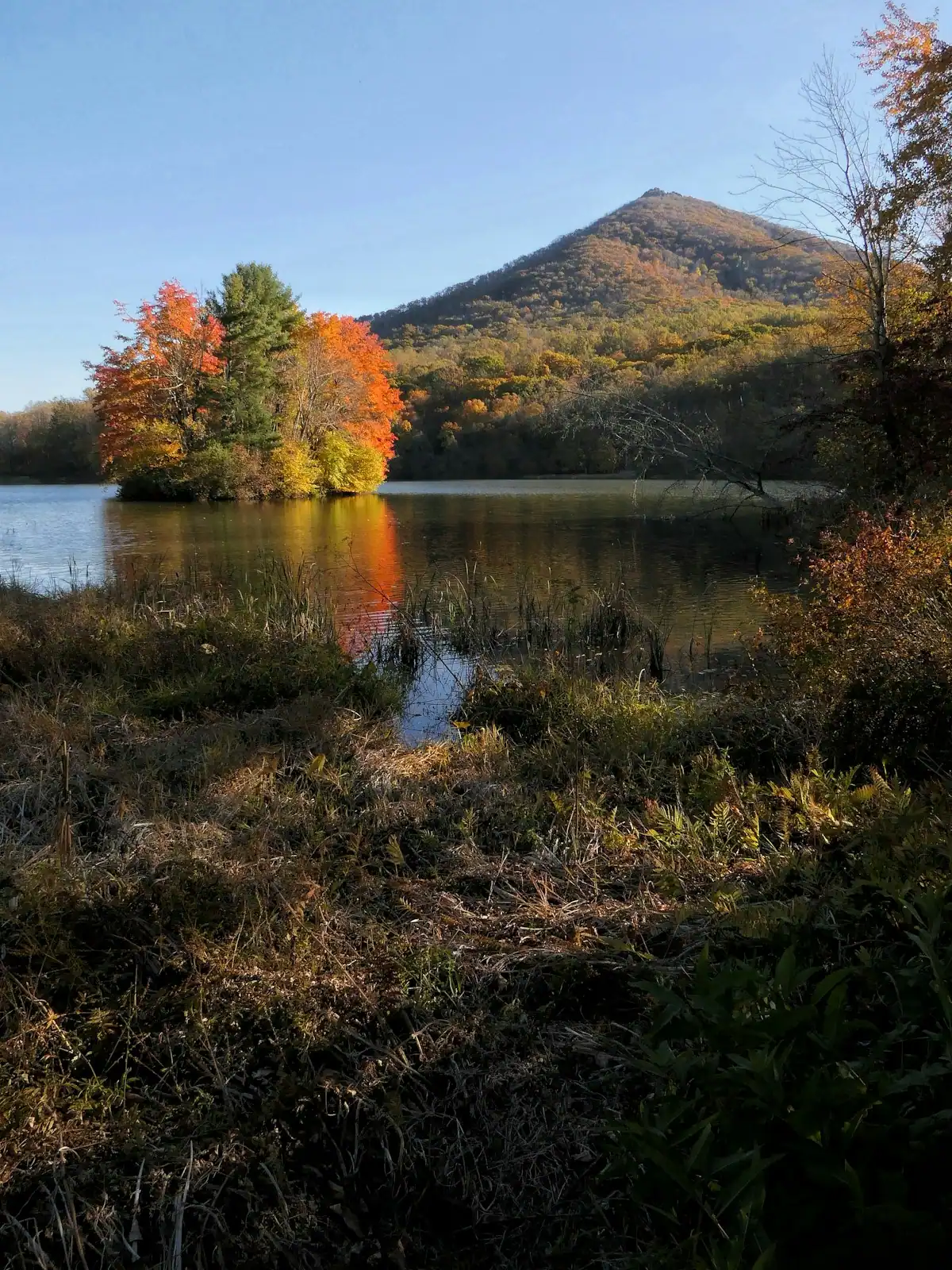
| Lake Blue Ridge from the water | Turning hardwoods reflected, and almost no buildings in frame | Couples, early risers | Boat hire is limited and October dates go early |
| Springer Mountain and the high trails | The first colour of the season, three weeks before town | Hikers, early-October visitors | Long gravel drive on Forest Service Road 42 |
| Downtown and Mercier Orchards | Street trees, apples, cider, doughnuts | Families, a half day without driving | The orchard on an October Saturday is the busiest place in the county |
If you only do one of these, do the railway in the middle of the month and the Aska ridges at the end of it. That pairing covers two different rungs of the elevation ladder and needs one booking rather than five.
If you have a car and a weekday, drive GA 60 south towards Suches and back. It climbs, it winds, it is slow, and it shows you the whole staircase in an hour and a half.
Before you book
October is not a quiet month here and pretending otherwise would be dishonest.
Cabins. This is the most expensive and earliest-booked fortnight of the year. Minimum stays get longer, rates rise, and the good cabins with the view and the hot tub are gone months out. If you are booking late, look at midweek. A Tuesday to Thursday in peak colour costs a fraction of the Friday to Sunday either side of it and the trails are empty.
Roads. Aska Road, the approach to Mercier, and the two-lane routes into town carry far more traffic than they were built for. Journey times that are fifteen minutes in June are forty in October. Build that into the day rather than discovering it.
Parking. Trailhead pull-ins on the Aska network fill early. If a pull-in is full, drive on rather than inventing a space on a blind bend, because these are working roads with log trucks on them.
The orchard. Mercier Orchards has been there since 1943 and is, deservedly, an institution. On an October Saturday it is also a car park with a queue. Go on a weekday, go early, or go in the last hour of the day.
The railway. Book before you book anything else. October through Thanksgiving is its busiest run of the year and the train does not add carriages because you asked nicely.
None of this means avoid October. It means arrive with a Tuesday mindset in a Saturday month.
On the ground
Every place below has its own page — hours, parking, what it costs and what to expect when you get there.

Twenty-six miles of river running to a town cut in half by a state line, in an open-sided coach with the windows down.
2–5 hoursTicketed. Fares vary by coach class, trip length and season.
Photograph: Thomson200

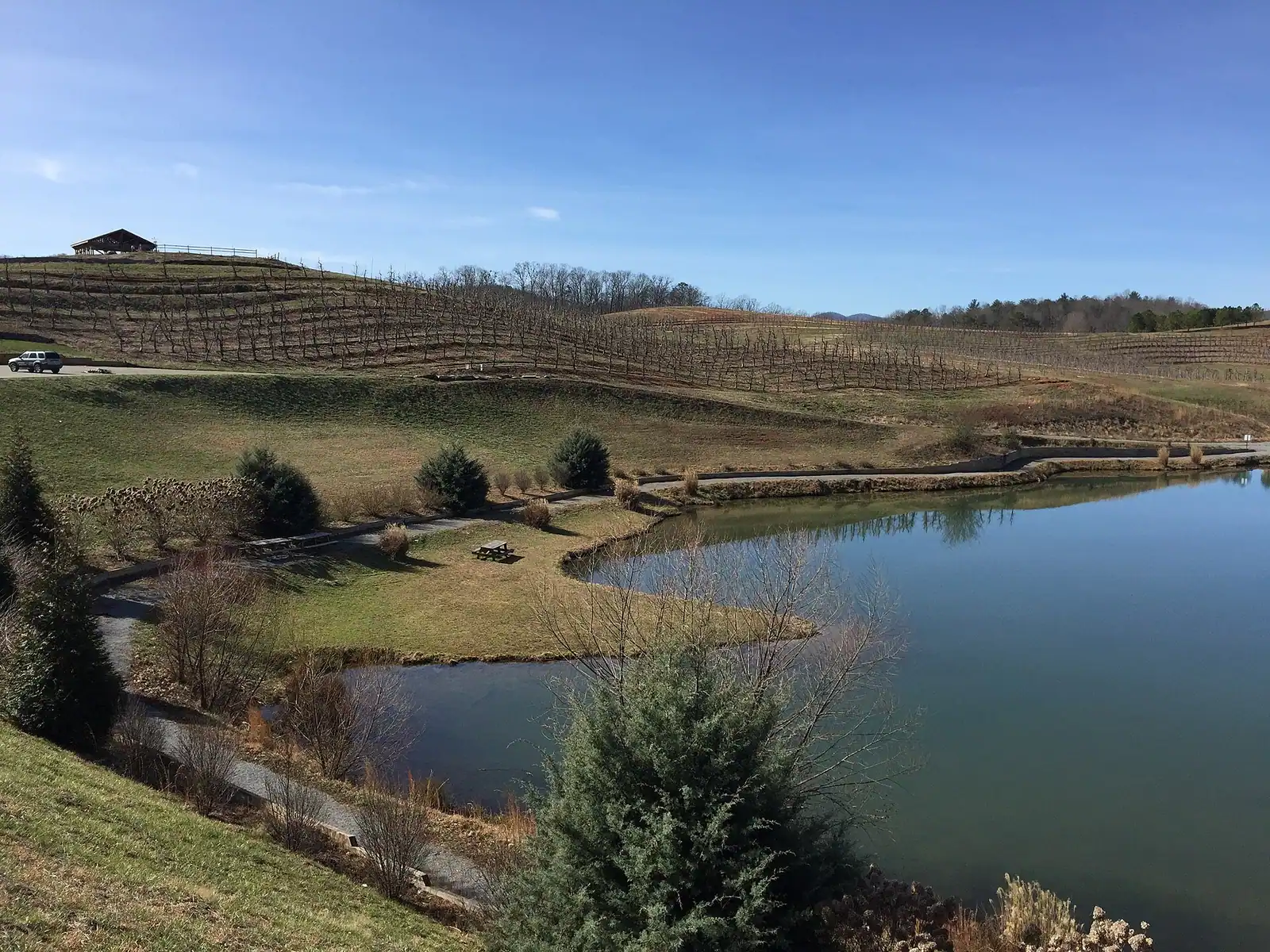
A fourth-generation apple farm with a bakery, a hard cider house and, on an October Saturday, a car park like a county fair.
1–3 hoursFree to visit the market, bakery and cider house. U-pick and tastings are charged.
Photograph: Thomson200

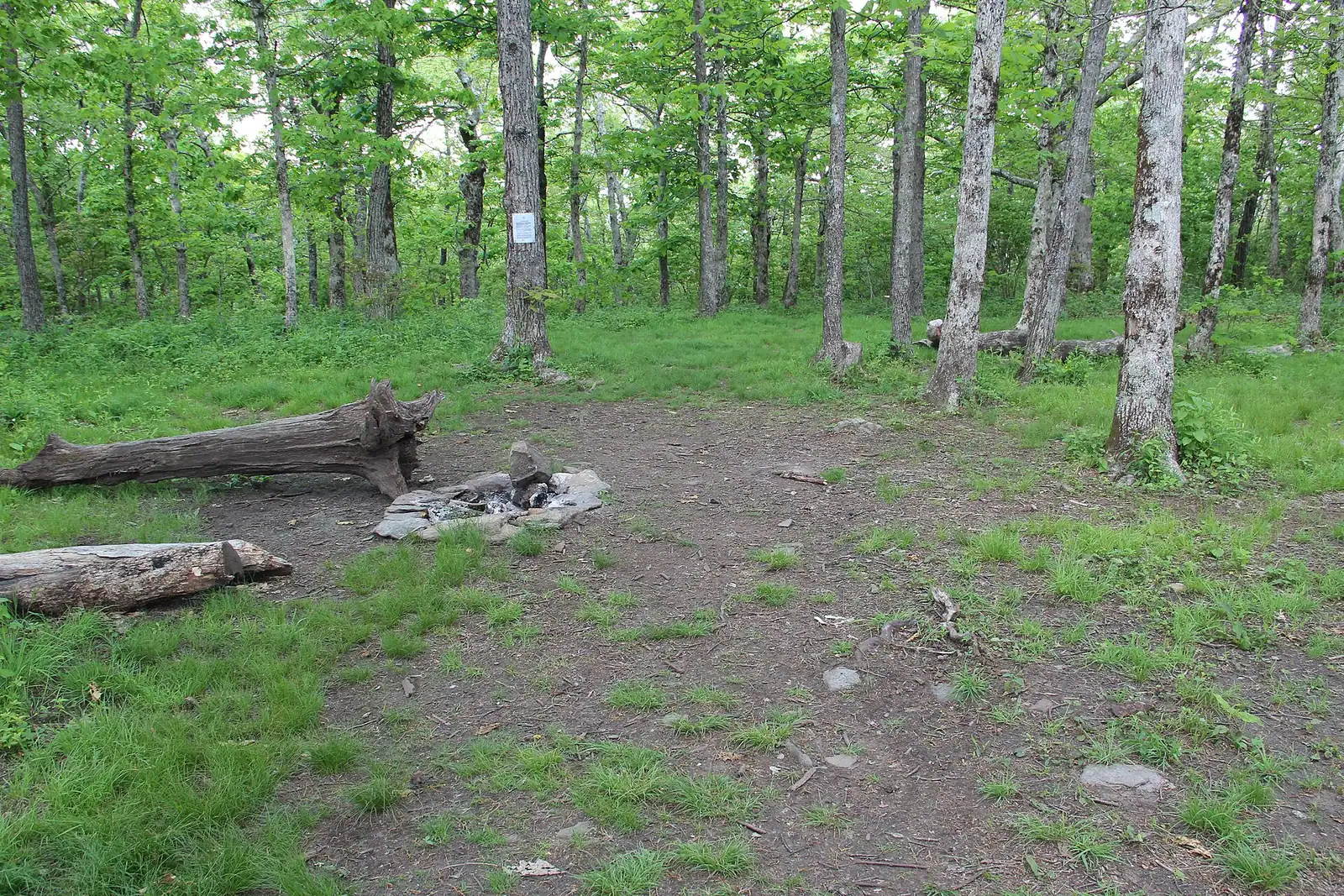
The Appalachian Trail's first white blaze sits at 3,770 feet, about an hour of mountain road from a Blue Ridge cabin.
1.5–7 hoursFree. No entry fee, no parking charge, no facilities.
Photograph: Thomson20192

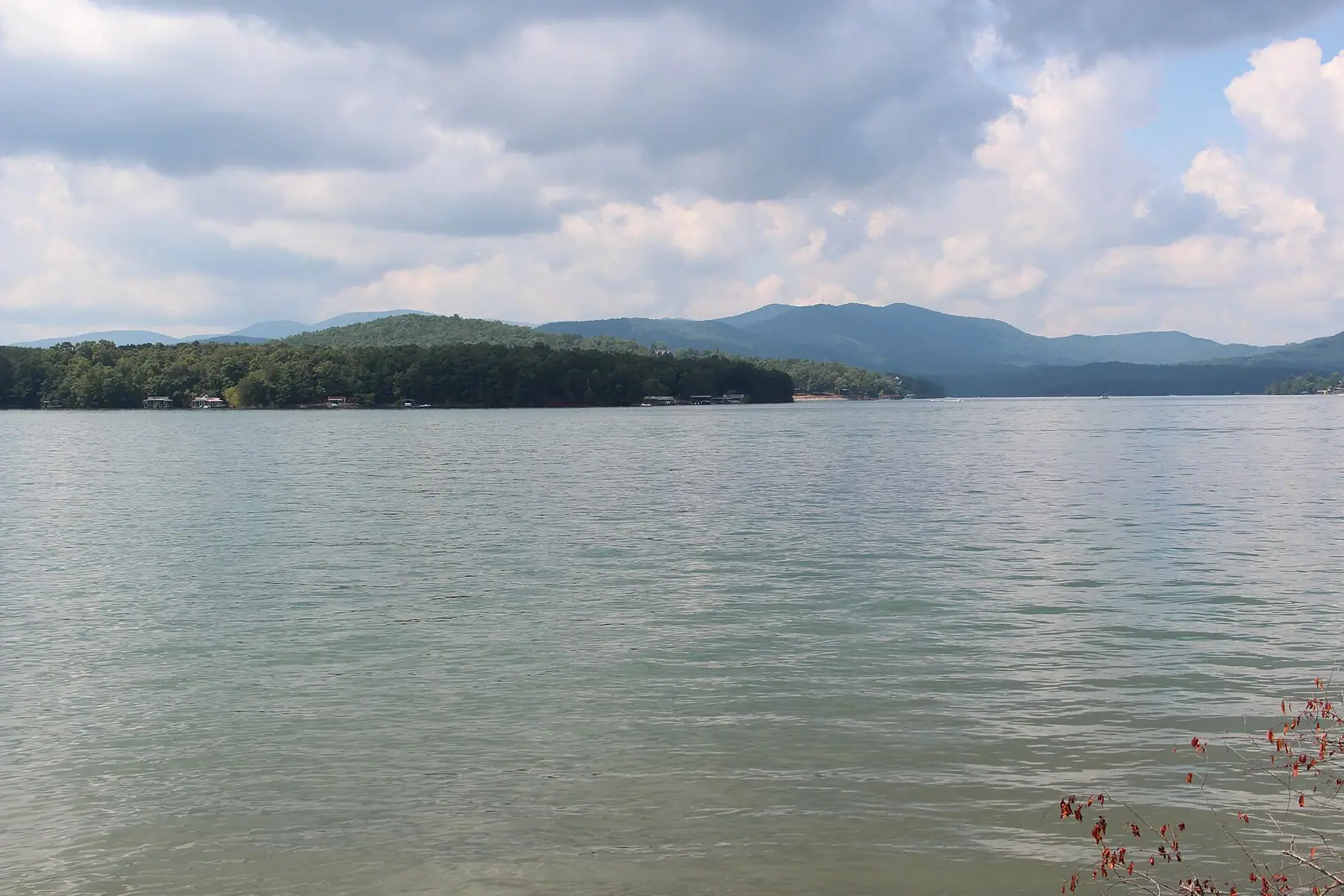
Thirty-three hundred acres of cold green water with national forest around most of it, and a level that TVA moves by dozens of feet a year.
1.5–8 hoursFree to look at and to fish from public land. Recreation areas and ramps may charge.
Photograph: Thomson200

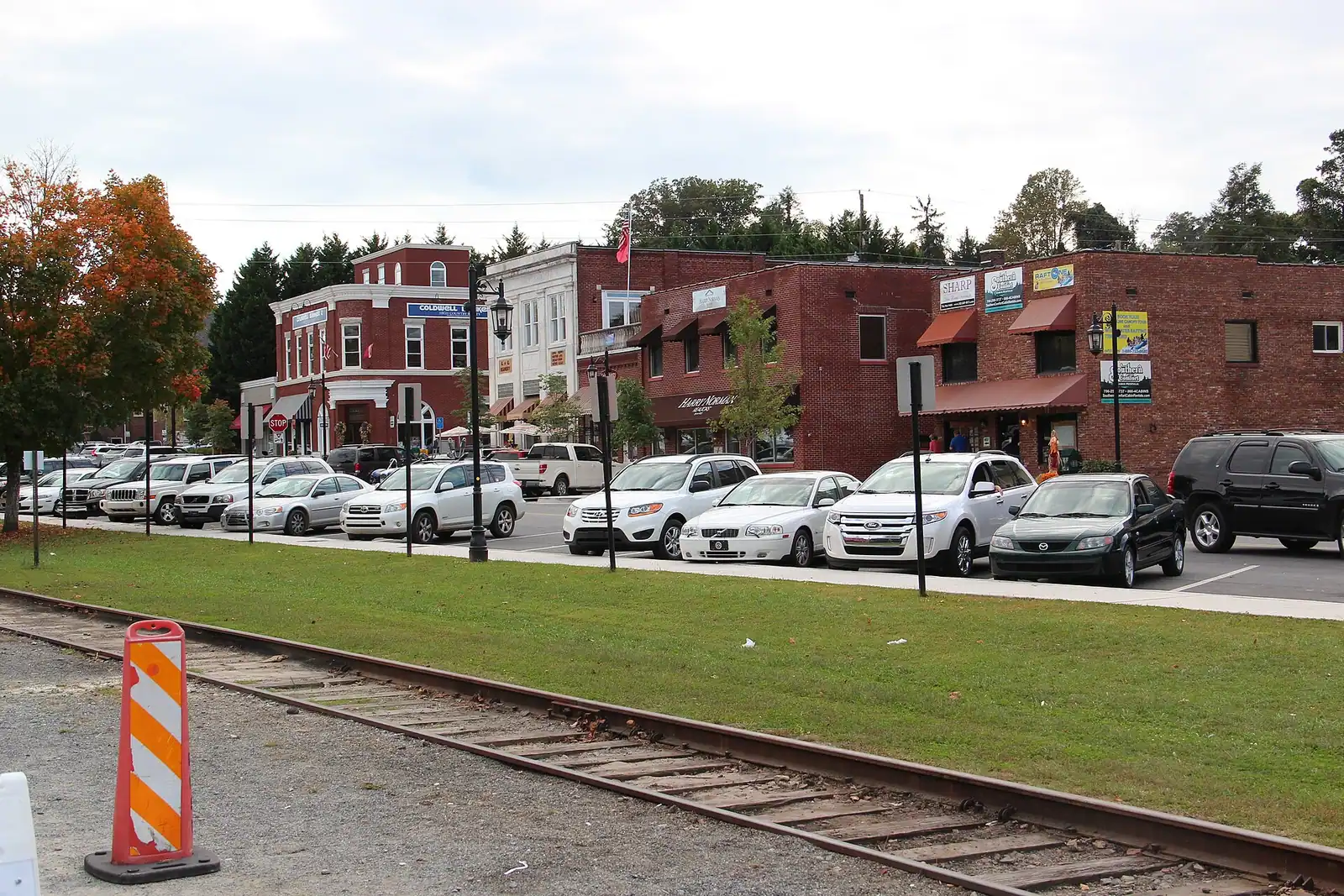
Four blocks of shopfronts facing a working railway depot, small enough to walk twice and busy enough to need a parking plan in October.
1–4 hoursFree. Street parking is free and scarce on peak weekends.
Photograph: Thomson M

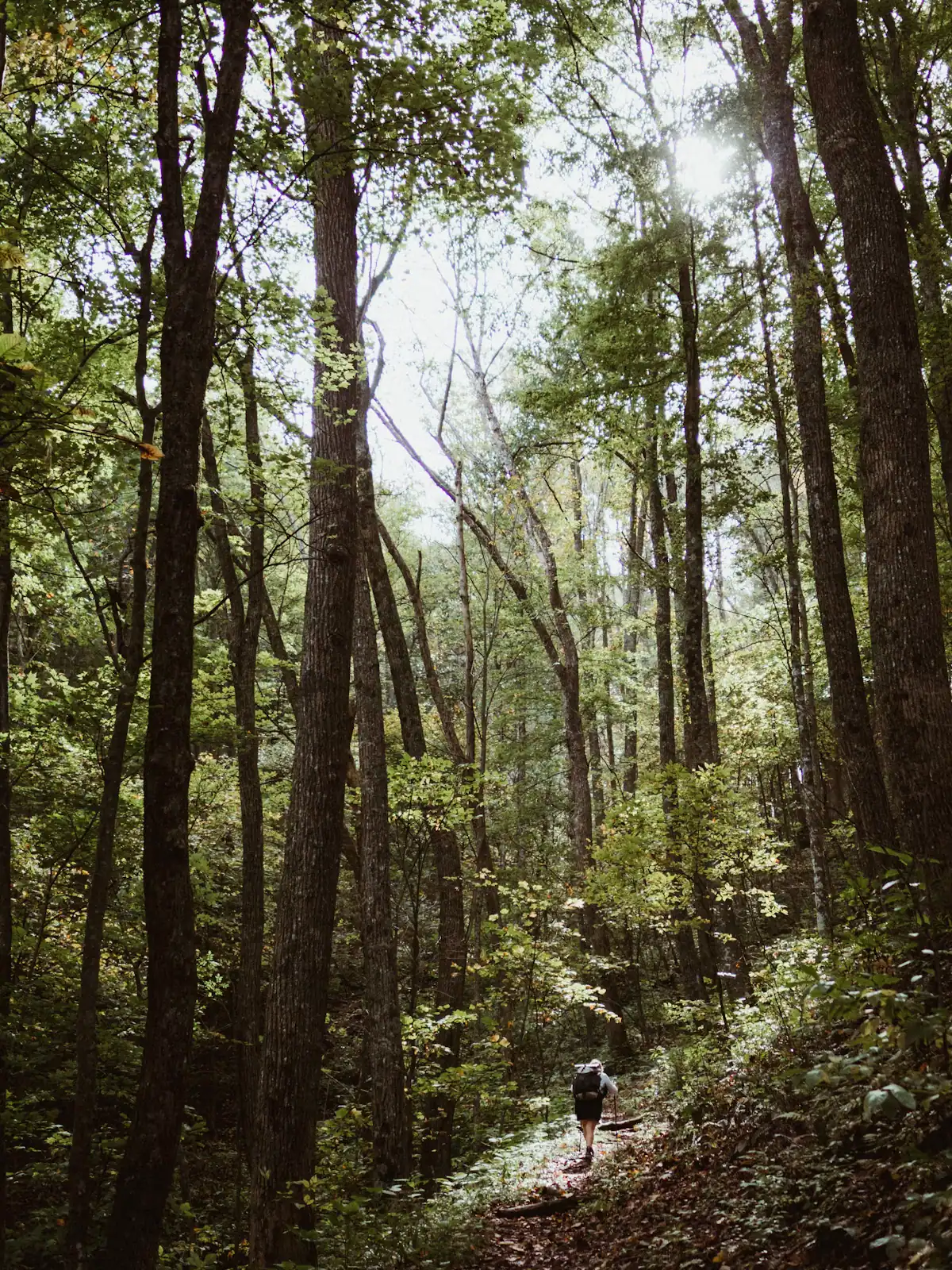
A ridge of Forest Service singletrack wedged between the lake and the river, and the closest real hiking to most Blue Ridge cabins.
1.5–6 hoursFree. No permit, no parking fee, no facilities.
Photograph: Unsplash

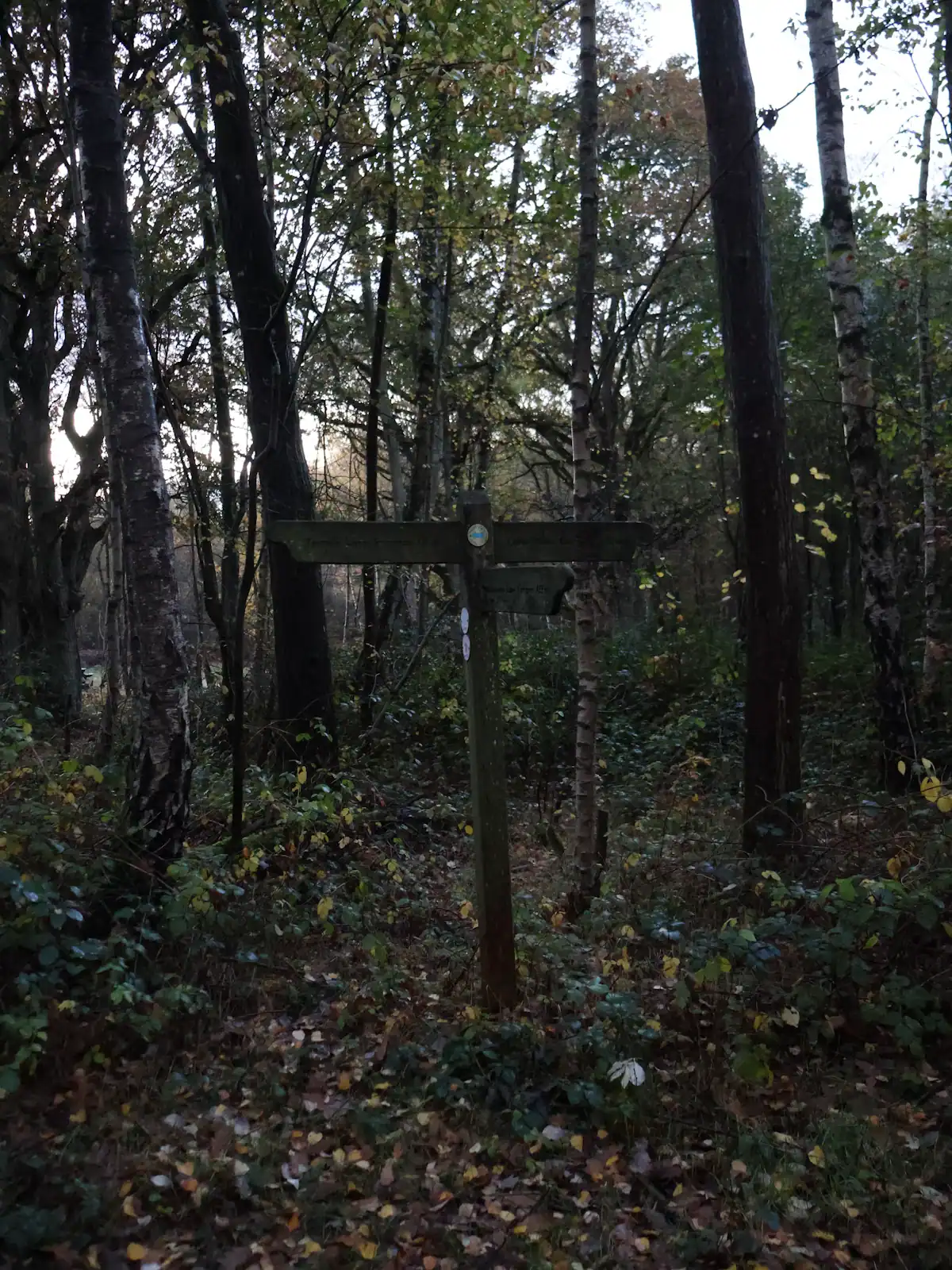
The quieter long trail: 300 miles from Springer Mountain to the Smokies, and the one that actually runs through Fannin County.
1–8 hoursFree. No permit required for day walking, no facilities on the trail.
Photograph: Unsplash
Straight answers
Usually somewhere in the second half of October, but it moves by a week or more each year and it is never one date for the whole county. Colour starts on the high ridges above 3,000 feet and works down to the lake and the town over two to three weeks. Book the back half of the month if you have to commit early, then check reports about ten days out and plan which elevation to aim for.
Georgia State Parks runs a Leaf Watch page through the season with a fall foliage prediction map, the Blue Ridge Ranger District office on East Main Street sees it first-hand, and Fannin County's visitor bureau posts reports. The best single source is the person managing your cabin, who drives these roads every day. Look for photographs posted in the last week rather than stock images, which are often from another year.
It is the easiest way to see the colour, because the line runs 26 miles round trip along the Toccoa River through the lowest ground in the county, with the canopy close overhead from an open car. Two-hour and four-hour options exist, the longer including a two-hour layover in McCaysville and Copperhill. October through Thanksgiving is its busiest stretch and it sells out well ahead, so book this before anything else.
It depends when you arrive. Early in the season, drive up: the Springer Mountain country and the high trail sections turn first. Mid-season, the Aska ridges above Lake Blue Ridge give colour at eye level with long views down to the water. Late in the season, stay low along the river valley, the lake shoreline and the town, which hold their leaves after the ridges are bare.
Considerable. Aska Road, the approach to Mercier Orchards and the two-lane routes into town carry far more vehicles in October than they were designed for, and a fifteen-minute journey in June can take forty. Trailhead pull-ins fill by mid-morning at weekends. The fix is midweek: a Tuesday in peak colour costs less, parks easily and looks exactly the same as the Saturday.
Because of what grows on these slopes. Sourwood and black gum turn crimson early, maples follow with the bright reds, but oaks dominate much of the forest here and they turn late and go russet and bronze. The result at peak is warmer and more coppery than a New England image, which is the genuine character of southern Appalachian autumn rather than a poor imitation of somewhere further north.
For a weekend, yes, and months rather than weeks. Peak colour is the most expensive and most booked-out fortnight of the year in Fannin County, minimum stays lengthen, and the better cabins go early. Midweek is the escape route: Tuesday to Thursday in the same week is substantially cheaper, easier to find late, and the trails and roads are quiet.
Have one indoor plan ready. The railway runs in the rain with enclosed heated cars as well as open ones, Mercier's bakery and cider house are indoors, and downtown Blue Ridge is a compact walkable Main Street of shops beside the depot. Wet leaves also photograph better than dry ones, with far more saturated colour, so a grey drizzling morning on a ridge is not the write-off it feels like.