Reading a temperature chart will not help you pick a month in Fannin County. The weather is ordinary southern Appalachian weather and it is broadly the same here as it is in Ellijay or Blairsville. What is not ordinary is that four separate schedules decide what a visitor can actually do, and not one of them is the calendar.
They are: the scenic railway's operating season, the picking windows at the orchard, the TVA release schedule that decides whether the Ocoee has water in it, and the drawdown that decides where the edge of Lake Blue Ridge is. Learn those four and the year makes sense.
One thing about the weather is worth saying, though. Your cabin is not at the elevation of the forecast. Blue Ridge sits at 1,762 feet and most rentals are higher, so expect a cabin at 2,200 feet to run several degrees cooler than the Atlanta forecast, with the gap widest on clear nights. Pack a layer more than you think.
The four schedules
The railway. Trains generally run Friday to Monday from late March to the last weekend in December, with daily service except Wednesdays in the first full week of April and again from the middle of June to the end of July. Santa trains take over from Thanksgiving weekend until about a week before Christmas. There is no service through most of January and February.
The orchard. Strawberries in late spring, blueberries and blackberries through early and mid summer, peaches in high summer, apples from late summer to early November, flowers across the warm months. The farm store and cider house are open year round; the fields are not.
The Ocoee. The whitewater over the Tennessee line only runs when the TVA releases water, which is most weekends from March through October. Outside that, the river bed is largely dry and rafting is not an option at any price. Check the release schedule before you build a day around it.
The lake. Lake Blue Ridge sits at around 1,686 feet at full summer pool and its level swings roughly 20 feet in a typical year. High water in summer means ramps, docks and swimming edges are where you expect them. Winter drawdown exposes mudflats and stumps, moves the shoreline a long way out, and makes some ramps awkward or unusable.
Month by month
| Month | The feel | What is running | Crowds and cost |
|---|---|---|---|
| January | Cold, quiet, bare. Ice on shaded gravel | No train. Lake low. Shops on short hours | The cheapest week of the year |
| February | The same, with the first stirrings | Railway season starts winding up late in the month. Chili cook-off in town | Very quiet |
| March | Waterfalls at their strongest. Thru-hikers at Springer | Weekend trains resume. Ocoee releases begin | Quiet except at trailheads |
| April | The best walking month. Wildflowers, cool nights | Spring break week brings near-daily trains. Trout festival | Building. Holiday weekends busy |
| May | Warm days, green everywhere. Strawberries | Arts in the park. Weekend trains | Moderate. Memorial Day is a spike |
| June | High summer arrives. Afternoon storms | Near-daily trains from mid-month. Tubing and the lake | Busy at weekends, calm midweek |
| July | Humid, warm, thunderstorms most afternoons | Everything running. Peaches. Peak lake season | Busy. The July 4 weekend is a peak |
| August | Hot and heavy. Yellow jackets on trails | Apples begin. Lake still warm | Eases after schools return |
| September | The best-kept month. Warm days, cool nights | Fall foliage trains start. Blues and barbecue | Moderate and rising |
| October | The peak of the year, by a wide margin | Everything, at capacity. Colour moves down the mountain | Highest rates, longest minimum stays, real traffic |
| November | Colour in the valley early, bare by the end | Santa trains from Thanksgiving. Late apples | Drops sharply after the first week |
| December | Cold, clear, festive downtown | Santa trains to mid-month, then a short return of normal service | Busy on the weekends before Christmas |
Choose by what you actually want
| If your priority is | Go in | Why |
|---|---|---|
| Fall colour without the crowd | Early October up high, or the first week of November down low | Same colour, a fraction of the traffic |
| Waterfalls at full strength | March to May | Saturated ground, no canopy blocking the view |
| The lake and tubing | Mid-June to mid-August | Full pool, warm water, outfitters running |
| Rafting the Ocoee | Any release weekend, March to October | No release, no river |
| Walking and long days out | April, or late September | Cool, dry, no insects worth mentioning |
| The cheapest cabin | January and February midweek | Nothing is running and that is the point |
| Apples and the orchard | Mid-September to mid-October, on a weekday | Fruit on the trees, car park not yet at capacity |
| Christmas in a mountain town | The first half of December | Lights downtown, Santa trains, cold clear nights |
October, honestly
October is the reason most people come and it deserves a straight assessment.
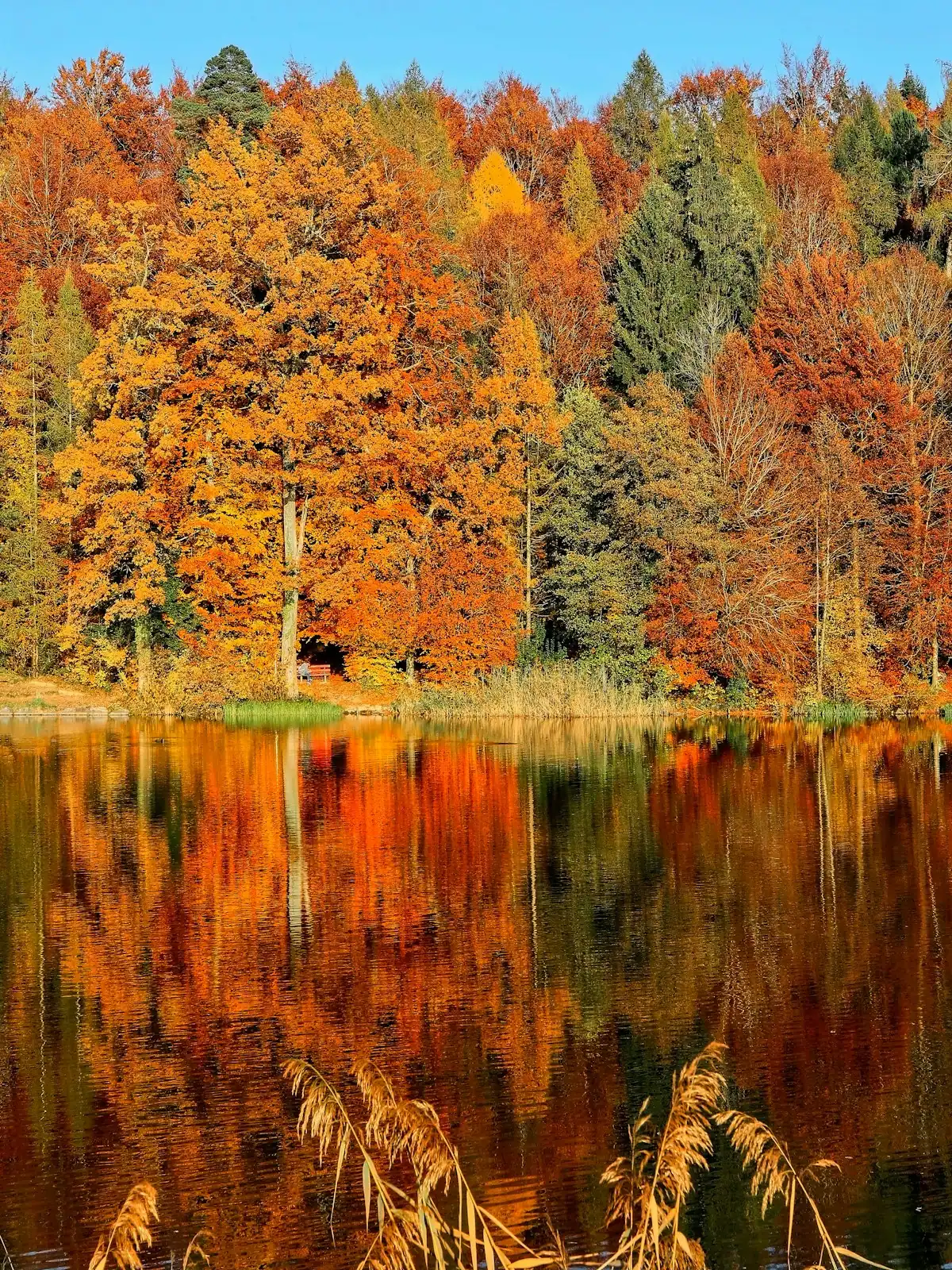
The colour is genuinely worth it. The county spans roughly 2,300 feet of elevation, so the change comes down the mountain over about three weeks and there is good colour somewhere here for most of the month. The apples are ripe. The weather is usually the best of the year.
The costs are real. GA-515 backs up in both directions at weekends. Downtown parking is gone by late morning. Mercier is near capacity by the middle of the day. The railway sells out weeks in advance. Cabin rates reach their annual high and minimum stays get longer, often three nights. If you are choosing between a busy peak weekend and a quiet one either side, take the quiet one.
The two underrated windows
The second half of September. Warm days, cool nights, the first fall foliage trains running, early apples in the fields, and a fraction of October's crowd. This is the best value fortnight of the year in Fannin County and most visitors drive straight past it.
The first ten days of November. The ridges are bare but the valley, the lake shoreline and the railway corridor are often still holding colour, because they are the lowest ground in the county. Rates have dropped, the roads are clear, and the woods are open enough to see through.
Winter, for the right person
January and February are cold, quiet and cheap. No excursion trains, short hours downtown, low lake, and ice that sits on north-facing gravel drives for days after the road below has cleared. Power cuts happen and restoration in a county this rural is not instant.
In exchange you get a bare-tree view you cannot get in October, trails with nobody on them, the county's own rhythm rather than the visitor one, and a wood stove that finally makes sense. Bring more food than the trip needs, ask which way the drive faces, and treat a forecast of freezing rain as a reason to move the dates.
Last updated
Opening hours, ordinances and prices move with the season. We re-check this guide rather than rewrite it, and the date above is the last time someone did. How we research and correct.