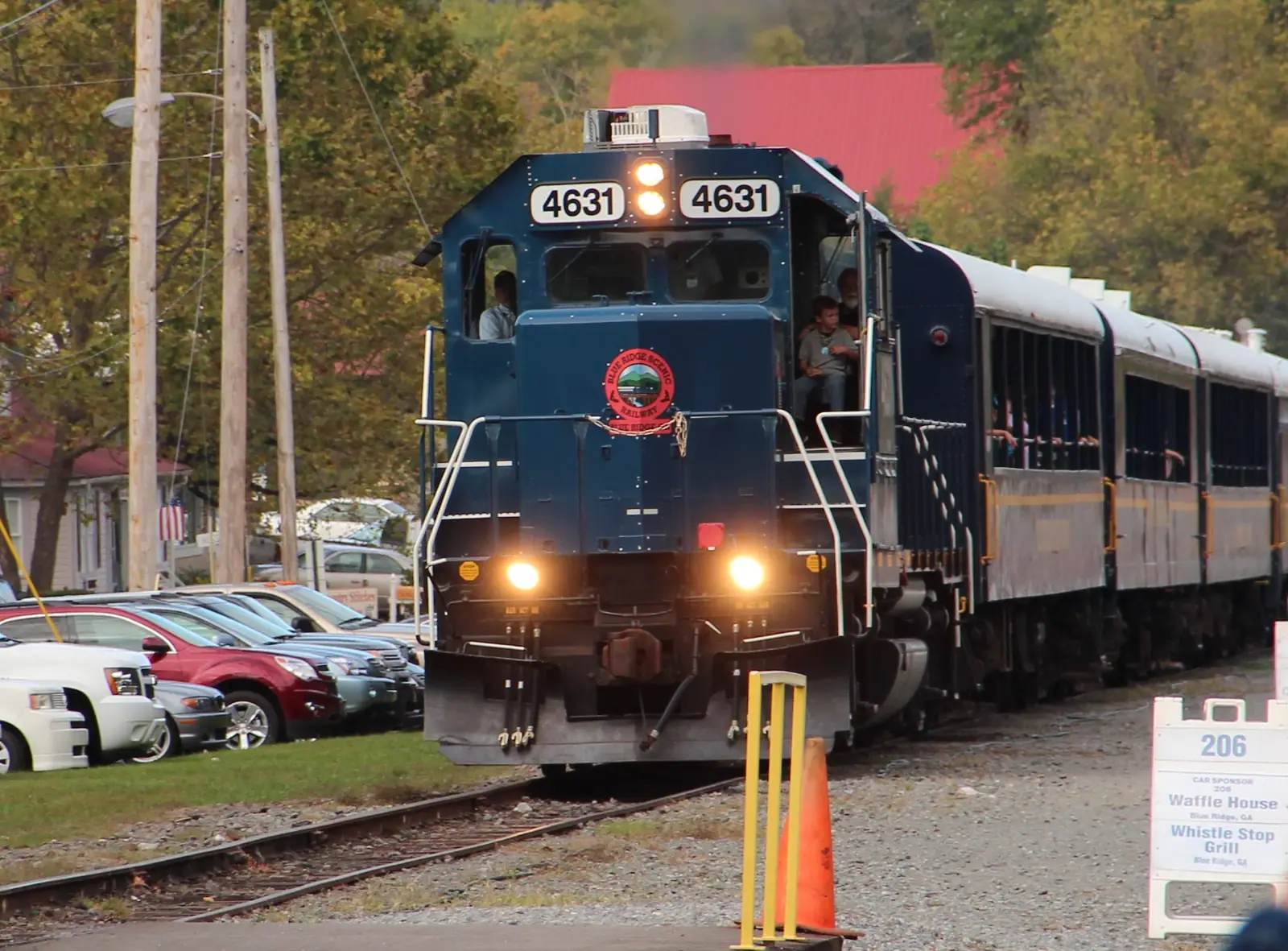
Blue Ridge Scenic Railway
Twenty-six miles of river running to a town cut in half by a state line, in an open-sided coach with the windows down.
2–5 hoursTicketed. Fares vary by coach class, trip length and season.
Photograph: Thomson200
Plan your trip
When to visit Blue Ridge, Georgia: how leaf colour really works at these elevations, what closes in winter, and the month nobody books but should.
UnsplashAlmost everybody asking this question is really asking one narrower one: when do the leaves turn. The honest answer is a range rather than a date, and anybody giving you a date is guessing.
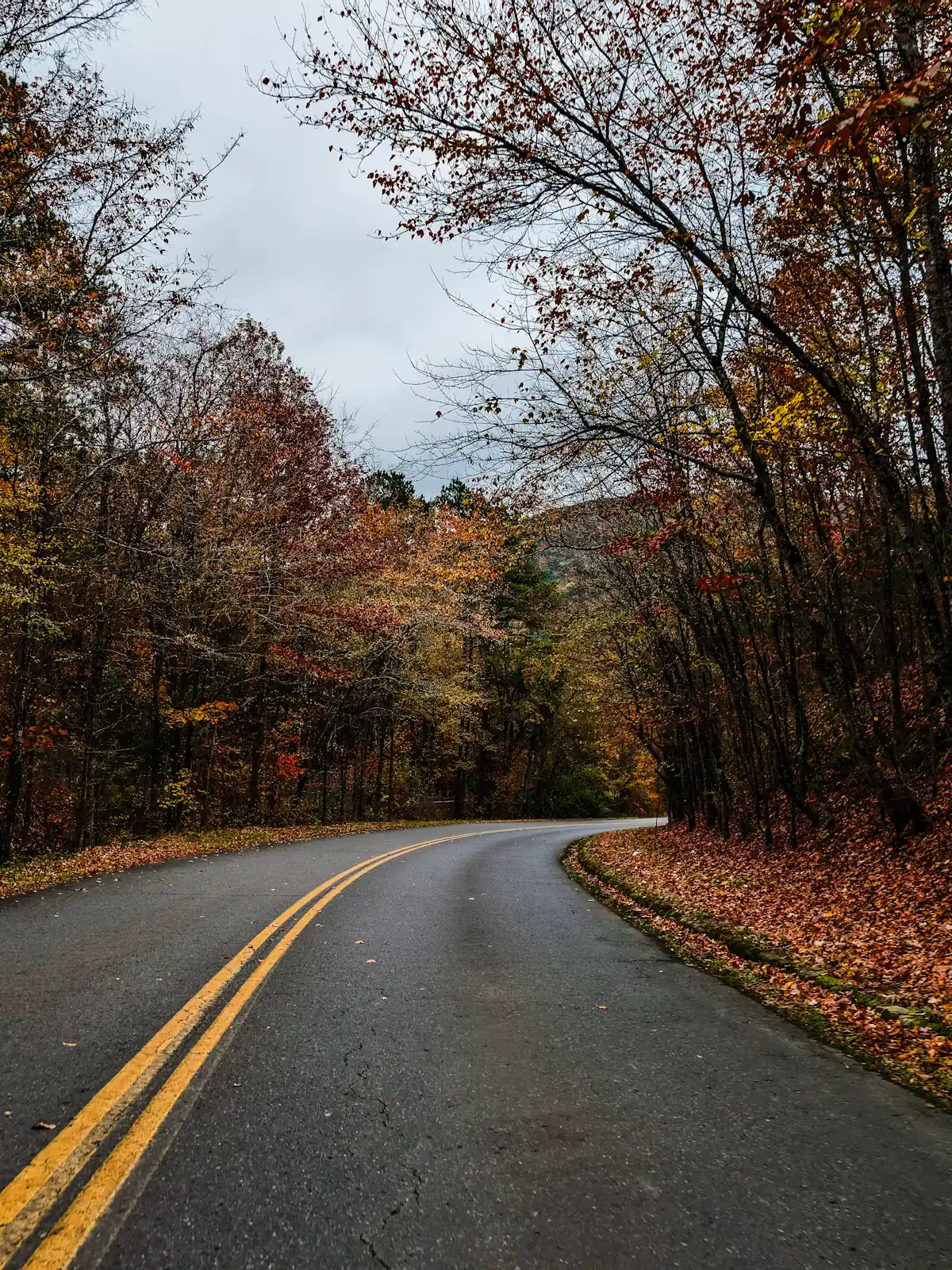
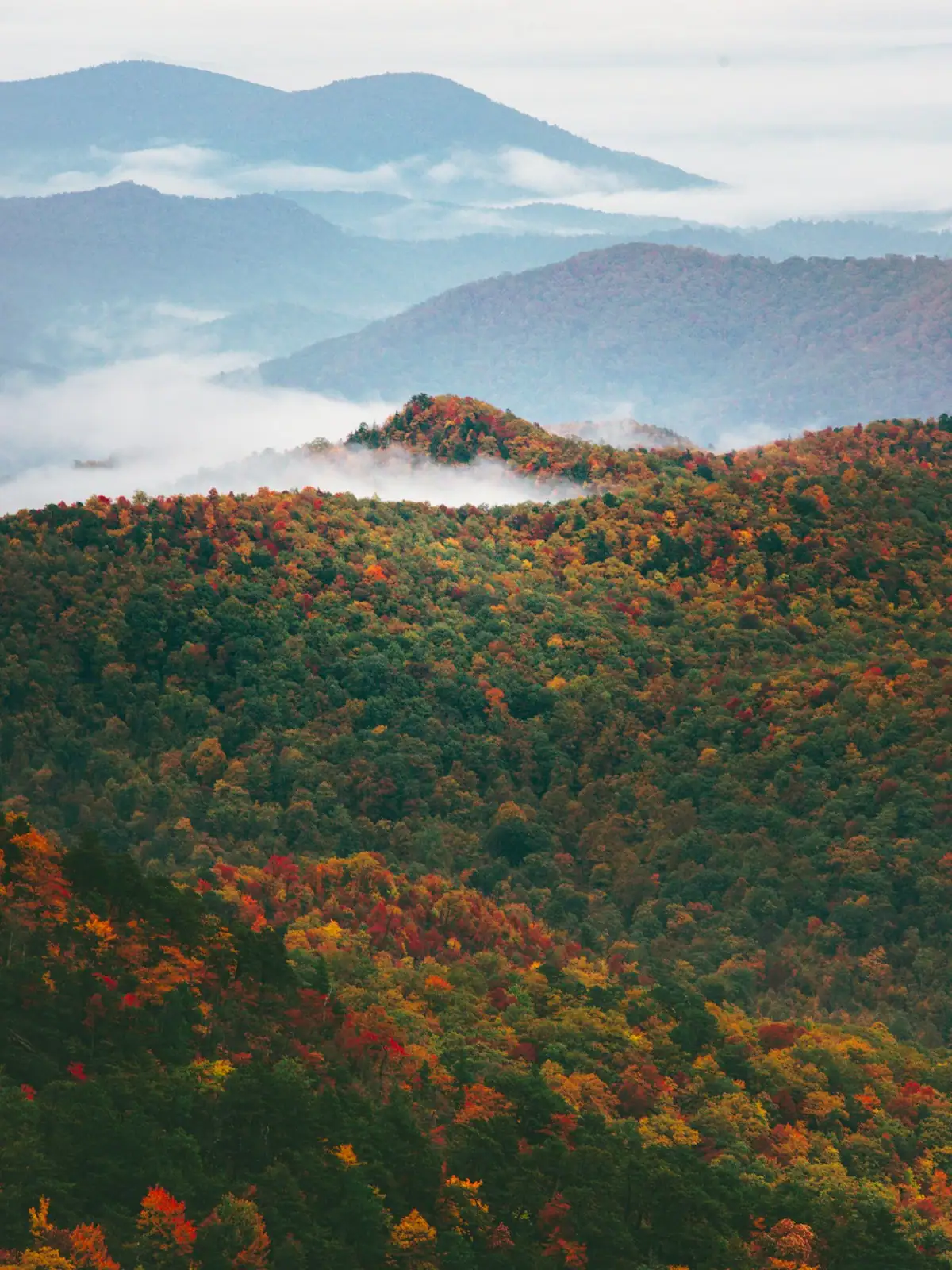
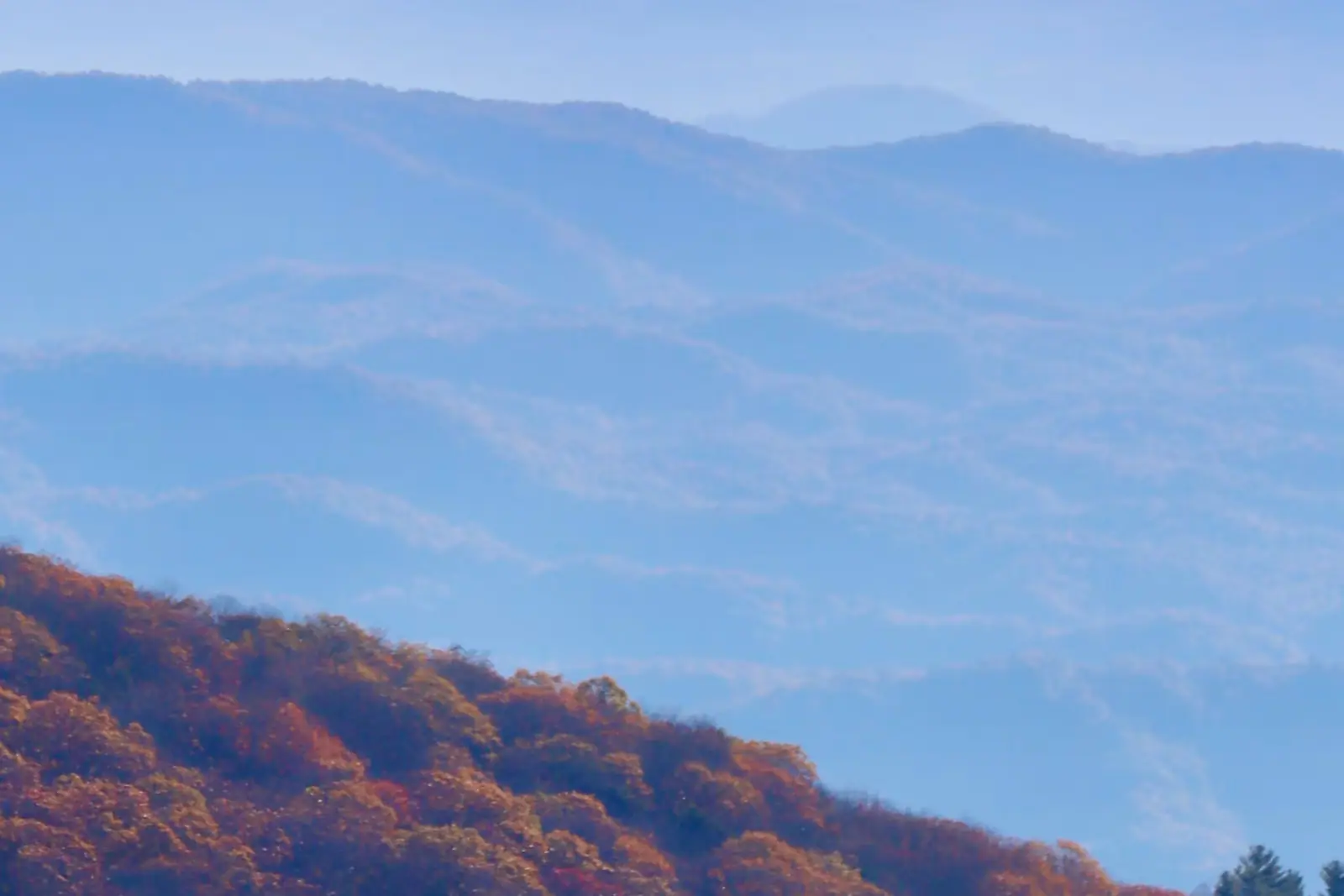
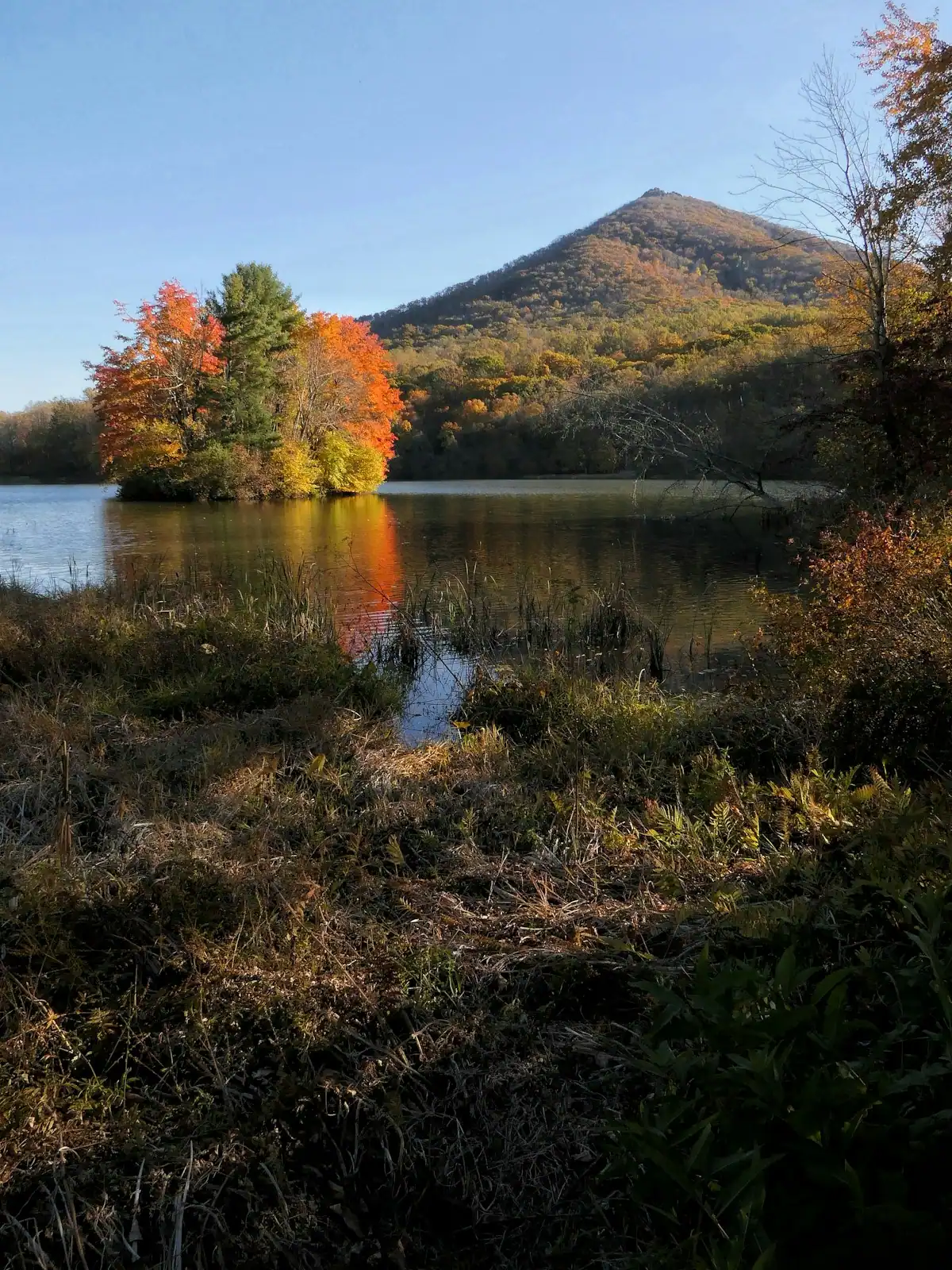
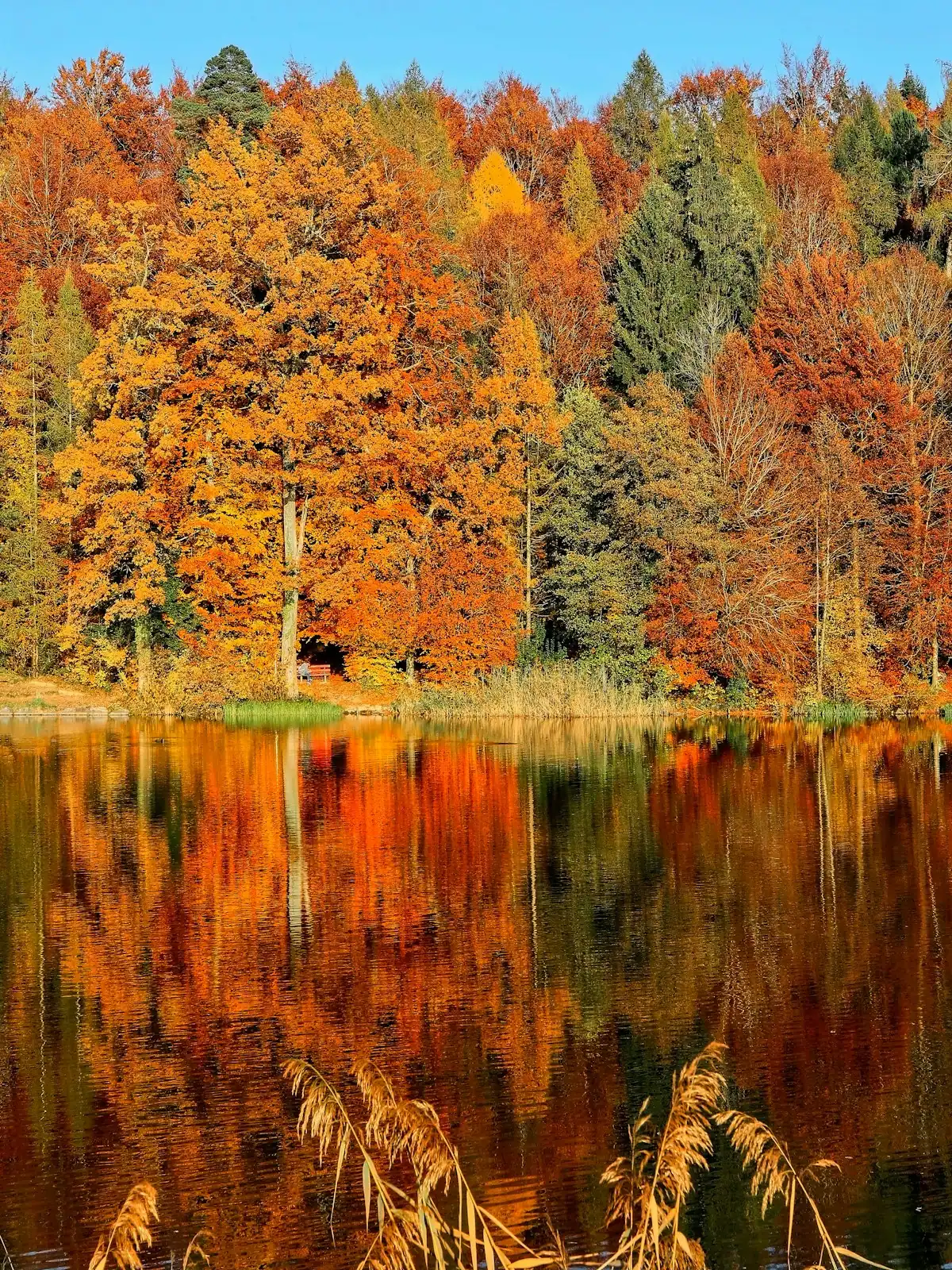
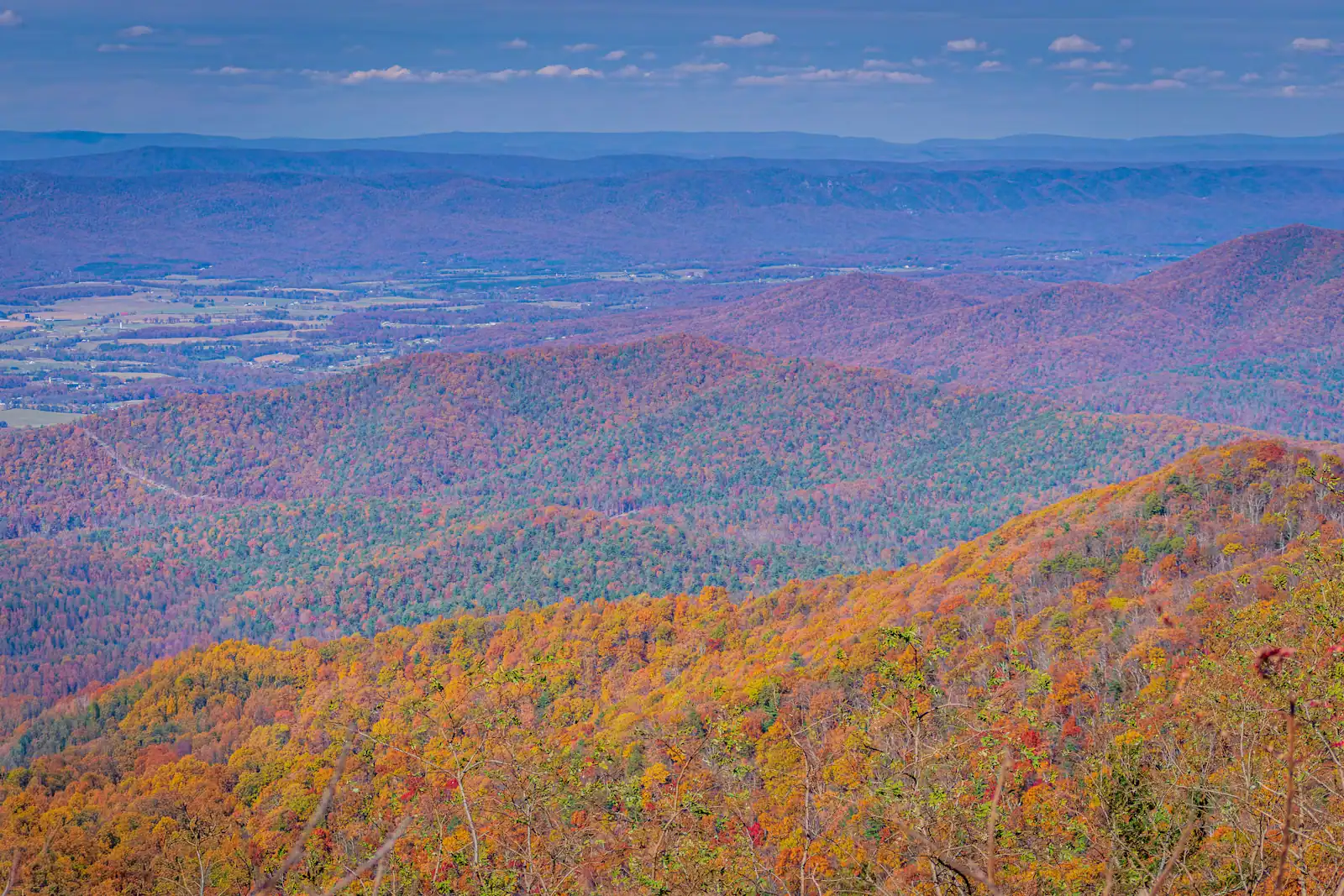
Colour at these elevations usually comes through in the second half of October. That is the pattern, not a promise. It shifts by a week or more from year to year depending on how much rain fell over the summer and when the first genuinely cold nights arrive, and it does not happen everywhere at once. Colour starts on the high ground and works downhill over several weeks, so the ridges above 3,000 feet turn well before the valley floor at 1,760 feet where the town sits. In a typical year that means you can be too early on the high trails and too late in town within the same fortnight, or find the county half-turned on the day you arrive and fully lit three days later.
The practical consequence is that you book the cabin months ahead and check the colour a fortnight ahead. The Chattahoochee-Oconee National Forest posts colour updates through the season and the Georgia State Parks leaf reports cover the same mountains. Read both in the two weeks before you travel and adjust which drive and which trail you do, not whether you come.
The second half of this page is the part people find more useful once they stop chasing October. Blue Ridge has a genuinely good year, and several of the best weekends here are in months nobody thinks about. Early May is green, empty and cheap. December opens up long views that summer hides completely, because the trees are bare. February is grey and wet and the quietest the county ever gets, which for some people is exactly the point.
And then there is the closure calendar, which catches more visitors than the weather does. Lake Blue Ridge is drawn down about twenty feet over winter. U-pick at the orchard only runs when a crop is ready. The Ocoee rafts on scheduled dam releases rather than on rain. The railway runs in seasonal blocks. Knowing which of these is shut in the month you are considering matters more than the forecast.
UnsplashWhen to go
Three variables, and none of them is the calendar.
Elevation does most of the work. Colour moves downhill. The high ridges south of the county, up toward Springer Mountain at 3,770 feet, turn first. The town, at 1,762 feet, turns last. In any given week of October you can usually find good colour somewhere in Fannin County by choosing your altitude, which is the single most useful trick on this page. Too early, drive up. Too late, drive down.
Cold nights trigger it. What actually sets colour off is a run of cool nights without a hard freeze. An early cold snap brings it forward; a long mild autumn pushes it back and, if the first cold arrives with wind and rain, can strip the leaves before they peak.
Summer rainfall sets the quality. A wet summer generally gives better colour than a drought summer, because stressed trees drop leaves early and brown rather than turning.
Which means the honest planning advice is this. Book a weekend somewhere in the back half of October and accept that you are buying a lottery ticket on the exact peak. Then, in the fortnight before, read the national forest's colour updates and the Georgia State Parks leaf reports and decide where in the county to spend your days. That gets you good colour in almost any year. Insisting on a specific Saturday does not.
UnsplashLocal tips
When to go
Fannin County's scarce resource is beds, not activities, and the lead times are unusually long for a destination this size.
Any weekend in the back half of October: book the cabin six months out and the railway as soon as the schedule opens. This is not caution. A county of 25,000 people absorbing a very large weekend influx runs out of cabins, and the good ones go first.
Thanksgiving, Christmas and New Year: similar, because cabins with wood stoves are exactly what people want at that time of year and the town does Christmas well for its size.
Summer holiday weeks and any long weekend: a couple of months is usually enough, more for a lakeside cabin.
The rest of the year: a few weeks, and in January and February you can often book a fortnight out and choose from a good selection.
Two things that are almost never scarce: trails and the river. You can decide on the morning. And one that quietly is: a fishing guide on an autumn weekend, because there are not many of them and they are booked by people who come every year.
The other lead-time item nobody thinks about is dinner. In leaf season, a town this size has no spare covers on a Saturday evening. Where reservations are taken, make one; otherwise eat early, or eat at the cabin.
How they compare
Temperatures below are approximate bands for the town. You will be higher than the town for much of your trip, and the mountains run several degrees cooler with much cooler nights.
| Season | Roughly | Crowds and cost | What it is good for |
|---|---|---|---|
| Spring, March to May | Highs climbing from the 50s to the 70s; cold nights well into April | Quiet, and the best value of the year | Waterfalls at full flow, wildflowers, empty trails, thru-hikers starting at Springer |
| Summer, June to August | Highs generally low to mid 80s, humid, nights in the 60s | Busy with families, especially July | Tubing, the lake at full pool, u-pick berries and peaches, long evenings |
| Autumn, September to November | Warm September, cooling fast through October, frost by November | Peak of the year in the back half of October; book months out | Leaf colour, apples, the railway at its best, the busiest roads of the year |
| Winter, December to February | Highs often in the 40s and 50s, nights around or below freezing | Quietest and cheapest | Long views through bare trees, a wood stove, waterfalls running well, real solitude |
Rain is a constant rather than a season. The county averages somewhere near sixty inches a year, considerably more than Atlanta, arriving as afternoon thunderstorms in summer and longer grey spells in winter.
The trap in this table is October. It contains both the best week of the year and the worst traffic, and those are usually the same week.
Before you book
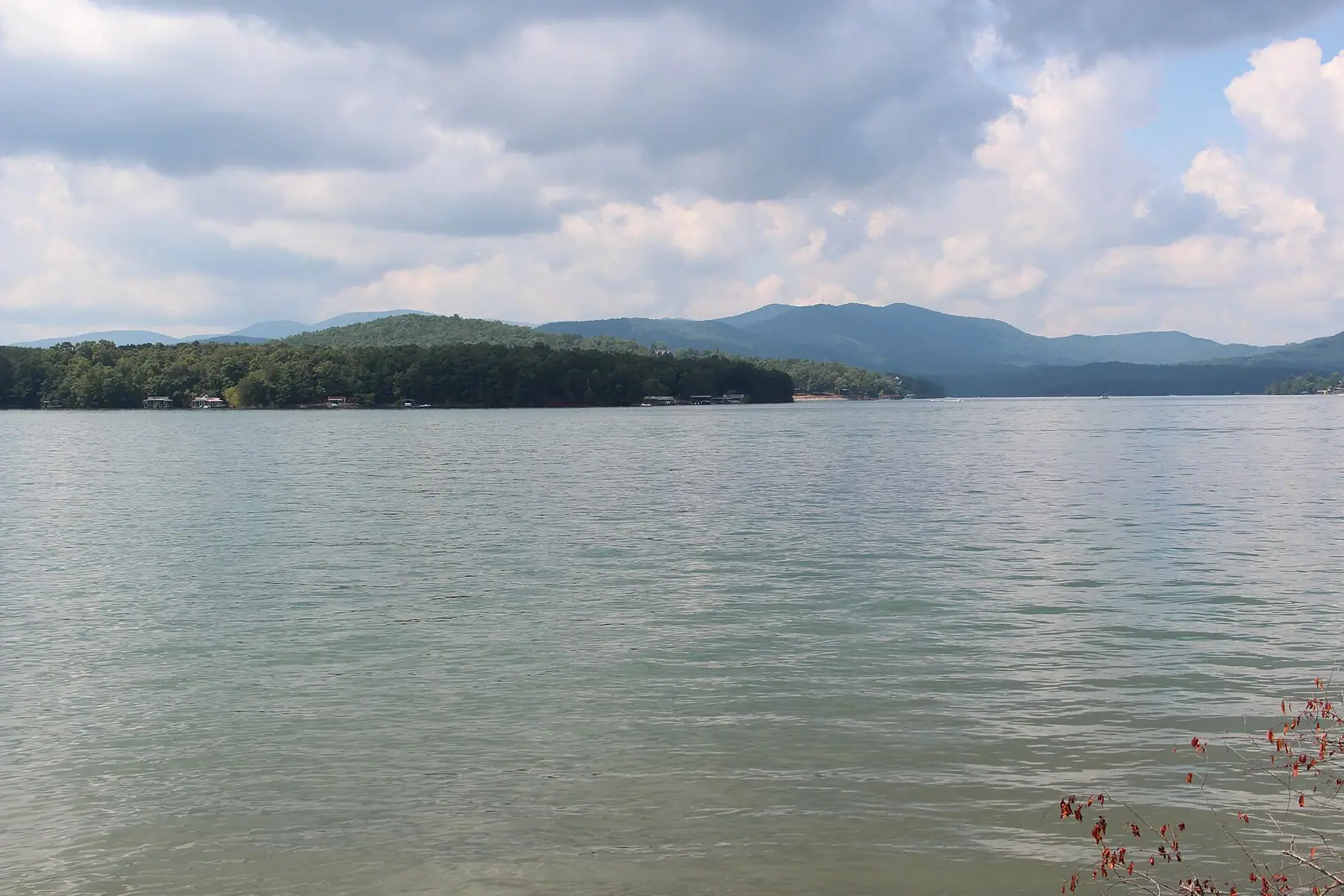
Lake Blue Ridge is drawn down about twenty feet over winter. The TVA lowers the reservoir from roughly 1,686 feet at full summer pool, and from late autumn until spring the water is well below the docks in every photograph you have seen. Ramps can be awkward or unusable and boat hire is not a year-round business. A lake trip is a late-spring-to-early-autumn plan.
U-pick runs by crop, not by season. Strawberries in late spring, blueberries and blackberries through summer, peaches, then apples from late summer into autumn. Fields close when they have been picked over, sometimes at short notice. Check the orchard's current picking calendar the week you travel rather than assuming that October means apples on your Saturday.
Ocoee rafting runs on dam releases. The TVA publishes a schedule and water is generally available most weekends from March into October, with fewer midweek days and very little after October. No release means no trip, whatever the weather is doing.
The railway runs in seasonal blocks across most of the year, including a Christmas train, but the timetable changes between blocks and is not the same every year. Check the current schedule.
The drive-in is seasonal, and forest roads to high trailheads can be gated or impassable after storms and in ice. Check Chattahoochee-Oconee National Forest alerts before committing a day to a remote trailhead.
On the ground
Every place below has its own page — hours, parking, what it costs and what to expect when you get there.

Twenty-six miles of river running to a town cut in half by a state line, in an open-sided coach with the windows down.
2–5 hoursTicketed. Fares vary by coach class, trip length and season.
Photograph: Thomson200

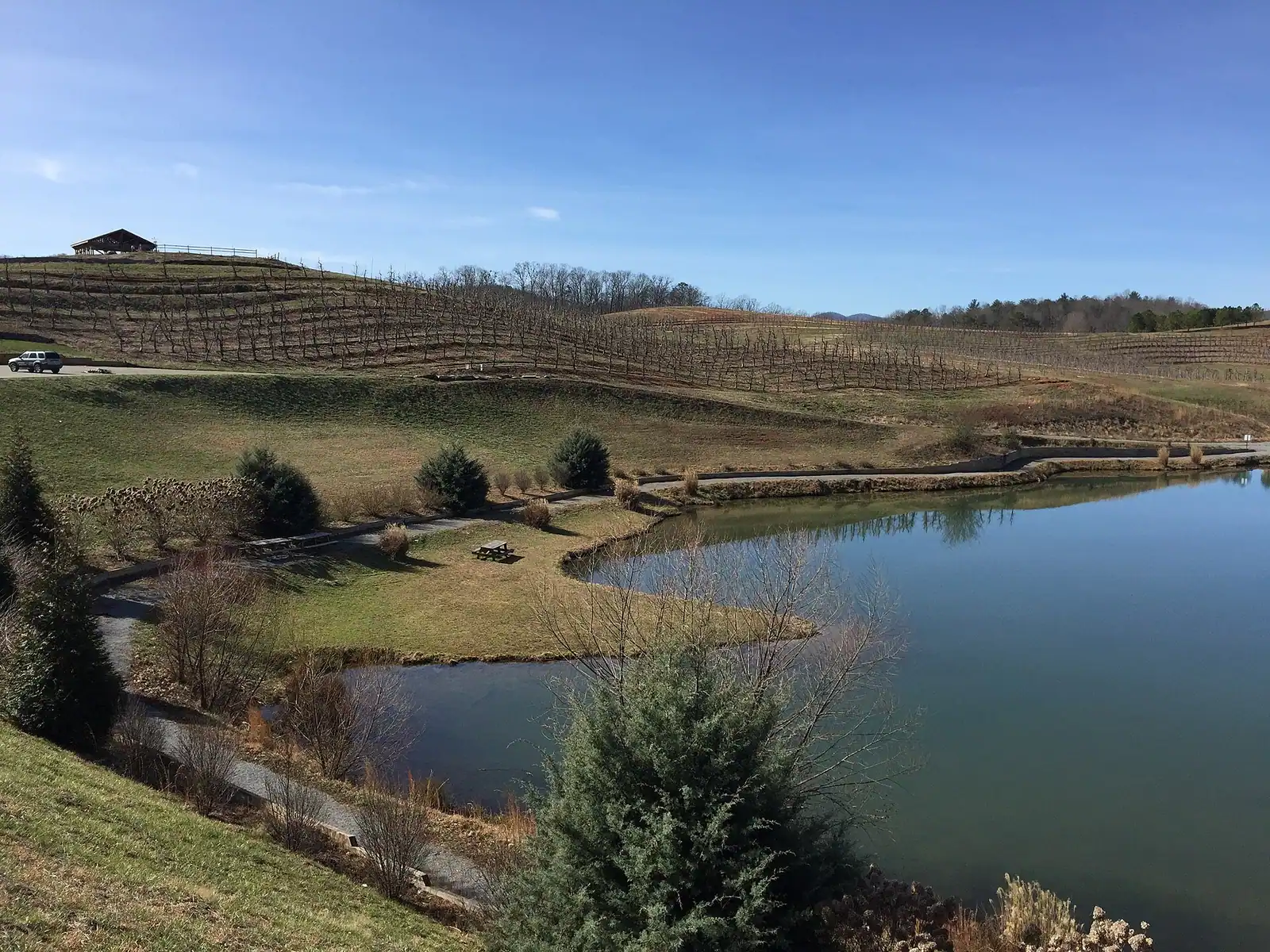
A fourth-generation apple farm with a bakery, a hard cider house and, on an October Saturday, a car park like a county fair.
1–3 hoursFree to visit the market, bakery and cider house. U-pick and tastings are charged.
Photograph: Thomson200

The Appalachian Trail's first white blaze sits at 3,770 feet, about an hour of mountain road from a Blue Ridge cabin.
1.5–7 hoursFree. No entry fee, no parking charge, no facilities.
Photograph: Thomson20192

Thirty-three hundred acres of cold green water with national forest around most of it, and a level that TVA moves by dozens of feet a year.
1.5–8 hoursFree to look at and to fish from public land. Recreation areas and ramps may charge.
Photograph: Thomson200

One river, two personalities: a lazy summer float above the lake, and a cold tailwater below the dam that fishes all year.
2–7 hoursFree to access. Forest Service recreation areas charge a day-use parking fee, and rentals and shuttles are extra.
Photograph: Thomson200

Around 106,000 acres of public land in Fannin County alone, almost none of it signposted, gated or supervised in the way visitors expect.
2–8 hoursFree to enter. Developed campgrounds and some day-use areas charge a fee.
Photograph: USFWS
Straight answers
Usually in the second half of October, but the exact week moves each year and nobody can promise it. Colour is triggered by a run of cool nights and its quality depends on summer rainfall, so an early cold snap brings it forward and a mild autumn pushes it back. It also runs downhill: high ridges turn before the town at 1,762 feet. Check the Chattahoochee-Oconee National Forest colour updates and Georgia State Parks leaf reports a fortnight before you travel.
October for colour, May for everything else. The back half of October is the most beautiful and by far the busiest and most expensive fortnight of the year. The first two weeks of May give you green mountains, rivers at good flow, available cabins and empty roads, which for a first visit is often the better trip. December is the underrated third choice, because bare trees open up long views that summer completely hides.
For any weekend in the back half of October, six months is not excessive, and the same applies to Thanksgiving, Christmas and New Year. Summer holiday weeks and long weekends generally need a couple of months, more for lakeside. Outside those windows a few weeks is usually enough, and in January and February you can often book a fortnight out with a real choice. Beds are the scarce thing here, not activities.
More than most people expect. With the leaves off, ridge-top cabins see country that is invisible in June, waterfalls run well, trails are empty and the night sky is at its best. It is also the cheapest and quietest the county gets. The trade-offs are real: Lake Blue Ridge is drawn down about twenty feet, several seasonal businesses close, and a steep gravel driveway in an ice event is genuinely not driveable.
Warm rather than brutal. Summer highs in the town are generally in the low to mid 80s Fahrenheit with humid air and nights dropping into the 60s, which is noticeably cooler than Atlanta ninety miles south, and cooler still at cabin elevations. The real summer feature is the afternoon thunderstorm, which builds over the ridges from a clear morning most days. Do your walking early and keep the afternoon flexible.
A few times most winters, usually light and usually short-lived in the town, with more and longer-lying snow on the high ground south and east. The bigger practical issue is ice rather than snow. The county is not going to grit a private gravel driveway, and a steep one with ice on it cannot be driven in a normal car. If ice is forecast and your cabin is up a slope, park lower down or leave earlier.
January and February, by a distance. The leaf crowds have gone, the summer families have not arrived, cabins are at their cheapest and you can have a trail entirely to yourself. It is grey, wet and bare, and that is the deal. If your idea of a good weekend is a wood stove, a book and nobody else on the road, this is the season the county does not advertise and should.
Realistically late May through early September. The water takes a long time to warm because it is a mountain reservoir, and more importantly the TVA draws the lake down by roughly twenty feet over winter, so from late autumn until spring the shoreline is well below the docks and the beach at Morganton Point is not what the photographs show. There are no lifeguards on the lake at any time of year.