Skip to content
Search
Menu

These bookings pay us a commission through Viator. Your price does not change, and neither did our picks because of it.

Plan your trip

What Renting a Cabin Here Is Actually Like

Last updated

Renting a cabin in Blue Ridge, Georgia: steep gravel driveways, mobile signal that drops, wells and septic, bears on the porch and the real grocery run.

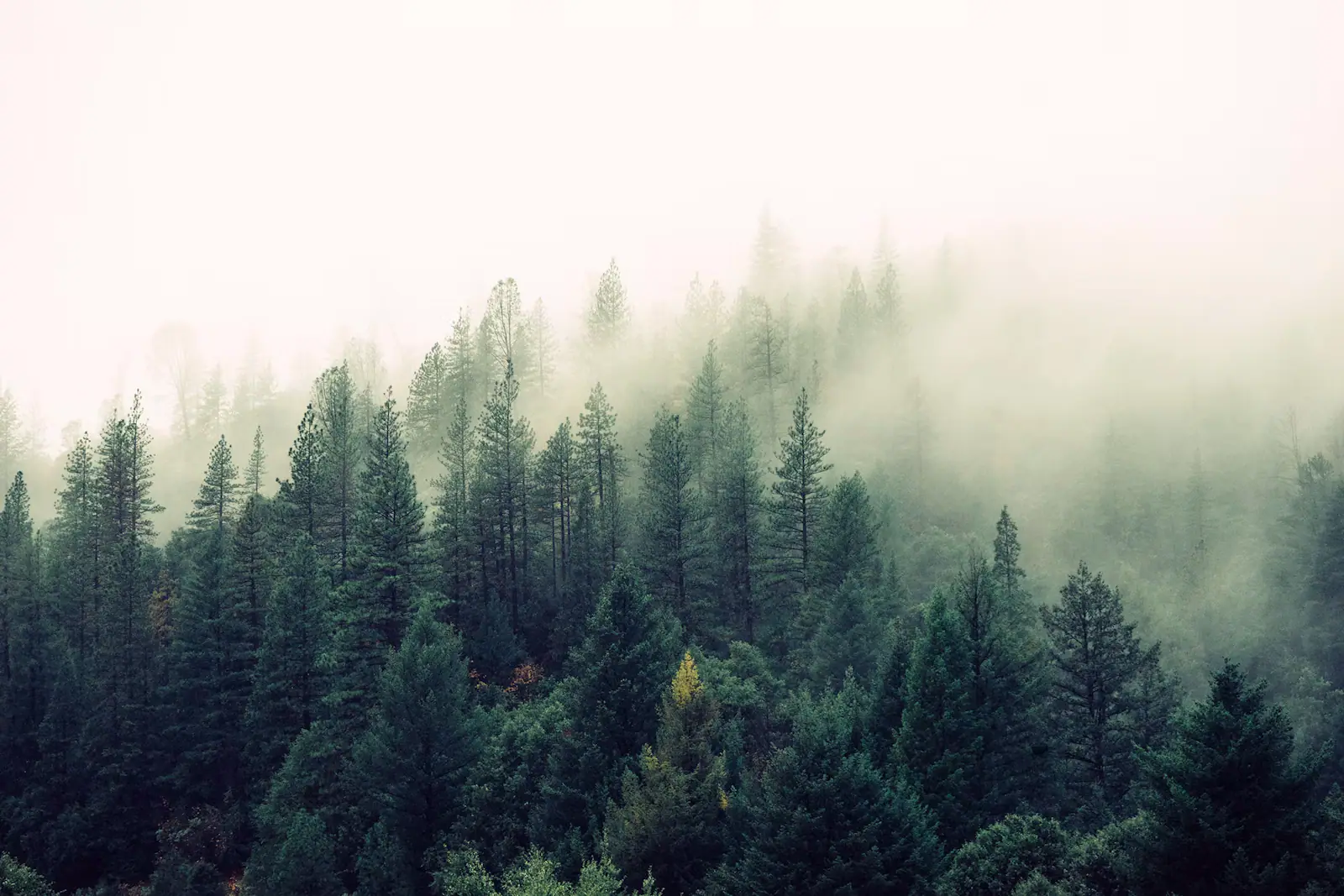
Mist lying between the tops of tall conifers along a forested ridge on a still morningUnsplash

Almost everybody who comes to Fannin County sleeps in a rented cabin in the woods, and the cabin is not the accommodation. It is the holiday. The railway, the orchard, the lake and Main Street are things people do in the gaps between sitting on a deck with a coffee listening to a creek, and any guide that treats the cabin as a place to keep your bags has misunderstood what was booked.

This page exists because the listing photographs do not tell you the things that decide whether the week goes well. We do not rent cabins, we have nothing to sell you here, and we are therefore free to say the unhelpful parts out loud. The driveway. The signal. The well pump. The septic tank. The distance to a shop that is open. The bear that will take the lid off a bin left on a porch.

Start with the geography, because it explains most of the rest. Fannin County has around 25,000 residents across 392 square miles, and roughly nine in ten of them live outside a town limit. Blue Ridge itself is 1,253 people at 1,762 feet. Everything else is ridge, hollow, national forest and private land threaded with narrow lanes, and the cabins are scattered across all of it. A property advertised as "ten minutes from downtown" may be ten minutes on a map and twenty-five in practice, because the last two miles are gravel switchbacks you take at fifteen miles an hour.

The second thing to understand is that these are rural houses on rural services. A large share of cabins run on a private well and a septic tank, which means the water is pumped by electricity and the drains do not go to a treatment works. When a summer thunderstorm or a January ice load drops the power, you lose the lights, the heat pump, the internet and, on a well, the taps. None of that is a fault to report. It is normal, it usually comes back within hours, and it is a great deal less alarming if somebody told you in advance.

The third is that the mountain is genuinely wild. This is black bear country in a national forest that runs to more than 750,000 acres, and bears in Fannin County have long since worked out what a rental cabin's bin looks like. Deer will be on the drive at dusk. Something will be in the roof space at some point. This is not a problem with the property.

None of this is a reason to book a hotel instead. A well-chosen cabin here is one of the best weeks you can buy in the southern Appalachians, and the things that ruin it are almost all avoidable at the booking stage rather than on arrival. The rest of this page is the list of questions worth asking before you pay, followed by the things worth putting in the car.
Signal, GPS and the address to write down

Local tips

  • Assume the phone stops working somewhere on the way in. Coverage up here is a function of terrain, not of network quality. You can have four bars on GA-515 and nothing at all six miles later in a hollow, and different networks fail in different places.
  • Download the map before you leave the highway. Offline maps for the whole county take a minute over the supermarket's wi-fi and save an hour of driving in circles.
  • Satellite navigation is unreliable on these lanes. It will route you onto forest roads, send you to a driveway a mile from the right one, or announce arrival at a junction. Use the owner's written directions in preference to the pin, every time.
  • Write the physical address on paper. Not a screenshot. If you need to call for help from a landline or give an address to somebody else, a dead phone is not a plan.
  • Ask about the internet specifically. "Wi-fi" on a listing can mean genuinely fast service, a satellite dish with a data cap, or a signal booster that depends on the same tower your phone cannot reach. If somebody in the party has to work, confirm it rather than assuming.
  • Tell somebody at home where you are staying before you lose signal, and agree that no contact for a day is not an emergency.
  • The gate code and the lock code are worth memorising before you leave the last place you had signal.

Bears, bins and the porch

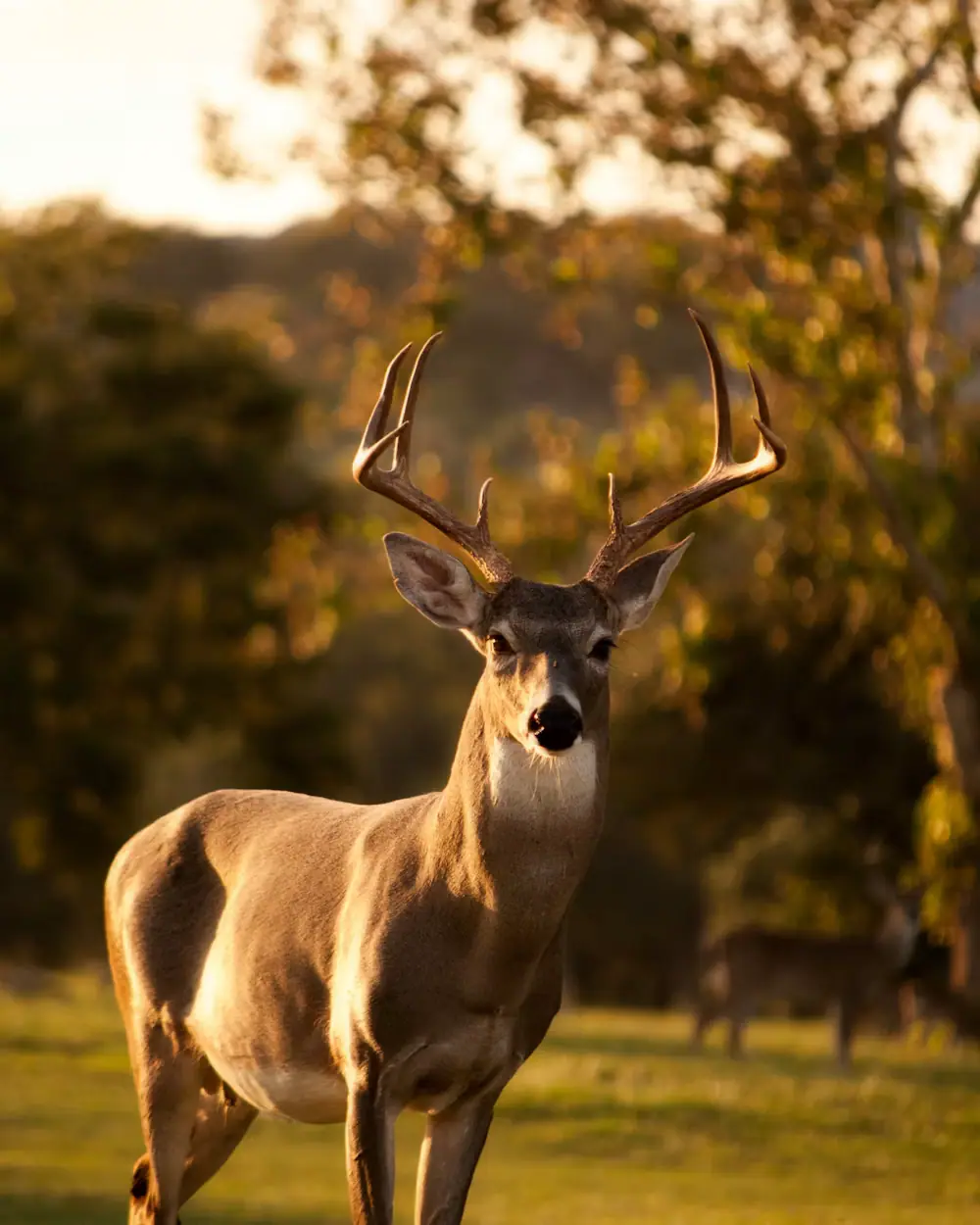
A white-tailed buck standing at the edge of open ground in low golden evening lightUnsplash
A white-tailed buck standing at the edge of open ground in low golden evening light

You are staying in or beside a national forest of more than 750,000 acres with a healthy black bear population, and the bears know the cabins.

Black bears here are not aggressive animals looking for a confrontation. They are large, intelligent omnivores with an extraordinary sense of smell and a strong preference for easy calories. A bin bag left on a deck, a cooler on the porch with the lid on, a barbecue that was not scrubbed, a bird feeder, a bag of dog food in an open boot: all of these are, from a bear's point of view, an advertisement.

The rules are short. Rubbish goes inside the cabin or in whatever bear-resistant arrangement the owner provides, not on the porch overnight. Coolers come in. Grills get burned off and the grease tray emptied. Nothing edible, including scented things that are not food, gets left in an unlocked car. If the property has a bear box or a locking bin, use it even for one night.

If a bear does turn up, the correct response is dull. Do not run, do not approach it for a photograph, and do not get between it and a cub. Make noise from a distance, bring children and dogs indoors, and let it lose interest. Feeding one, deliberately or by carelessness, is both an offence in Georgia and the surest way to get that animal killed later.

The rest of the wildlife is less complicated. Deer on the drive at dusk, wild turkeys, a barred owl doing its who-cooks-for-you call at three in the morning, and something small in the roof space. That last one is not a reason to call the manager at midnight.

Wood stoves, hot tubs and the view you booked

Three things get photographed more than anything else in this market, and all three deserve a question before you pay.

The fire. A great many "stone fireplaces" in Fannin County cabins are gas logs operated by a switch on the wall. They are warm, they are instant and they are not what most people picture. If you specifically want to burn wood, ask, and ask who supplies the wood. If wood is supplied, it is often a token armful. Buy more locally rather than bringing any from home: moving firewood moves the insects in it, and the standing guidance across these forests is to buy it where you burn it.

The hot tub. Ask when it was last drained and refilled rather than when it was last "serviced". A well-run tub between guests is a genuine pleasure at the end of a cold day on a trail. A badly run one is a chemical smell and a cloudy tub you will not get into. Also ask where it is: a tub on an open deck overlooking a road is a different proposition from one screened by rhododendron.

The view. This is the one nobody warns you about. Listing photographs of a long ridge view are frequently taken in winter. From roughly May to October the hardwood canopy closes and a great many "mountain view" cabins look out at a wall of green twenty feet away. That is not a scam, it is a forest. If the view is the reason you are booking, ask for a photograph taken in July, and consider that a leaf-off week in February may show you more of these mountains than a week in June.

The grocery run, and how far the shop really is

Local tips

  • Do a proper shop on the way in, not after you arrive. The supermarkets are on the GA-515 corridor at Blue Ridge and towards Ellijay. Once you are up a hollow on Aska Road, a forgotten ingredient is a forty-minute round trip on curves in the dark.
  • Budget 20 to 35 minutes each way from most cabins, not the ten minutes the listing distance suggests. Mountain miles take roughly twice the time of flat ones, and you will be behind somebody towing a boat.
  • Bring the first night's dinner with you. Arriving at seven, unpacking, and then driving back out for food is the standard way to start a Blue Ridge week badly.
  • There is effectively no food delivery to cabin country. Do not plan on it. Grocery delivery services will often refuse the address outright, and no pizza is coming up a gravel switchback.
  • Ice, firewood and propane are easiest at the highway shops and at the small stores along the main county roads. Buy the ice last.
  • Fill the car with fuel on the way in. Petrol stations out in the county keep shorter hours than you expect and some close early on Sundays.
  • Carry cash. Roadside stands, honesty boxes and the odd small store are cash businesses, and card readers need a signal that may not be there.
  • Coffee. Cabins supply a machine and rarely supply filters. Bring filters.

Booking: minimums, leaf season and what the listing leaves out

What it costs

Rates here move more than in most markets, and the driver is not the weather. It is foliage.

The six weeks from roughly the third week of September to the first week of November are the peak of the Fannin County year by a wide margin, and cabin pricing reflects it. Weekend minimum stays get longer, the better properties go months ahead, and a cabin that was comfortable in May costs meaningfully more in October for the same bed. If your dates are flexible and the leaves are not the point, the cheapest good weeks are January and February, and late spring is the best balance of price and weather in the year.

Beyond the headline rate, the things that change the total are cleaning fees, pet fees, damage waivers and any resort or booking charge, and they are not trivial on a short stay. Price a two-night booking as a total, not a nightly rate, or you will get a surprise at checkout.

Read the listing for what it does not say. "Sleeps 12" frequently counts sofa beds and a bunk room; count the actual beds. "Lakefront" is a claim about the deeds, not about the walk down to the water, which may be a steep hundred yards. "Creek" can mean a seasonal trickle that is dry in August. And a low nightly rate on a property with no reviews in a market this mature is usually telling you something.

Finally, ask about the drive, the wi-fi and the hot tub in one message before booking. Three straight answers is the best signal you will get about how a property is run.

Where the cabins actually are

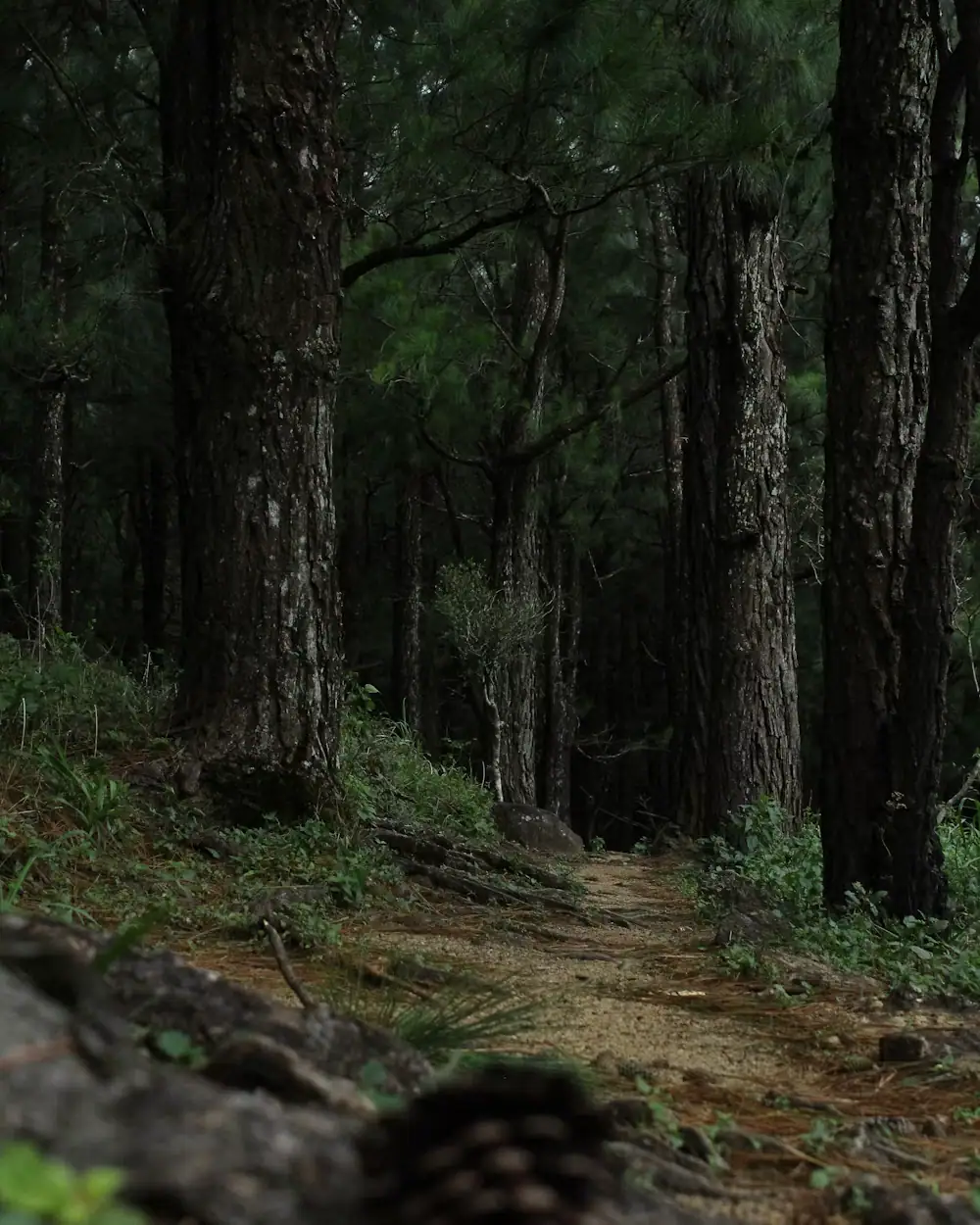
A narrow dirt track climbing away between dark pine trunks in dense forestUnsplash
A narrow dirt track climbing away between dark pine trunks in dense forest

How they compare

"Blue Ridge" on a rental listing rarely means the town. It usually means somewhere in the county, and which part changes the week considerably.

AreaWhat it isSuitsThe trade-off
Aska Road corridorThe strip south of town between Lake Blue Ridge and the Toccoa, and the densest cabin country in the countyTrail access, river access, the classic deep-woods cabinWinding road, patchy signal, 15–25 minutes back to a shop
LakesideCabins on or above the Lake Blue Ridge shorelineBoating, swimming, docks, summerWinter drawdown, steep access down to the water, higher rates
Toccoa river corridorProperties strung along the river north and south of townFalling asleep to water, tubing and trout on the doorstepFlood-prone ground in places; river noise is constant, not occasional
Morganton, Mineral Bluff, EpworthOpen valley land and small communities around the countySpace, pasture views, lower ratesLonger drives to everything, fewer neighbours
Cherry Log and the 515 sideBetween Blue Ridge and EllijayEasiest driving, closest to groceries and both townsHighway noise on some properties; less remote-feeling
Walk-to-townThe handful of properties within the town gridNo driving at all, the depot on footNot a cabin in the woods; you can hear the town

If this is a first visit and you want the postcard version, the Aska Road corridor is the one. If you are bringing somebody who will be unhappy when the phone stops working, choose Cherry Log or the town instead and drive to the woods.

The driveway is what goes wrong

Before you book

More Blue Ridge holidays are damaged by the last two hundred yards than by anything else, and it is entirely predictable from the listing if you know what to look at.

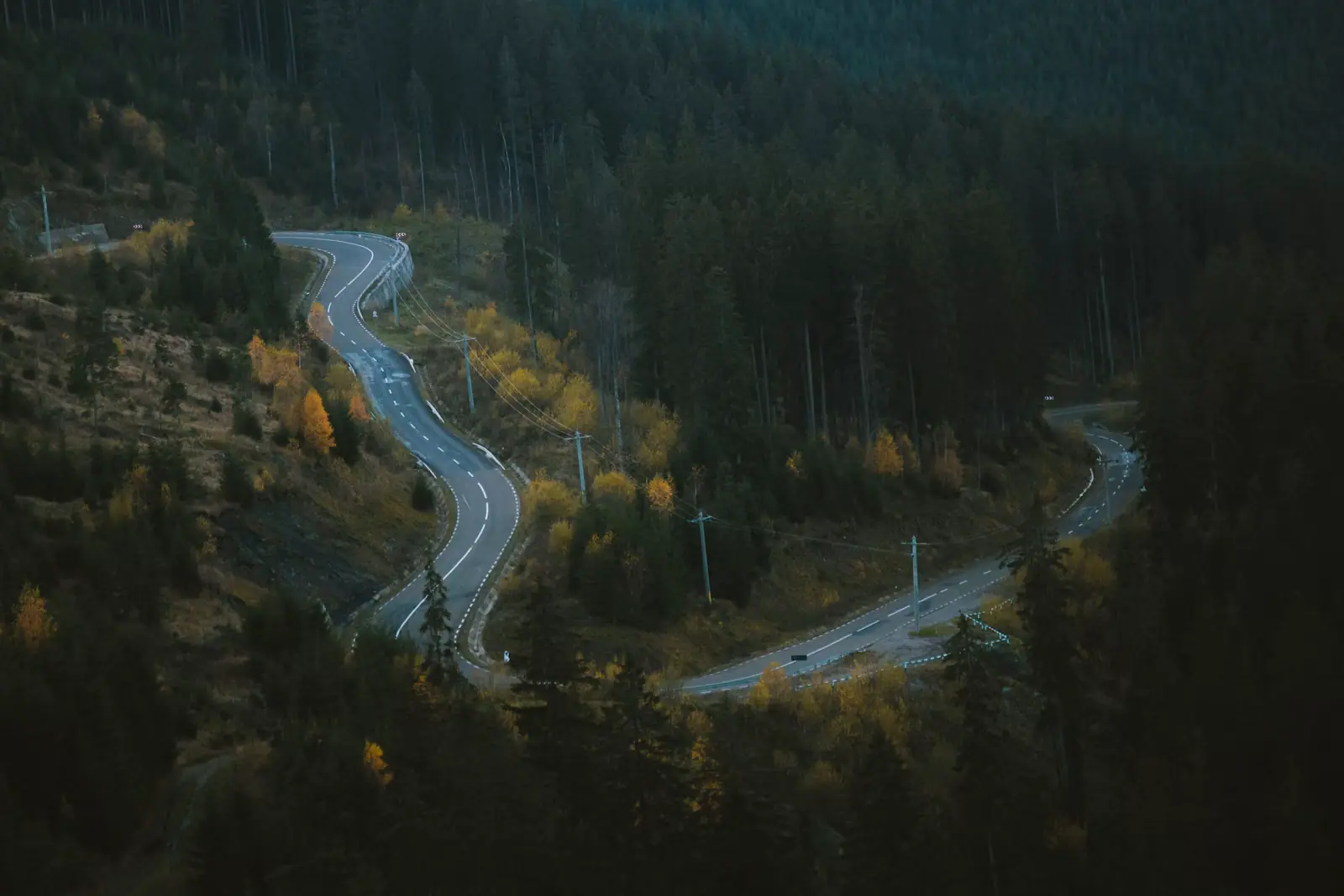
A large number of cabins here sit above the road on a private gravel drive that climbs, turns back on itself once or twice and finishes on a slope. In dry weather in a normal car, most are fine. The failure modes are specific.

Rain. Gravel on a steep grade washes into ruts. A drive that was fine in May can have a four-inch channel down the middle of it in July.

Ice. From December to February, north-facing gravel holds ice long after the highway has cleared, and a two-wheel-drive car with all-season tyres will not climb it. This is the single most common winter problem.

Ground clearance. A low saloon can ground out on a water bar or a hump where the drive meets the road.

Turning and reversing. Many drives have no turning circle at the top. You will be reversing down, at night, in the dark, with a drop on one side.

Ask three questions before booking, in writing: how steep and how long is the drive, is it gravel or paved, and is four-wheel drive recommended in winter. A property manager who answers straight is telling you something useful about how they run everything else. If you are hiring a car for a January trip, hire the all-wheel-drive one.

Wells, septic tanks and what happens when the power goes

Before you book

This is the section that surprises people, and it is the one that prevents the most unpleasant middle-of-the-week phone calls.

The water probably comes from a well. It is pumped by an electric pump. If the power goes off, so does the water, including the toilets after one flush. That is not a fault. Fill a jug or two when you arrive if the forecast is rough, and keep a bucket by the bath for the toilet if a storm is coming through.

The drains go to a septic tank in the garden. Septic systems are biological, they are sized for a household, and a full cabin puts twice the usual load through one. Nothing goes down the toilet but what came out of you and the paper. No wipes, whatever the box says. No cooking fat down the sink. Stagger showers rather than running six back to back, and if a drain is slow, stop using water for an hour rather than pouring drain cleaner into a living system.

Power cuts are routine. Summer thunderstorms and winter ice both take lines down in wooded terrain, and rural circuits take longer to restore than town ones. A few hours is normal. Know where the torch is before dark, and do not open the fridge every ten minutes.

Heat. Most cabins run a heat pump, which struggles hard below freezing and is why the wood stove or gas logs exist. In January, expect to use both.

What to put in the car

What to bring

Cabins here are furnished for self-catering, not for hotel service. Assume you get a kitchen, linen and towels, and assume nothing else.

The things people most often wish they had brought

  • A proper torch or head torch for each adult. Outdoor light up here means genuinely dark.
  • Coffee filters, washing-up liquid, a sponge, bin bags and dishwasher tablets. Starter supplies run out on day two.
  • Cooking oil, salt, pepper and whatever spices you actually use. Cabin cupboards are a lottery.
  • A paper copy of the address and directions, and the manager's phone number.
  • Layers. A 1,700-foot valley is ten or more degrees cooler than Atlanta at night, and October evenings on a deck need a fleece even after a warm afternoon.
  • Insect repellent from May to September, and something for chiggers if you are walking in long grass.
  • Water shoes if you are anywhere near the river. The Toccoa bed is rock and it is slippery.
  • A cool box for the drive home if you are buying cider, apples or trout.
  • A board game or a book. The evening entertainment at a cabin is the evening.

What not to bring

  • Firewood from home. Buy it locally.
  • Any expectation of a delivery arriving at the door.
  • Heels, and shoes you mind about. Everything here is gravel, clay and leaf mould.

On the ground

Where to go

Every place below has its own page — hours, parking, what it costs and what to expect when you get there.

  • Pine-covered slopes running down to still green water on a mountain reservoir
    Water feature

    Lake Blue Ridge

    Free

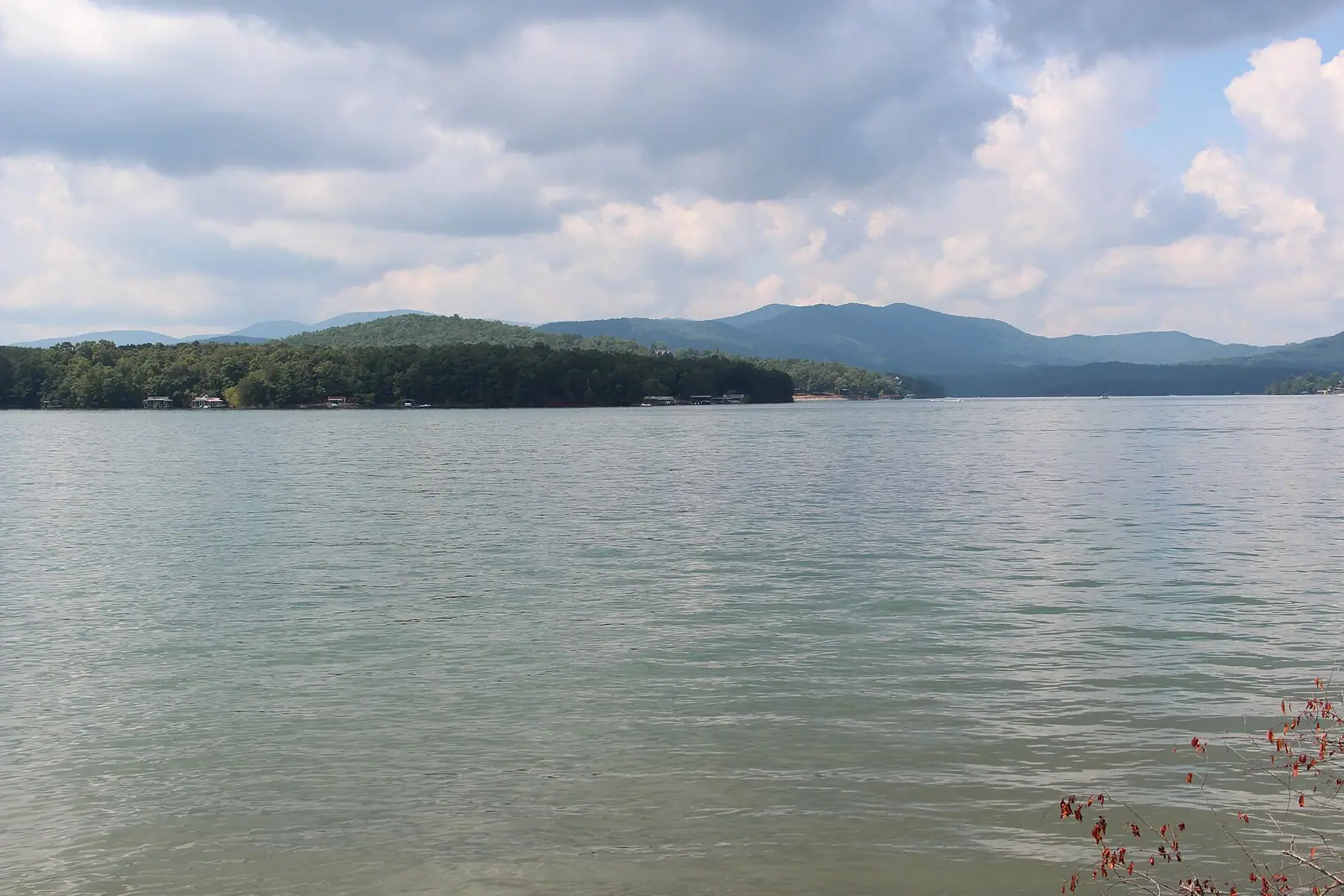
    Thirty-three hundred acres of cold green water with national forest around most of it, and a level that TVA moves by dozens of feet a year.

    1.5–8 hoursFree to look at and to fish from public land. Recreation areas and ramps may charge.

    Photograph: Thomson200

  • A shallow river running over rock ledges between steep banks of dense forest
    Water feature

    Toccoa River

    Free

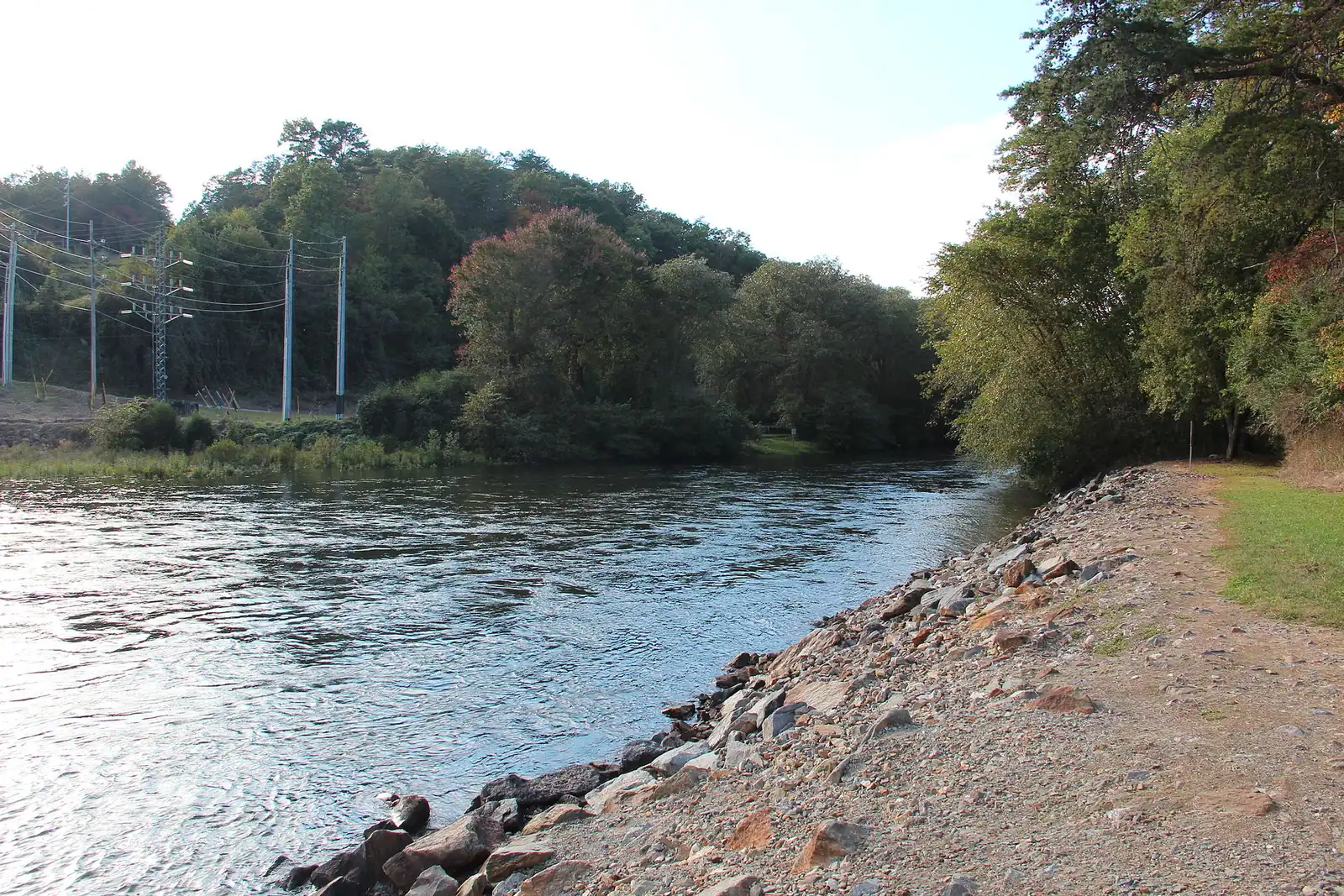
    One river, two personalities: a lazy summer float above the lake, and a cold tailwater below the dam that fishes all year.

    2–7 hoursFree to access. Forest Service recreation areas charge a day-use parking fee, and rentals and shuttles are extra.

    Photograph: Thomson200

  • A small-town storefront in white and red painted brick seen from the pavement
    Neighbourhood

    Downtown Blue Ridge

    Free

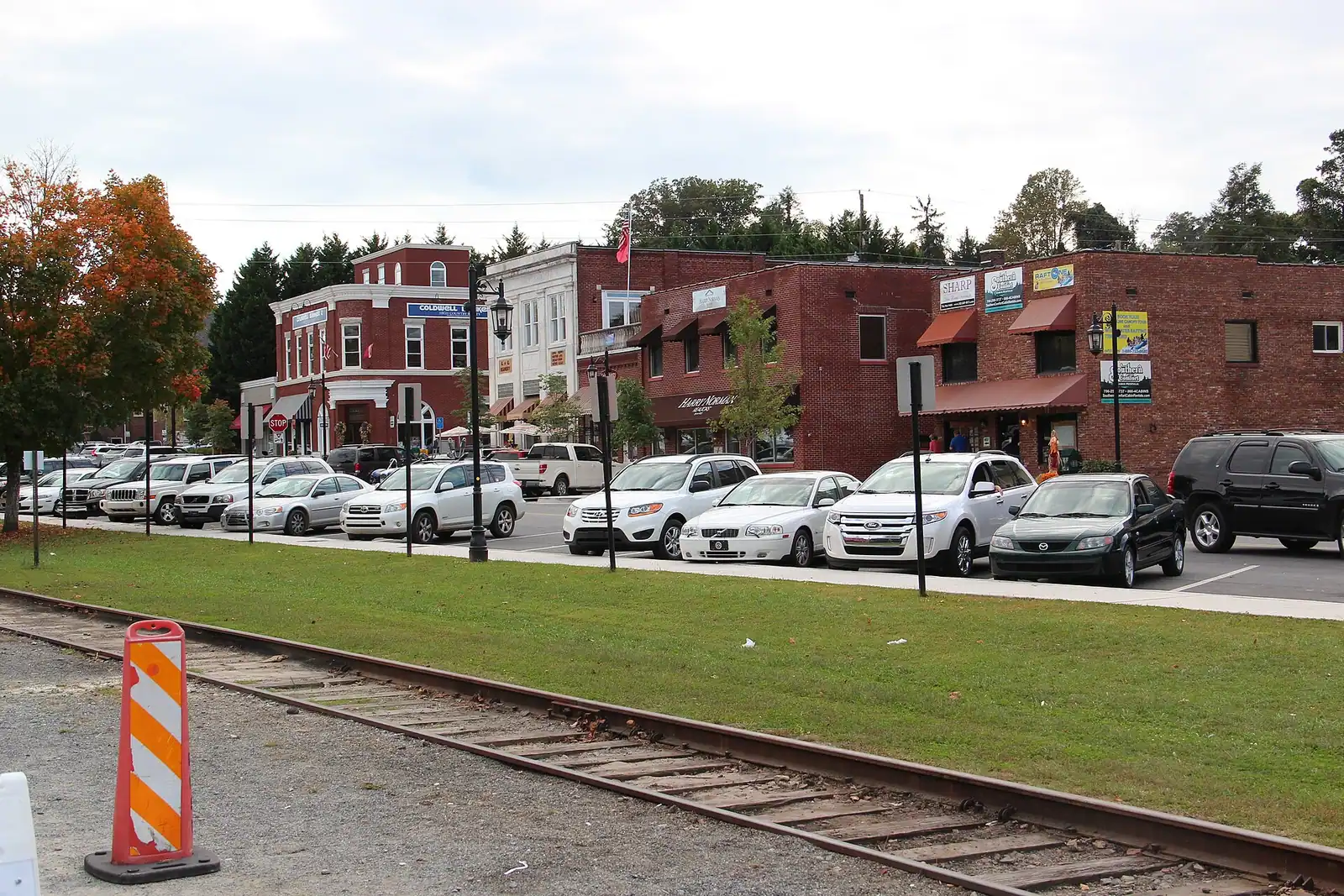
    Four blocks of shopfronts facing a working railway depot, small enough to walk twice and busy enough to need a parking plan in October.

    1–4 hoursFree. Street parking is free and scarce on peak weekends.

    Photograph: Thomson M

  • Layered ridges covered in autumn hardwood colour under a pale sky
    Nature preserve

    Chattahoochee National Forest

    Free

    Around 106,000 acres of public land in Fannin County alone, almost none of it signposted, gated or supervised in the way visitors expect.

    2–8 hoursFree to enter. Developed campgrounds and some day-use areas charge a fee.

    Photograph: USFWS

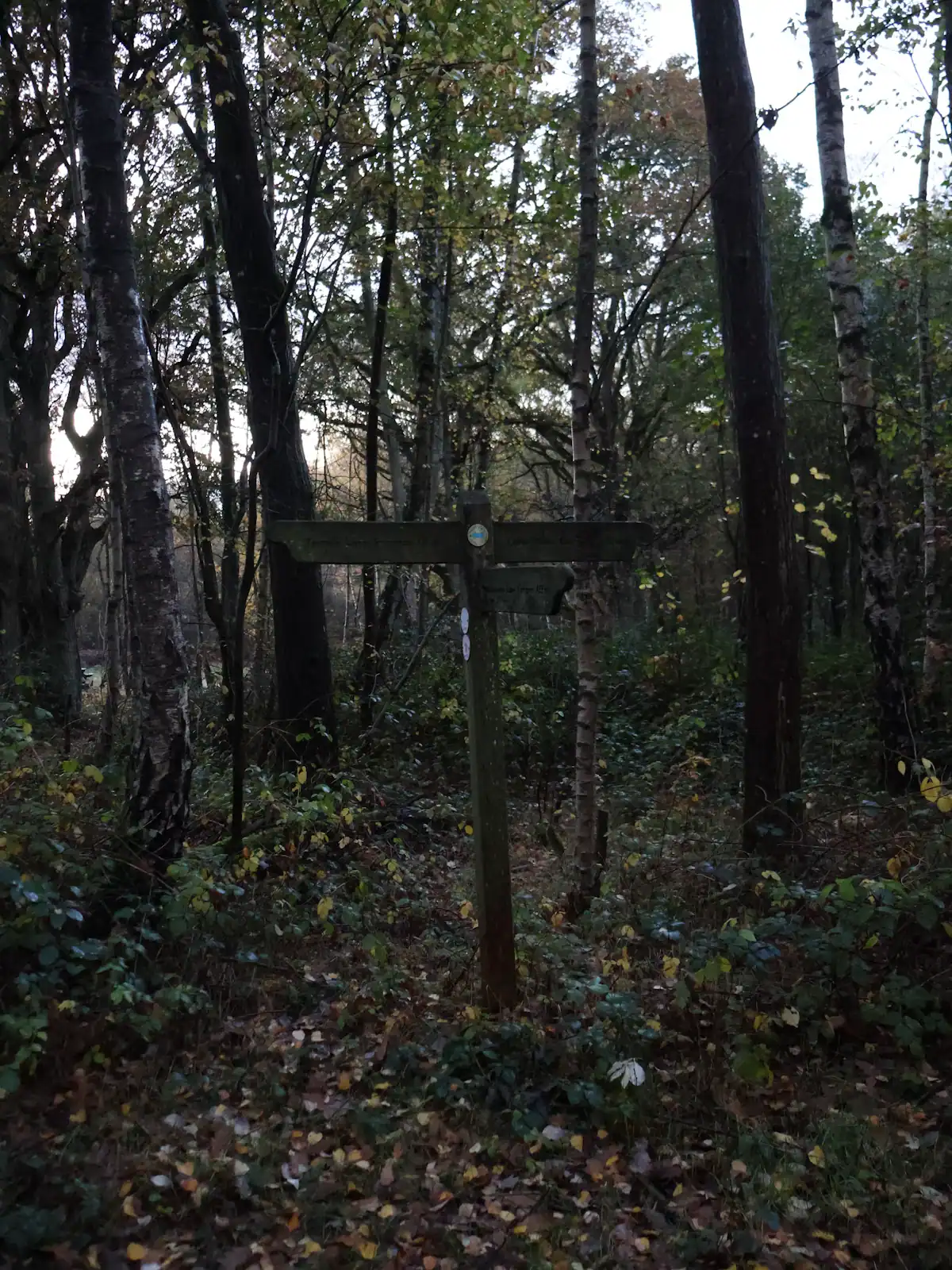
  • A wooden trail signpost standing in dense autumn woodland
    Trail

    Aska Adventure Area

    Free

    A ridge of Forest Service singletrack wedged between the lake and the river, and the closest real hiking to most Blue Ridge cabins.

    1.5–6 hoursFree. No permit, no parking fee, no facilities.

    Photograph: Unsplash

  • A tent pitched on a grassy site among trees at the edge of a calm lake
    Park

    Morganton Point Recreation Area

    The public way onto Lake Blue Ridge: a small sand beach, 42 forest campsites and a ramp, in a village that used to run the county.

    2–5 hoursDay-use parking fee per vehicle; camping charged per night.

    Photograph: Thomson200

Straight answers

Questions people actually ask

Do you need four-wheel drive for a cabin in Blue Ridge?

Not usually in summer, and often yes in winter. Many cabins sit above the road on a steep private gravel drive, and from December to February north-facing gravel holds ice long after the highways are clear. A two-wheel-drive car with all-season tyres will not climb that. Ask the owner in writing how steep the drive is and whether four-wheel drive is recommended, and hire the all-wheel-drive car for a January trip.

Is there mobile signal at cabins around Blue Ridge?

Sometimes, and rarely reliably. Coverage here depends on terrain rather than network: you can have full signal on GA-515 and none at all six miles later in a hollow, and different carriers drop out in different places. Download offline maps before you leave the highway, write the physical address on paper, memorise the gate code, and tell someone at home not to worry if you go quiet for a day.

How far is the nearest grocery store from a Blue Ridge cabin?

The supermarkets are on the GA-515 corridor at Blue Ridge and towards Ellijay. From most cabins allow 20 to 35 minutes each way rather than the distance the map suggests, because mountain miles take roughly twice as long as flat ones. Do a full shop on the way in and bring the first night's dinner with you. There is effectively no grocery or takeaway delivery into cabin country.

Are there bears around Blue Ridge cabins?

Yes. This is black bear country in the middle of a national forest of more than 750,000 acres, and bears in Fannin County know what a rental cabin's bin looks like. They are not looking for trouble, they are looking for calories. Keep rubbish inside or in the bear-resistant bin provided, bring coolers in, burn off the grill and leave nothing edible in an unlocked car. Never feed one.

When is the cheapest time to rent a cabin in Blue Ridge?

January and February, by a distance. The expensive weeks are the six from roughly the third week of September to the first week of November, when leaf season drives rates up, lengthens minimum stays and fills the better properties months ahead. Late spring is the best compromise: mild weather, high water in the rivers, everything open, and rates well below autumn. Summer sits in between and books solidly at weekends.

Why does the water stop when the power goes out?

Because a large share of cabins here draw from a private well, and the well pump runs on electricity. No power means no pump, which means no taps and one flush left in each toilet. It is normal rather than a fault, and rural circuits take longer to restore than town ones. If the forecast is rough, fill a jug or two on arrival and keep a bucket by the bath for flushing.

What does a septic tank mean for guests?

It means the drains go to a biological system in the garden sized for a household, not to a treatment works, and a full cabin doubles the usual load. Nothing goes down the toilet except what came out of you and the paper, including wipes labelled flushable. Keep cooking fat out of the sink, stagger showers rather than running six in a row, and if a drain slows, stop using water for an hour.

Will a cabin with a mountain view actually have one in summer?

Not always. Listing photographs of long ridge views are often taken in winter, and from about May to October the hardwood canopy closes in. A good number of cabins advertised on the view look out at green twenty feet away in July. If the view is the reason you are booking, ask for a photograph taken in midsummer. A leaf-off week in February will show you far more of these mountains.

Are Blue Ridge cabins good for a first trip with young children?

They can be excellent, with two cautions. Decks and lofts here often have railings and stairs built to older standards than a childproofed house, so walk the property when you arrive and decide what needs a gate or a rule. And pick location over photographs: a cabin twenty-five minutes up a gravel road with no signal is a long way from a pharmacy at two in the morning. Cherry Log and the town edge suit families better.

How far ahead should you book a cabin for October?

Months, and the good properties go earlier than that. Autumn is the peak of the Fannin County year and the cabins with the best access, views and hot tubs are reserved by repeat guests well before the summer. If you are booking late for October, widen your search to Morganton, Mineral Bluff and Epworth rather than holding out for the Aska Road corridor, and expect longer minimum stays on weekend dates.