Skip to content
Search
Menu

These bookings pay us a commission through Viator. Your price does not change, and neither did our picks because of it.

Neighbourhood

Downtown Blue Ridge

Last updated

Four blocks of shopfronts facing a working railway depot, small enough to walk twice and busy enough to need a parking plan in October.

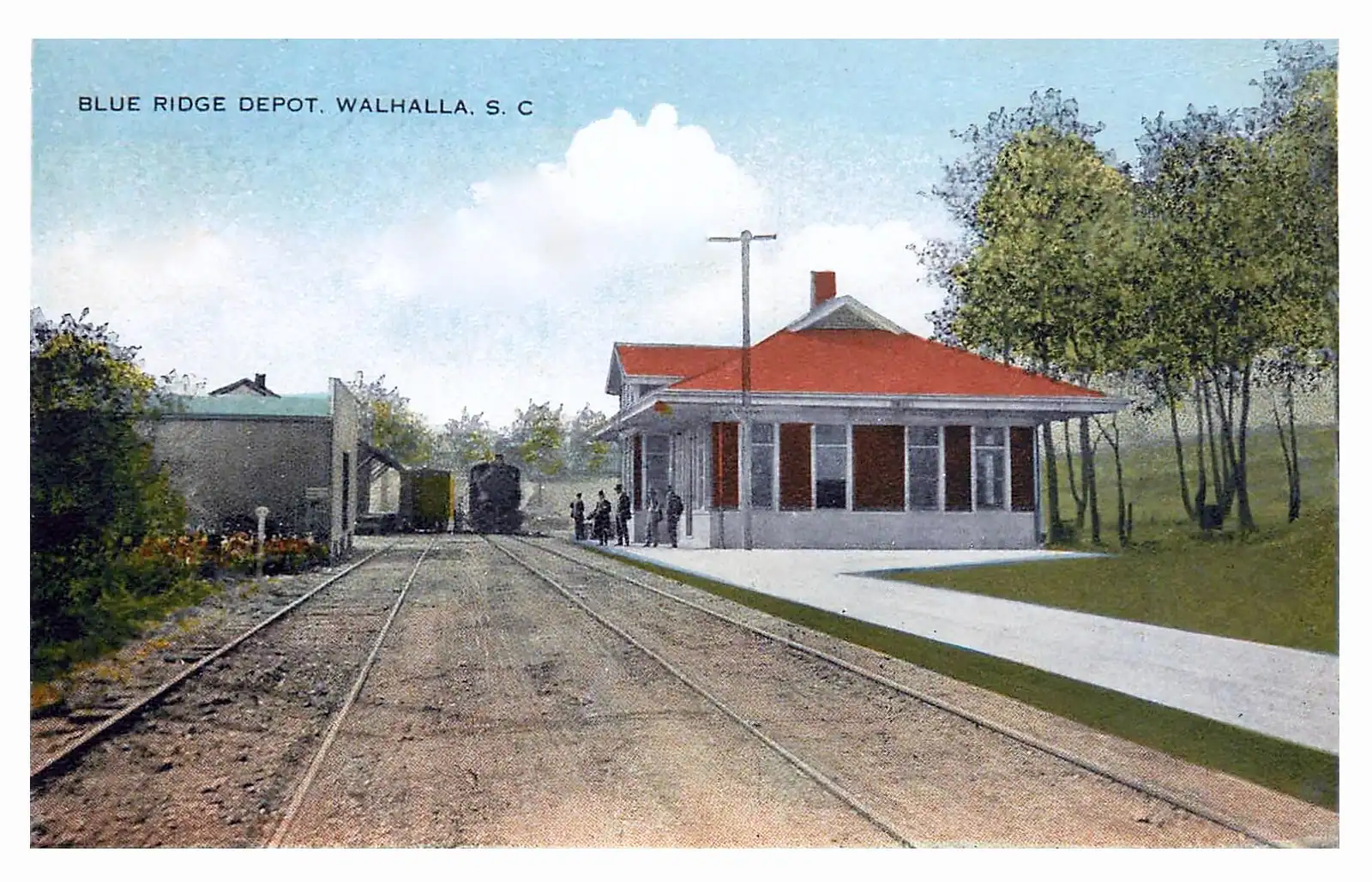
Blue Ridge exists because a railway company stopped here. The Marietta and North Georgia laid the town out in 1886 at the point its rails reached, incorporated it the following year, and the county seat moved up from Morganton in 1895 because this is where the trains were. That order of events explains the shape of downtown: the depot is not on the edge of town, it is the thing the town was arranged around, and East Main Street runs parallel to the tracks one block up.

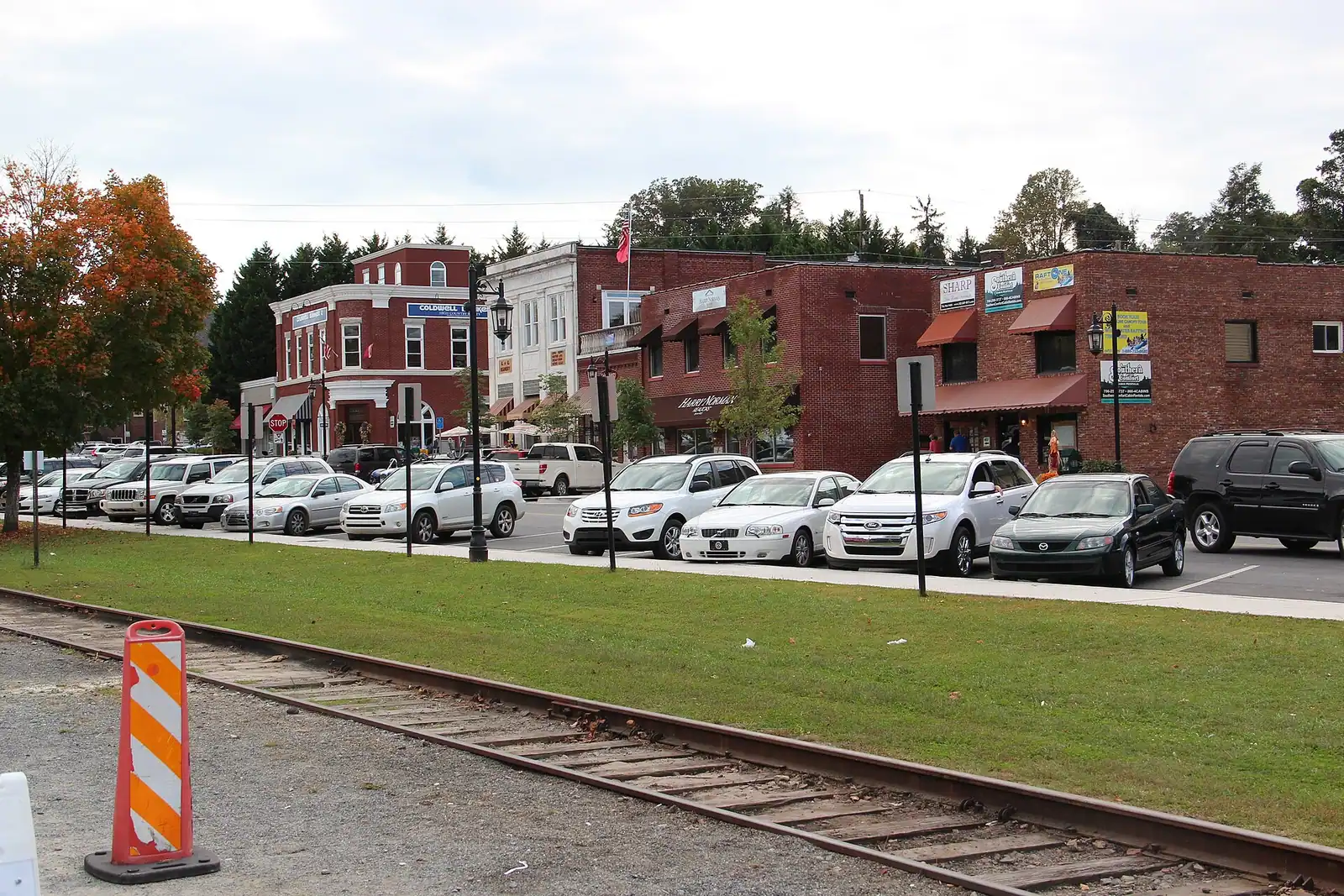
What you get today is roughly four blocks you can walk end to end in ten minutes. Two-storey brick and timber shopfronts, a courthouse up the hill at West Main and Summit that has been an arts centre rather than a court for decades, and a concentration of independent retail that is unusual for a town of about 1,250 people. The reason for the concentration is simple arithmetic: Fannin County has around 25,000 residents and several thousand rental cabins, and everybody staying in those cabins comes into town at least once.

That is the honest frame for a visit. This is a small mountain county seat that has been thoroughly reoriented towards weekend visitors. The shops lean towards home goods, outdoor gear, candles, fudge, art and an unreasonable quantity of cabin decor. There are good restaurants and there are tourist restaurants and the two are not always distinguishable from the street. Parking is free and inadequate on peak Saturdays.

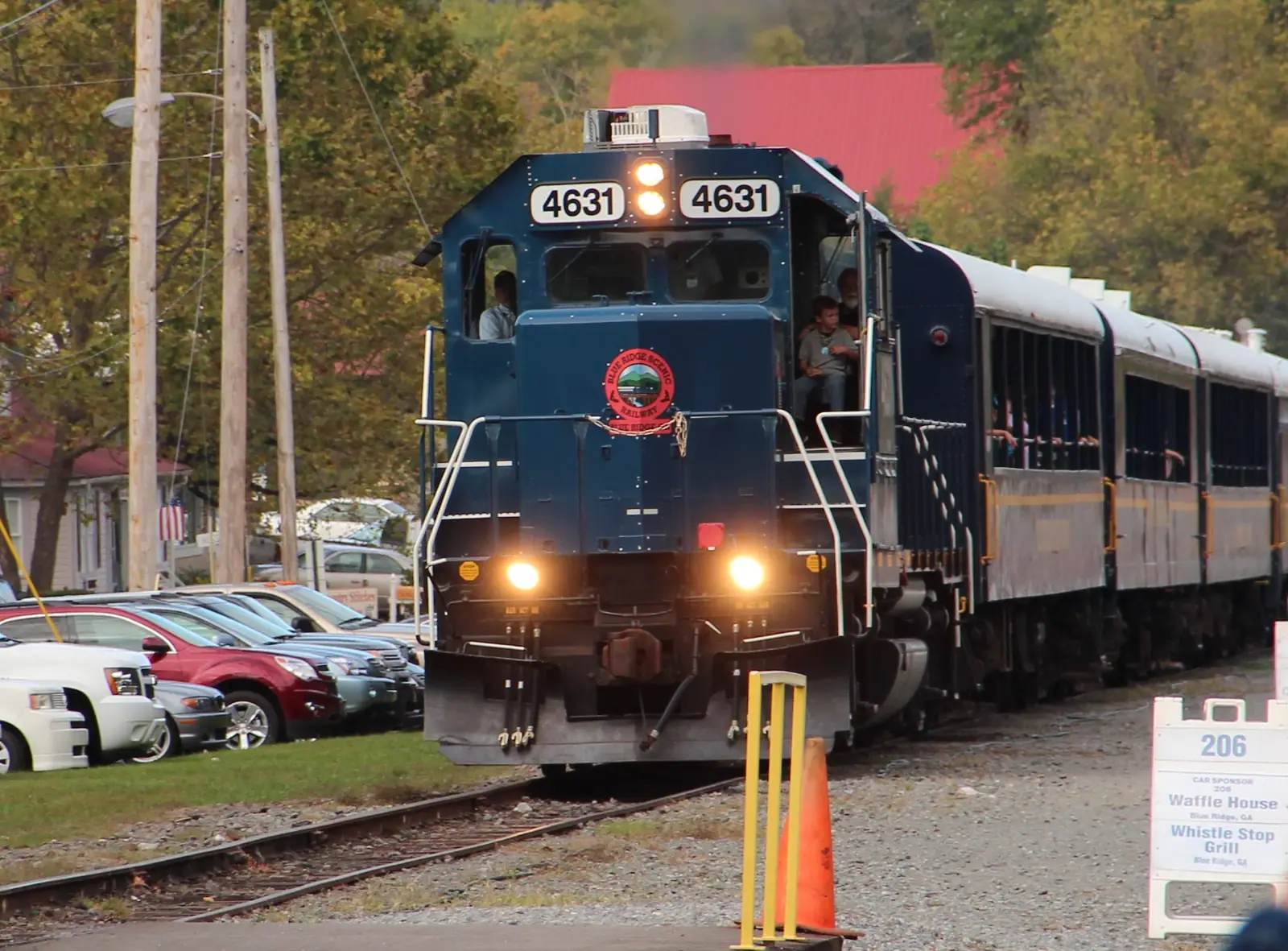
What lifts it above being a shopping street is the depot. A working excursion railway sits at the bottom of the hill, trains come and go through the day in season, and the whole downtown arranges itself around their timetable. Stand on East Main at the right moment and a train pulls out below you. No amount of retail could manufacture that.

Getting there and parking

From GA-515, take the signed exits for Blue Ridge and follow the historic district signs rather than routing to a specific street; the downtown grid is small and one-way in places, and it makes sense on the ground faster than it does on a screen.

From Atlanta the drive is about 93 miles, mostly I-575 and then GA-515, and it takes a little under two hours when nothing is happening and considerably more on a Friday afternoon in October. From Ellijay it is roughly 25 minutes, from Blairsville about 30, and from Chattanooga a little over an hour and a half via the Copperhill road.

Once you are here, downtown is walkable end to end. Cabin guests should expect 15 to 40 minutes of driving from a rental depending on which valley it is in, and should assume the last stretch is gravel.

How the four blocks fit together

Orient yourself on the depot. It sits at the low point of the grid on Depot Street, with the tracks running north-east to south-west through the middle of town.

One block uphill is East Main Street, which is the main retail spine and where most of the shops and restaurants are. It runs for roughly three blocks of continuous frontage before thinning out at each end. This is the part people mean when they say downtown.

West Main continues up the hill to the Fannin County Courthouse at Summit Street, a building on the National Register since 1995 that now houses the Blue Ridge Mountains Arts Association rather than any court. The current courthouse is a modern building elsewhere in town.

The side streets carry overflow: more parking, a few shops, the theatre and the businesses that could not get a Main Street unit. They are worth a lap.

The whole thing is flat enough at the bottom and noticeably steep towards the courthouse. If someone in your party finds hills hard, park on East Main rather than at the bottom by the depot, because the walk back up from the tracks is the part that hurts.

Parking, which is the real planning problem

Street parking downtown is free and there is not enough of it on an autumn Saturday. That is the whole situation, and no amount of circling changes it.

  • Arrive before ten on a weekend from late September to early November and you will find a space on or near East Main. Arrive at noon and you will not.
  • Use the side streets and the lots behind the Main Street blocks. People queue for a kerbside space on Main while a lot two hundred yards away has room.
  • The railway runs a paid lot at 204 West Main Street, priced low midweek and higher Thursday to Sunday when checked. On a train day it is worth paying for.
  • Do not park in a business lot you are not using. It is a small town and the towing is real.
  • Cabin guests: one car, not three. Most parties arrive in convoy and then discover that the thing downtown cannot absorb is vehicles.

Outside leaf season and outside Saturdays, none of this applies. A Wednesday in June you park outside the shop you want.

What the shops and kitchens actually are

Retail here splits into three honest categories.

The first is cabin supply in a broad sense: home goods, quilts, rustic furniture, candles, kitchen things, art for a wall in a rental. A surprising amount of it is well made and a certain amount of it is the same imported inventory you would find in any mountain town in the Southeast.

The second is outdoor: fly shops, outfitters, bike and paddling gear, maps. This is the part of downtown that serves the county rather than the weekend, and the staff in these shops are where you get a real answer about water levels, trail conditions and which forest road is passable this week.

The third is food and drink. Barbecue, southern plate lunches, a handful of more ambitious kitchens, coffee, ice cream, fudge and a growing number of tasting rooms for cideries, wineries and breweries based nearby.

Two structural facts to plan around. A lot of downtown closes early by city standards, and some of it closes on Mondays and Tuesdays outside the season. And on a peak Saturday evening every decent restaurant in a town of 1,250 people is absorbing a county of visitors at once, so book or eat early.
The rhythm of the week and the year

Downtown Blue Ridge runs on two clocks.

The weekly one is simple. Friday afternoon to Sunday lunchtime is when the cabins fill and the street is busy. Monday to Thursday it belongs to the county again, several businesses reduce their hours, and you can have a completely pleasant hour in a shop talking to the owner.

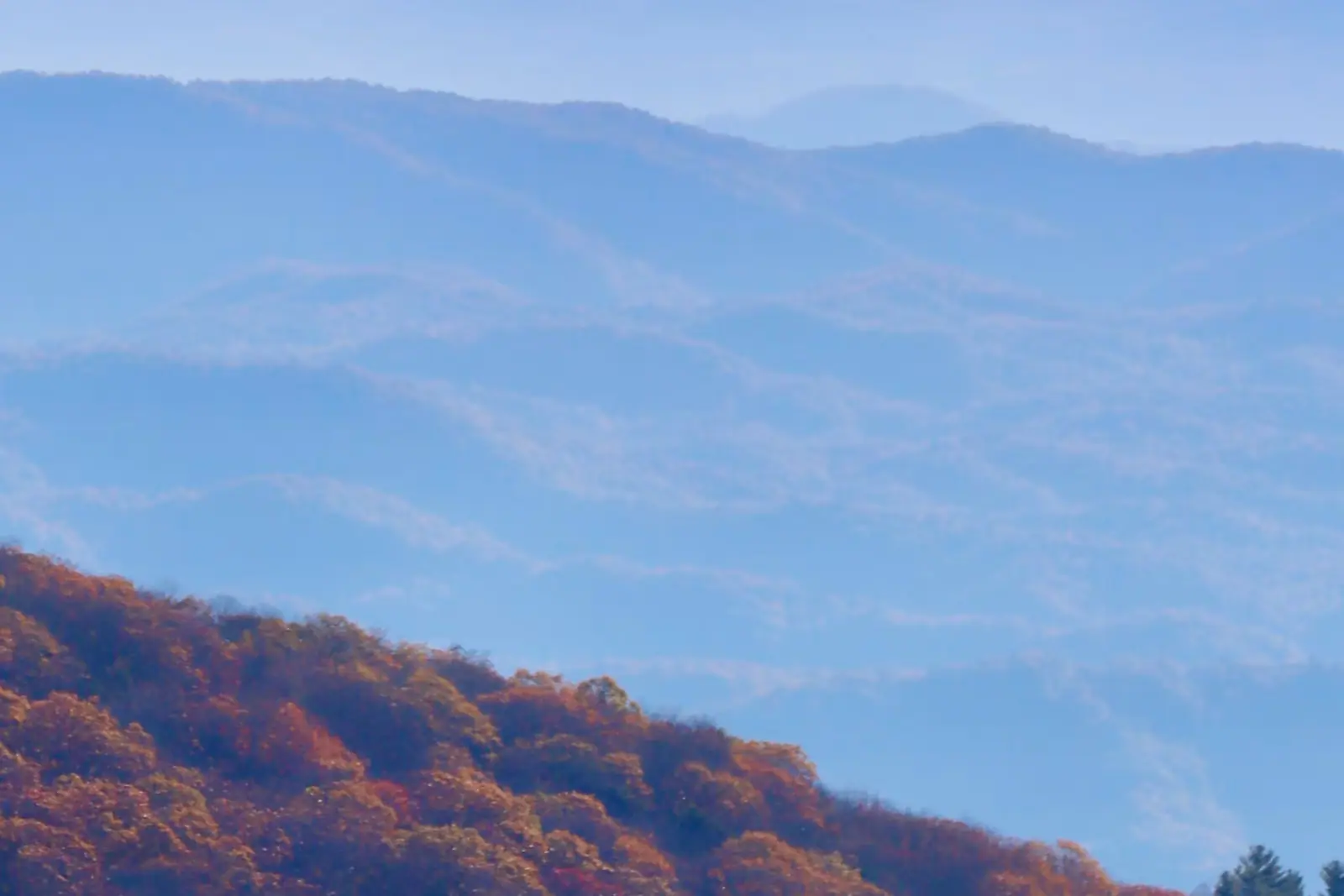
The yearly one is dominated by autumn. Town sits at about 1,762 feet and the ridges around it run higher, so the turn generally lands in the back half of October and occasionally holds into the opening days of November. Which fortnight it lands in is not predictable months ahead. Through that window downtown is at capacity every weekend.

The rest of the calendar is gentler. Spring brings dogwood and rhododendron and much better trail conditions than autumn crowds allow. Summer is warm, green and busy with families, and the lake carries most of the load. January and February are genuinely quiet, some businesses close for a stretch, and the town is at its most honest.

For an unhurried version of downtown, come on a weekday in May or September.

Near Downtown

Straight-line distances, so allow more on the road — the island is long and has one main parkway.

  • A railway depot with locomotives standing on the tracks below a forested hill
    Historic site

    Blue Ridge Depot

    Free

    The oldest working thing in Blue Ridge: a Register-listed railway building still selling tickets to a train that still runs.

    15–45 minutesFree to visit the building, platform side and yard. Train tickets are separate.300 ft away

    Photograph: Unknown author

  • A train on the tracks running close beside dense forest
    Entertainment

    Blue Ridge Scenic Railway

    Twenty-six miles of river running to a town cut in half by a state line, in an open-sided coach with the windows down.

    2–5 hoursTicketed. Fares vary by coach class, trip length and season.300 ft away

    Photograph: Thomson200

  • Rows of red seats facing a closed red stage curtain in an empty auditorium
    Entertainment

    Blue Ridge Community Theater

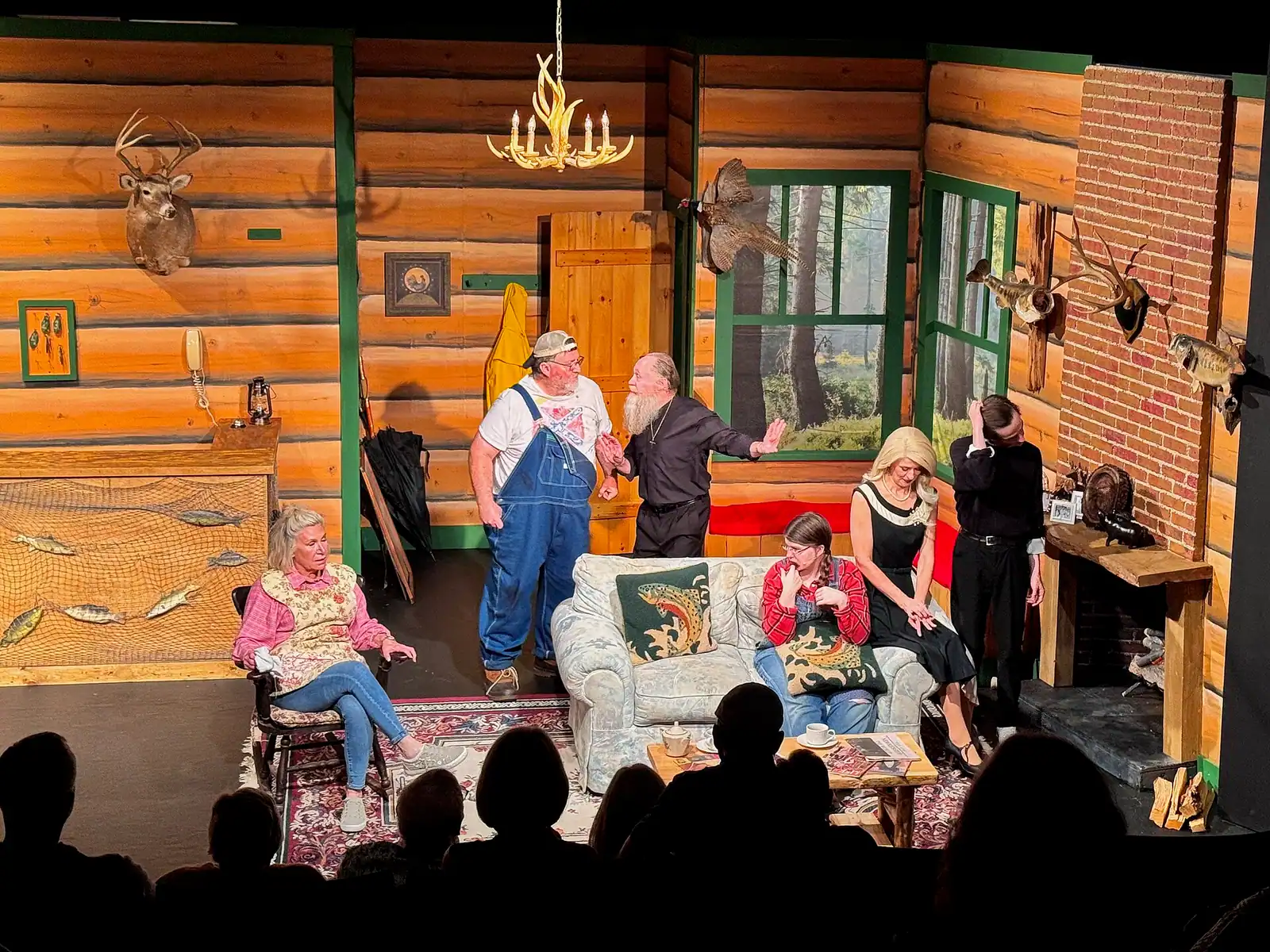
    A volunteer theatre with three separate spaces, in its twenty-eighth season, five minutes from the depot.

    2–3 hoursPaid tickets by production, sold through the theatre's box office.0.6 mi away

    Photograph: Harrison Keely

  • A drive-in cinema screen standing above an empty gravel lot with a pink sky behind it at dusk
    Entertainment

    Swan Drive-In Theatre

    Open since 1955 on a field above town: double features, sound through the car radio, and a diner that keeps the place alive.

    2.5–5 hoursPaid admission per person for a double feature. Entering for the second film only costs the same.0.5 mi away

    Photograph: Harrison Keely

Downtown: common questions

How big is downtown Blue Ridge?

Small. Roughly four blocks of continuous shopfront, walkable end to end in about ten minutes, arranged around the railway depot on Depot Street with East Main Street running parallel one block uphill. The city itself had a population of about 1,250 at the 2020 census. The reason the retail feels denser than that suggests is the several thousand rental cabins in the county, all of whose guests come into town at some point.

Where do you park in downtown Blue Ridge?

On the street, for free, if you arrive early enough. On an autumn Saturday the kerbside spaces on and around East Main are gone by mid-morning, and the answer is the side streets and the lots behind the Main Street blocks, which people consistently overlook while queueing for a space out front. The scenic railway also runs a paid lot on West Main Street, which is worth using on a train day.

What is there to do in downtown Blue Ridge besides shopping?

The scenic railway depot is at the bottom of the grid and trains come and go through the day in season, which is a free spectacle in itself. The old Fannin County Courthouse at West Main and Summit, on the National Register since 1995, is now an arts centre. There is a community theatre, several tasting rooms for cideries and breweries based nearby, and a drive-in cinema a short distance out of town.

Is downtown Blue Ridge dog-friendly?

Broadly yes on the street, and it is a town where a large share of visitors arrive with a dog. Plenty of shops keep a water bowl outside and some welcome dogs in. Individual policies differ and restaurant rules depend on whether there is outdoor seating, so ask rather than assume. One firm exception worth knowing about: the scenic railway allows certified service animals only and no pets at all on board.

When is downtown Blue Ridge least crowded?

Monday to Thursday, any month other than October. The town runs on a weekend rhythm because that is when the cabins fill, so Friday afternoon to Sunday lunchtime is the crush and midweek belongs to the county again. January and February are genuinely quiet, with some businesses shut for a stretch. The trade-off midweek is that several shops and kitchens keep shorter hours or close for a day or two.