Skip to content
Search
Menu

These bookings pay us a commission through Viator. Your price does not change, and neither did our picks because of it.

Things to Do

Downtown Blue Ridge

Last updated

What downtown Blue Ridge, Georgia is actually like: a Main Street beside the depot, where to park in leaf season, and how seasonal the opening hours get.

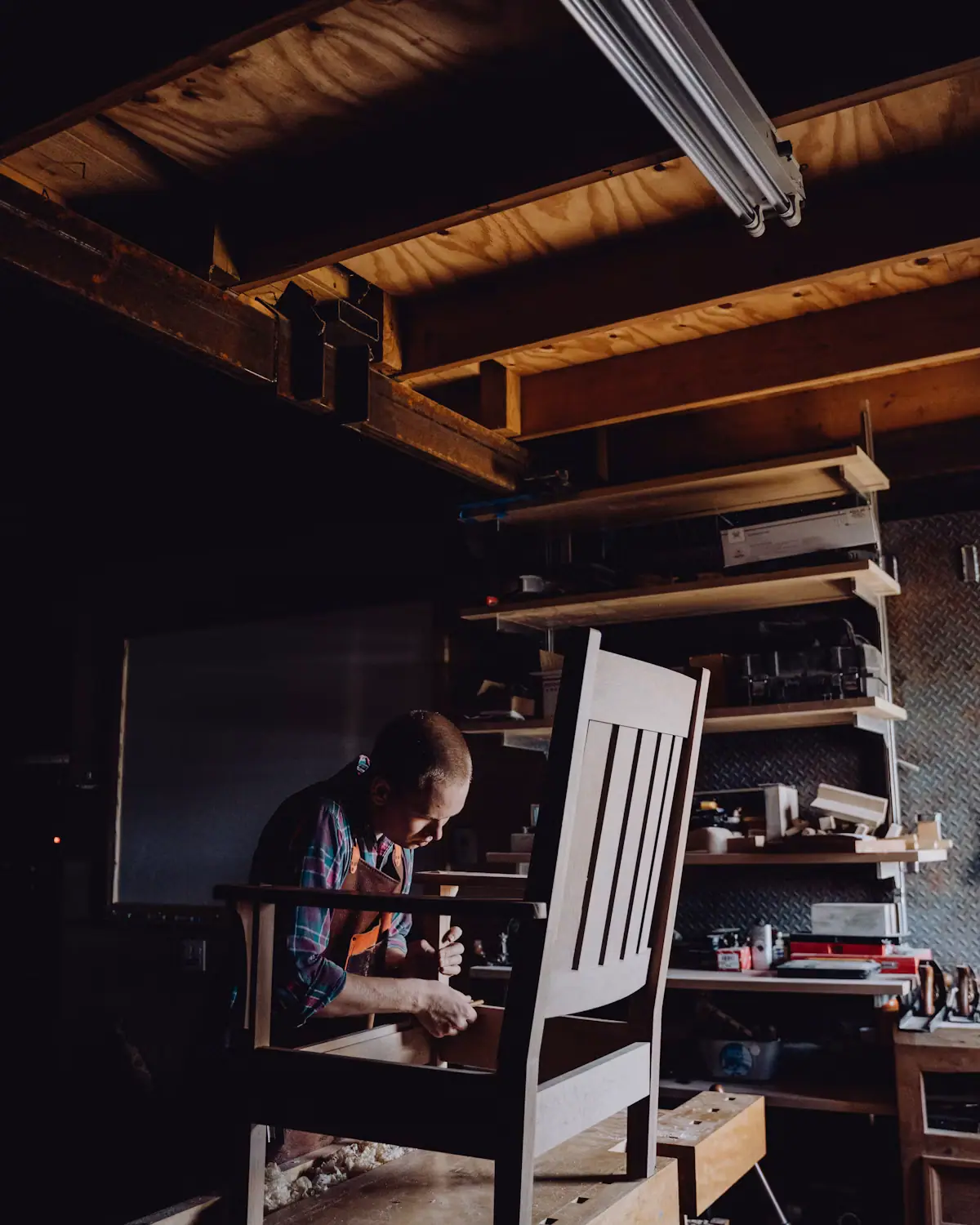
A maker working on a wooden chair frame at a bench in a timber-framed workshop under warm overhead lightUnsplash

Downtown Blue Ridge is four or five walkable blocks laid out around a railway depot, and the whole of it belongs to a town of 1,253 people. That number is the key to the place. Everything visitors find puzzling about Main Street — why parking is so tight, why a shop you wanted is shut on a Tuesday in February, why there is a wait for a table at seven on a Friday — falls out of a town this small carrying the retail and restaurant load of a county of 25,000 plus a very large autumn tourist season.

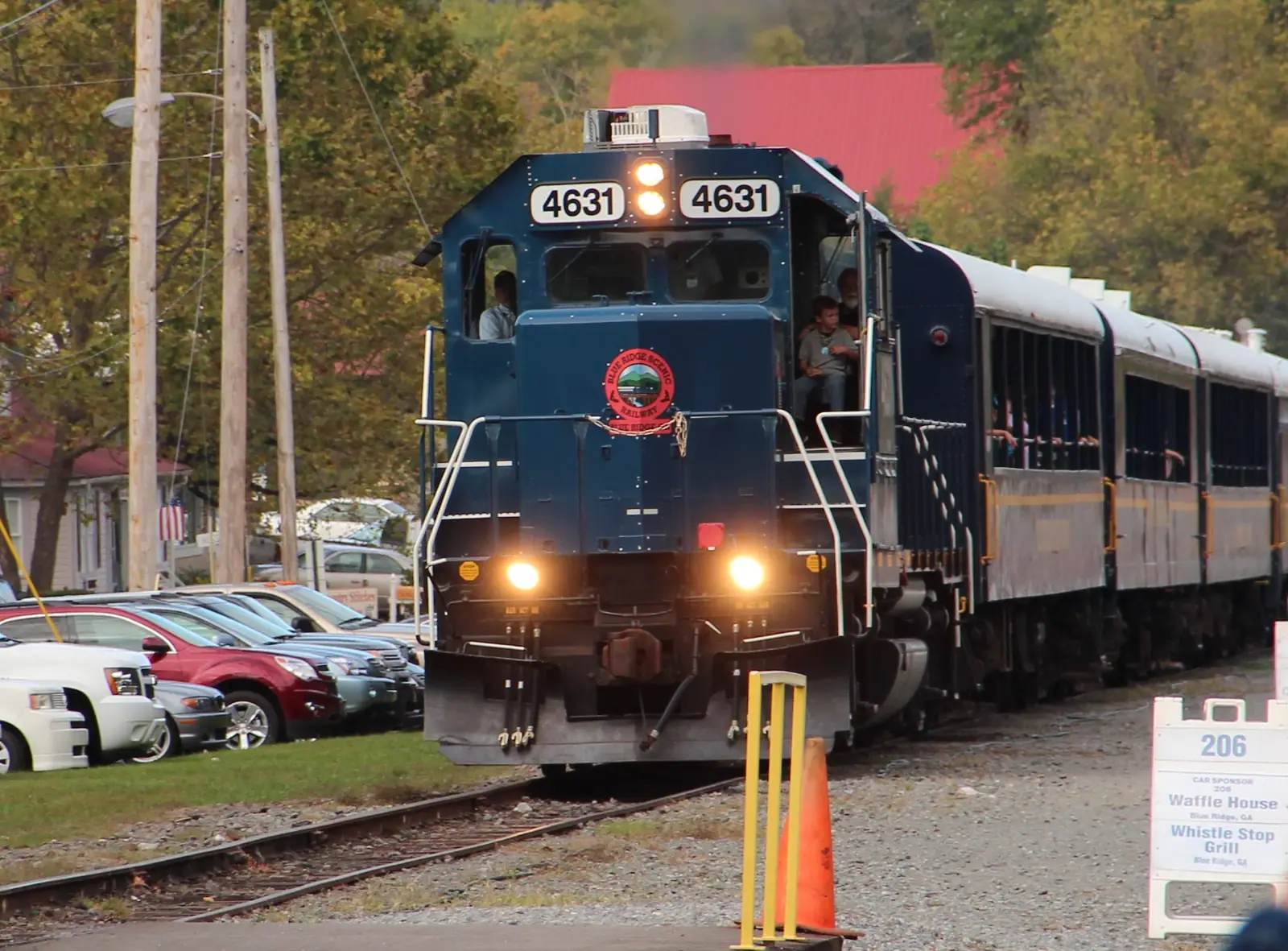
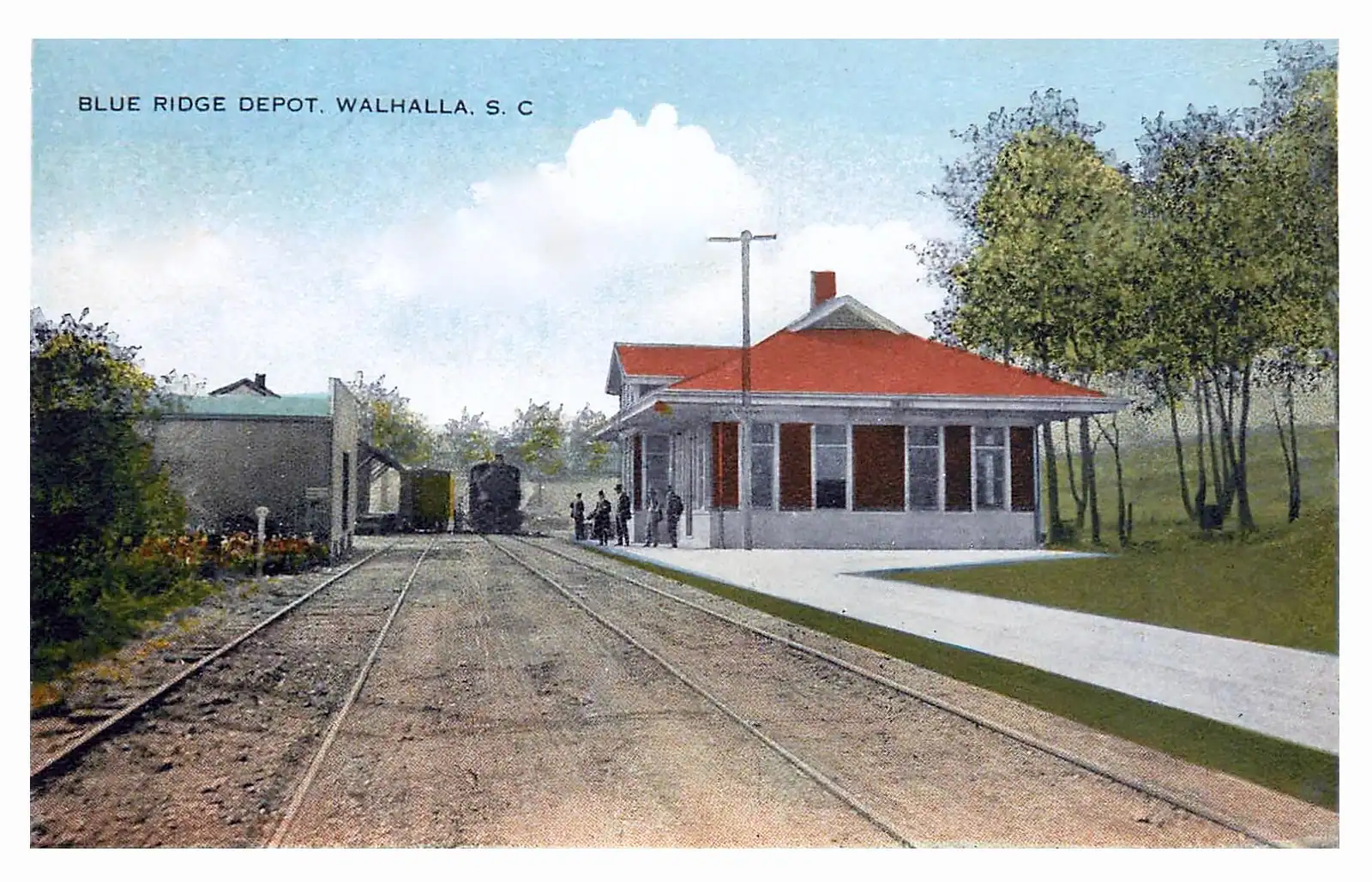
The grid is where it is because of the railway. The Marietta and North Georgia reached this point in 1886, the town was laid out around the stopping place, and by 1895 it had taken the county seat off Morganton. The depot on Depot Street is still the anchor: the excursion train leaves from it, the pavements radiate out from it, and the busiest hour of the Main Street day is the hour before a departure.

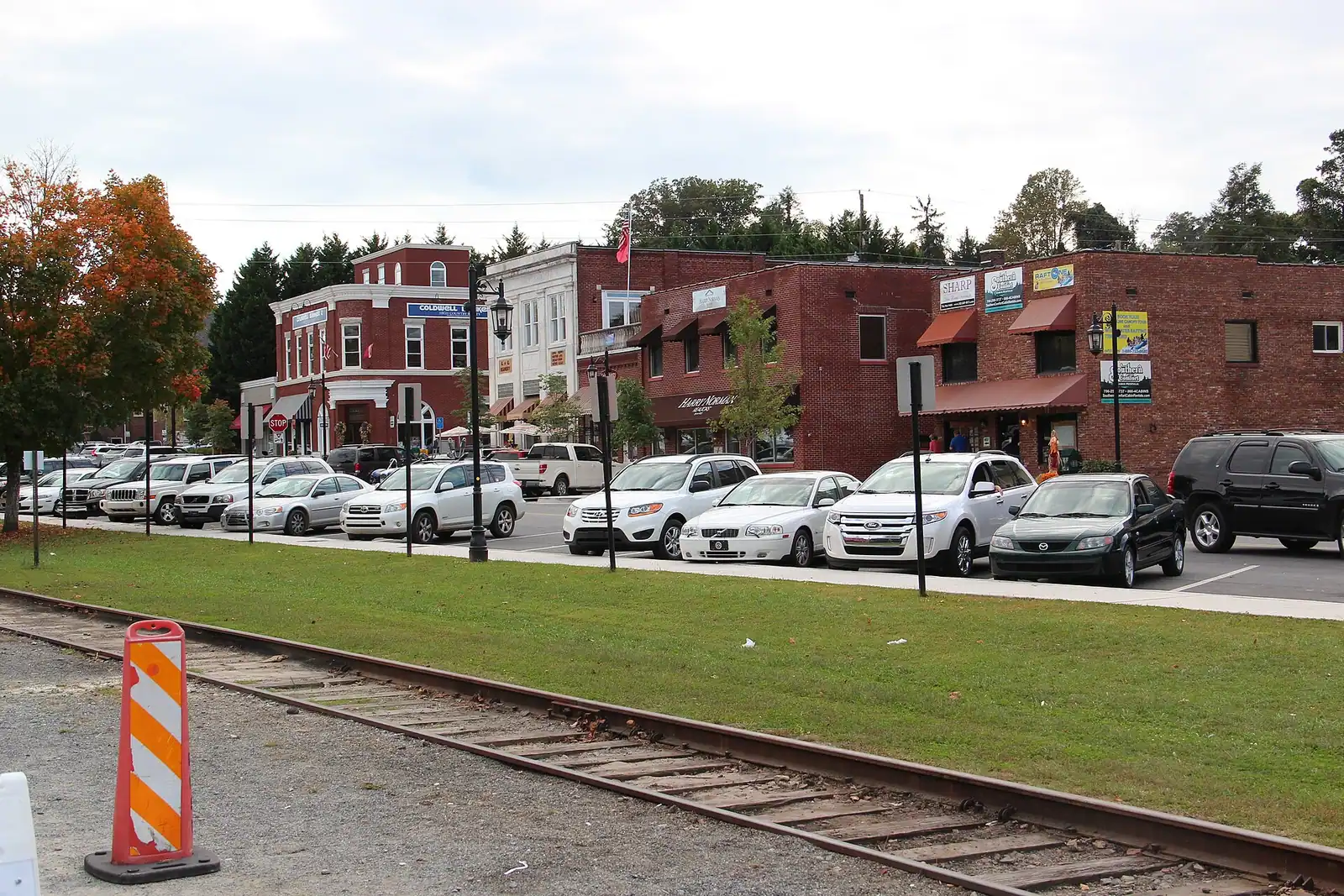
What is actually here is a compact run of independent shops in one- and two-storey brick and timber frontages, with restaurants worked in between them. The mix leans to galleries, outfitters, home and kitchen goods, sweet shops, antiques and mountain craft, and it leans hard. This is a Main Street that exists to be walked by people on holiday, and it is honest to say so: there is very little here that a resident would call day-to-day shopping. The supermarkets and the hardware are out on the highway.

What saves it from being a gift-shop strip is scale and setting. The buildings are low, the pavement is wide enough to stand about on, the hills are visible at the end of the street, and the depot gives the whole thing a centre of gravity that most mountain-town Main Streets do not have. Add a drive-in cinema that has been running since 1955 a few streets away, a working community theatre, and the fact that you can walk from a restaurant table to a train platform in ninety seconds, and it holds up.

One expectation to set before you arrive. This is a daytime street. Kitchens here close earlier than visitors from a city expect, several places do not open at all on Mondays or Tuesdays in the quiet months, and by nine on a January evening the pavements are empty. Plan the shopping and the eating around that and downtown works beautifully. Plan a late night and it will not.
Why the town is shaped like this

Blue Ridge did not grow into a railway town. It was created as one. The Marietta and North Georgia Railroad was pushing a line north through the mountains, it reached this point in 1886, and the town was laid out on the spot at an elevation of about 1,762 feet. Incorporation followed in 1887. In 1895 the county seat came here from Morganton, which is the moment a railhead became the centre of Fannin County.

That history explains the layout better than any map. The depot sits at the middle rather than at the edge, the commercial frontages face it rather than turning their backs on it, and the streets are laid out on a grid that runs with the tracks rather than with the contours, which is unusual in mountain country and is why downtown is flat enough to walk comfortably.

It also explains why the railway is not a novelty bolted on for tourists. The excursion train runs on the alignment the town was built for. When people describe Blue Ridge as a railroad town with the depot at its heart, that is a literal description of the street plan, not a marketing line.

The practical consequence for a visitor is convenient. The depot, the shops, the restaurants and the visitor parking are all inside a few hundred yards of each other, so a day downtown genuinely does not need the car once you have put it somewhere.

Parking, and the street not to circle

Local tips

  • The spaces closest to the depot fill first and stay full. On an autumn Saturday, circling the block nearest the platform is the single biggest waste of time available downtown. Assume you are walking two or three blocks and start looking early.
  • Go one street out, immediately. The side streets and the lots set back behind the main frontages turn over far more often than the kerb spaces on the main drag, and the walk in is a couple of minutes.
  • Arrive before ten or after three in October. Between those hours in leaf season, downtown parking is a genuine constraint on the day rather than an inconvenience.
  • If you are catching a train, park first and shop after. People reverse this and then sprint. The depot is at 241 Depot Street and boarding is not a flexible time.
  • Trailers and large trucks are a problem downtown. If you are towing a boat or a side-by-side, leave it at the cabin. There is nowhere convenient to put it on Main Street.
  • Check posted signage rather than assuming. Restrictions and any charges are set by the city and can change; nothing on this page is a substitute for what is written on the sign in front of you.
  • Midweek in winter, none of this applies. In January you will park outside the door you wanted.

What the shops actually sell

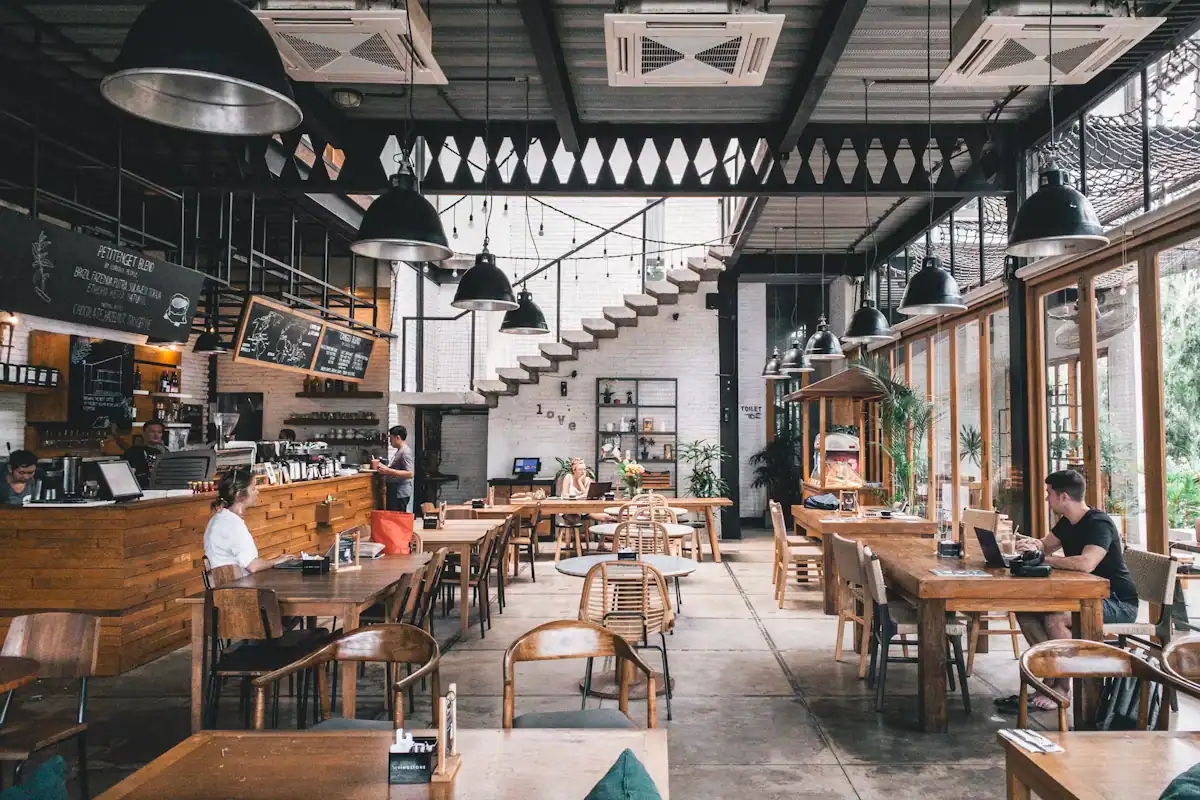
A warm, timber-lined café interior with pendant lamps, plants and long communal tables beside tall windowsUnsplash
A warm, timber-lined café interior with pendant lamps, plants and long communal tables beside tall windows

Being specific about this saves disappointment. Downtown Blue Ridge is mountain-holiday retail, and the categories repeat in a way that is obvious after the first block.

Galleries and studios are the strongest strand, and the genuinely good ones are showing regional work — pottery, turned wood, textiles, landscape painting of these ridges rather than generic prints. Outfitters and outdoor shops cover the fishing, hiking and river side of the county, and they are also the best free source of current information about water levels and trail conditions, because they lose customers if they get it wrong.

Then there is the large middle of the street: home and kitchen goods, candles, soap, sweets and fudge, seasonal decoration, toys, and a heavy layer of Christmas retail that runs for a good deal more of the year than Christmas does. Antiques and vintage occupy several frontages and are worth a slow look. There are bookshops, coffee, and a bakery presence that does well out of the pre-train hour.

The thing downtown does not have is everyday retail. A supermarket shop, a prescription, a hardware run or a tyre repair means going out to the highway. Visitors staying in cabins routinely discover this on the first evening, having assumed a town centre would have a shop in it.

For a cabin week, the useful framing is: downtown for the afternoon and the gifts, the highway for the groceries.

Evenings downtown, including the drive-in

Evening here is earlier and quieter than most visitors expect, and the best evening thing in Blue Ridge is not on Main Street at all.

The Swan Drive-In has been running on Summit Street since 1955, which makes it one of the longest-lived outdoor cinemas in the state and one of the very few things in Fannin County that has been doing the same job continuously for seventy years. Season, programme and prices move, and nothing on this page should be taken as current, but a double feature from the car on a warm evening with the hills going dark around you is the most Blue Ridge thing available after dark. Take blankets. Mountain evenings cool off fast even in August.

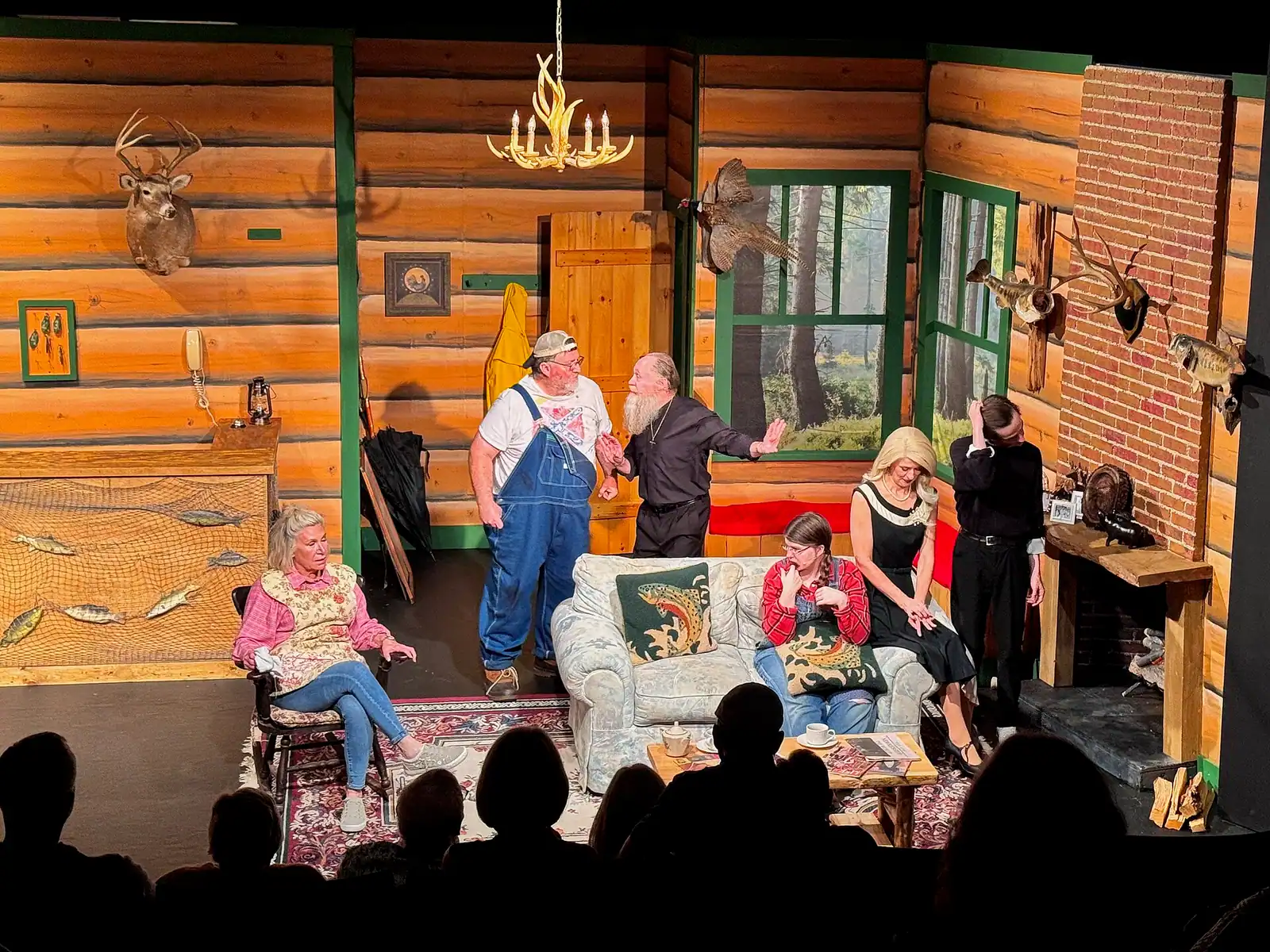
Downtown itself has a community theatre with a real programme, a handful of places where a drink after dinner is a reasonable proposition, and live music that tends to be a weekend proposition rather than a nightly one. Kitchens close early by city standards. If you want to eat at nine, ring first rather than walking down and hoping.

The other underrated evening is simply the street at dusk in December, when the lights go up along the frontages and the depot, the shops stay open a little later and the whole thing looks like the version of itself that gets photographed. It is cold, it is busy on the weekends, and it is genuinely lovely.

The Main Street calendar

When to go

A town of 1,253 people running a visitor economy does not trade evenly across the year, and the difference between seasons is more extreme than in a place with a resident customer base to fall back on.

Late September to early November. The peak of the year. Every frontage open, extended hours, live music, and a pavement full of people. Also: no parking, waits for tables and a queue for coffee. Come early in the day.

December. Lights along the street, holiday shopping, cold clear evenings and busy weekends. Weekdays in December are one of the better trades available downtown: everything open, half the crowd.

January and February. The quiet months. Expect some shops to close on Mondays and Tuesdays, some to shorten hours, and a few to shut for a fortnight entirely. Nothing is wrong. It is a town resting. Check before making a special trip for one specific shop.

Spring. Everything reopens, the river is high and loud, and the pavements are pleasant. The best balance of open and uncrowded in the year.

Summer. Busy, hot on the open pavement by mid-afternoon, and good for morning shopping followed by an afternoon on the water.

The rule that covers all of it: in this county, a weekday is worth roughly half a season of crowd relief.

Main Street and the highway are different towns

How they compare

Blue Ridge has two commercial districts and visitors conflate them constantly. Understanding the split fixes most of the logistics of a cabin week.

DowntownThe GA-515 corridor
What it isFour or five walkable blocks around the depotThe four-lane highway running past the town
What is thereIndependent shops, galleries, restaurants, the railwaySupermarkets, pharmacy, petrol, hardware, chain food, the big car parks
How you use itPark once and walkDrive between stops
Best timeLate morning to late afternoonWhenever, and it is where things stay open latest
The catchLittle that a resident would call practical shoppingNo atmosphere at all; it is a highway

Almost every visitor complaint about Blue Ridge comes from expecting one of these to be the other. The restaurant you read about is downtown. The ice, the firewood, the forgotten phone charger and the week's groceries are on the highway. The highway is also where you will find a pharmacy on a Sunday, which matters more than it sounds when you are an hour into a cabin holiday with a child running a temperature.

The two are minutes apart by car. The mistake is not distance, it is planning a day as though there is one centre.

On the ground

Where to go

Every place below has its own page — hours, parking, what it costs and what to expect when you get there.

  • A train on the tracks running close beside dense forest
    Entertainment

    Blue Ridge Scenic Railway

    Twenty-six miles of river running to a town cut in half by a state line, in an open-sided coach with the windows down.

    2–5 hoursTicketed. Fares vary by coach class, trip length and season.

    Photograph: Thomson200

  • A small-town storefront in white and red painted brick seen from the pavement
    Neighbourhood

    Downtown Blue Ridge

    Free

    Four blocks of shopfronts facing a working railway depot, small enough to walk twice and busy enough to need a parking plan in October.

    1–4 hoursFree. Street parking is free and scarce on peak weekends.

    Photograph: Thomson M

  • A drive-in cinema screen standing above an empty gravel lot with a pink sky behind it at dusk
    Entertainment

    Swan Drive-In Theatre

    Open since 1955 on a field above town: double features, sound through the car radio, and a diner that keeps the place alive.

    2.5–5 hoursPaid admission per person for a double feature. Entering for the second film only costs the same.

    Photograph: Harrison Keely

  • A railway depot with locomotives standing on the tracks below a forested hill
    Historic site

    Blue Ridge Depot

    Free

    The oldest working thing in Blue Ridge: a Register-listed railway building still selling tickets to a train that still runs.

    15–45 minutesFree to visit the building, platform side and yard. Train tickets are separate.

    Photograph: Unknown author

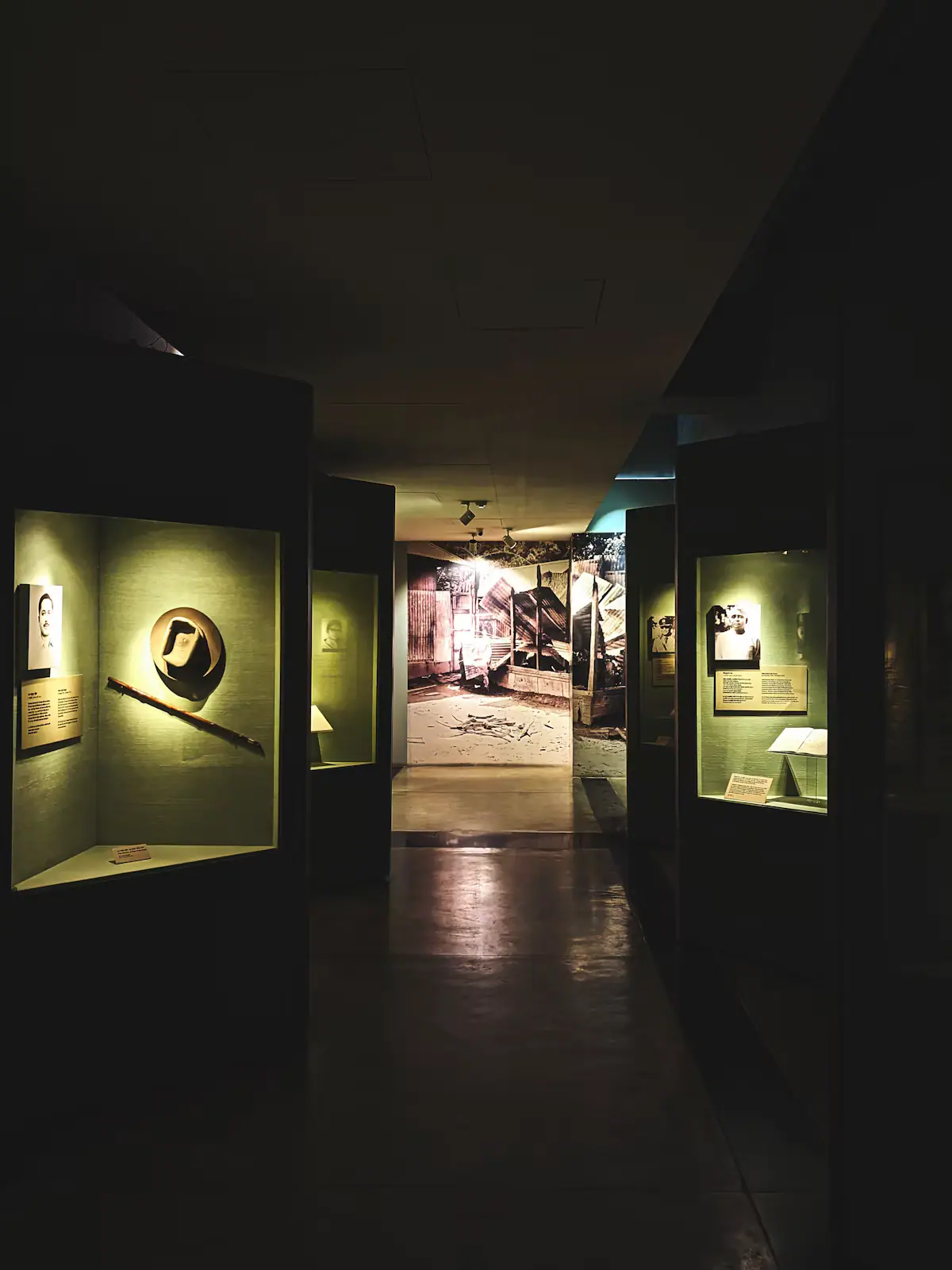
  • A dimly lit museum corridor with illuminated display cases set into the walls on both sides
    Museum

    Expedition: Bigfoot! The Sasquatch Museum

    Casts, field recordings and expedition kit on Highway 515: the county's most reliable hour indoors when the weather turns.

    1–1.5 hoursAround $9 adults and teens, $6 children 5-12, under 5s free.

    Photograph: Unsplash

  • Rows of red seats facing a closed red stage curtain in an empty auditorium
    Entertainment

    Blue Ridge Community Theater

    A volunteer theatre with three separate spaces, in its twenty-eighth season, five minutes from the depot.

    2–3 hoursPaid tickets by production, sold through the theatre's box office.

    Photograph: Harrison Keely

Straight answers

Questions people actually ask

Is downtown Blue Ridge walkable?

Yes, easily. It is four or five blocks laid out flat along the railway grid, and once the car is parked you do not need it again. The depot, the shops and most of the restaurants sit within a few hundred yards of each other. The walk that catches people out is the one from wherever they actually managed to park in October, which can add three or four blocks at each end of the day.

Where do you park in downtown Blue Ridge?

On the side streets and in the lots set back from the main frontages rather than on the kerb nearest the depot, which fills first and turns over slowest. In leaf season, arrive before ten or after three and accept a two- or three-block walk. Check posted signs for restrictions, since those are set by the city and can change. Midweek outside autumn, parking is not an issue at all.

What is there to do in downtown Blue Ridge besides shopping?

Ride the scenic railway from the depot, which is the anchor of the whole street. Beyond that: a community theatre with a real programme, galleries showing regional pottery, wood and painting, coffee and bakeries, and the Swan Drive-In on Summit Street, which has been showing films outdoors since 1955. There is also a small museum scene on the highway edge of town. Evenings are early and quiet by city standards.

Are the shops in Blue Ridge open in winter?

Many are, but not all and not every day. January and February are the quiet months, and it is normal for some independents to close on Mondays and Tuesdays, shorten their hours, or shut for a couple of weeks entirely. December is the opposite: everything open, lights along the street and busy weekends. If you are making a trip for one particular shop, phone ahead rather than assuming.

Is downtown Blue Ridge dog friendly?

Broadly yes, and you will see plenty of dogs on the pavement, particularly in autumn. A good number of shops welcome them and several restaurants have outdoor tables where dogs are fine. That is a shop-by-shop decision rather than a town policy, so look for the sign on the door. Bring water in summer: the pavements are open, the afternoon sun is strong, and there is not much shade along the frontages.

Where is the nearest supermarket to downtown Blue Ridge?

Out on the GA-515 corridor, a short drive from Main Street rather than on it. Downtown has no everyday shopping to speak of: the supermarkets, pharmacy, petrol and hardware are all on the highway. Visitors staying in cabins tend to discover this on the first evening. Plan one highway stop for the week's groceries and treat downtown as the afternoon, not the provisioning run.

How long do you need in downtown Blue Ridge?

Two to three hours covers the shops at a browsing pace, and half a day if you add lunch and a gallery you like. Add four hours on top if you are riding the railway the same day, and do not try to combine a train trip, downtown and an October orchard visit in one day. Most cabin visitors end up coming back downtown a second time rather than doing it all at once.

Can you see the train without buying a ticket?

Yes, and it is one of the better free things to do with small children here. The depot sits in the middle of downtown, the platform area is part of the street scene, and you can watch a train load and pull out without a ticket in your hand. Time it for a published departure, stand well back from the track, and follow whatever the staff on the platform tell you.